
Ruby-throated hummingbird
Archilochus colubris
Description
How to identify
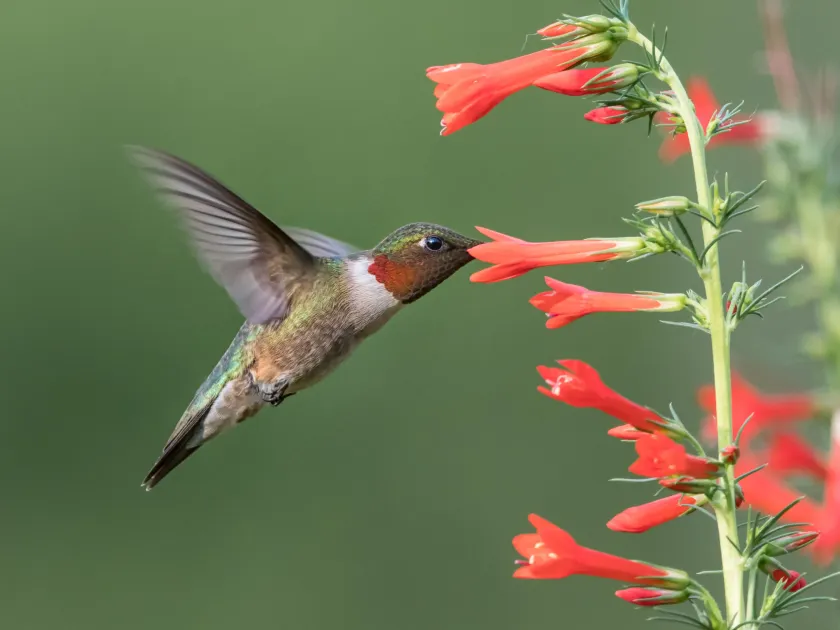
The Ruby-throated hummingbird (lat. Archilochus colubris) belongs to the order Apodiformes and the family Trochilidae. It is a tiny bird characterized by rapid wing beats and high agility.
Adult males are easily identified by their iridescent ruby-red throat patch, while females and juveniles display a more muted, greenish-grey plumage that aids in camouflage.
These birds possess a high metabolism and are specialized nectar feeders, though they also consume small insects and spiders to meet their protein requirements.
Their flight is direct and hovering, allowing them to remain static before flowers to extract nectar with their long, needle-like bills.
In agricultural settings, their specialized feeding behavior can inadvertently cause mechanical harm to delicate floral structures and young fruit sets.
What it damages
The primary damage caused by these hummingbirds involves the piercing and tearing of floral tissues, particularly in berry crops like raspberries and blackberries.
When foraging for nectar or small insects lodged in the blossoms, the birds may cause the premature detachment of buds, significantly reducing the potential yield.
Mechanical injuries to the blossoms create entry points for pathogens, facilitating the spread of fungal infections such as botrytis within the plantation.
Frequent visits to the same flowering clusters often result in the breaking of brittle flower stalks and pedicels, causing the loss of prospective fruit.
In intensive fruit production, the cumulative impact of these disturbances can lead to noticeable economic losses and reduced fruit quality at harvest time.
When it appears
Hummingbirds appear in garden areas during the spring and summer months, coinciding with the flowering stages of various commercial horticultural crops.
Their activity peaks during the early morning and late afternoon hours, periods when they are most actively foraging to replenish metabolic reserves.
The risk of damage is highest during the peak bloom period, as the birds actively explore floral resources for sugar and protein-rich insects.
As the summer progresses into autumn and temperatures begin to drop, the hummingbirds migrate south, effectively ending their impact on the local crops.
Monitoring for their activity should be prioritized during the most sensitive phenological phases of the target crops, specifically during the flowering and fruit initiation stages.
Signs of infestation
The most reliable sign of hummingbird activity is the presence of small, sharp punctures or tears at the base of the flower petals or the calyx.
Clusters of blossoms showing early wilting or signs of necrosis without evidence of insect infestation often indicate recent bird activity.
Audible clues, such as the distinctive humming sound of wings in flight, are frequent indicators of their presence within the foliage.
Droppings found on leaves immediately beneath flowering areas are another common indicator of a regularly frequented feeding site.
Observing a high number of fallen, undamaged petals and buds beneath the plants is a telltale sign that the area is being disturbed by avian visitors.
Control measures
The most effective physical control method is the application of fine-mesh netting over crops, which prevents birds from reaching the flowers while still allowing pollination.
Visual deterrents, such as reflective tape or predatory bird decoys, can be used to discourage hummingbirds from establishing feeding patterns in the garden.
It is advisable to remove highly attractive nectar-producing ornamental plants from the immediate vicinity of commercial berry rows to reduce the birds' interest in the area.
- Use automated motion-activated sprinklers to temporarily disrupt foraging habits.
- Implement ultrasound-based bird repellent devices.
- Maintain consistent crop monitoring to ensure timely intervention if damage levels rise.
Management strategies should be non-lethal, as many hummingbird species are protected by local wildlife regulations and environmental laws.
Taxonomy
- Latin name
- Archilochus colubris
- Family
- Trochilidae
- EPPO code
- ARHLCO
Discussion
No discussions yet — be the first.