
Selasphorus hummingbirds
Selasphorus
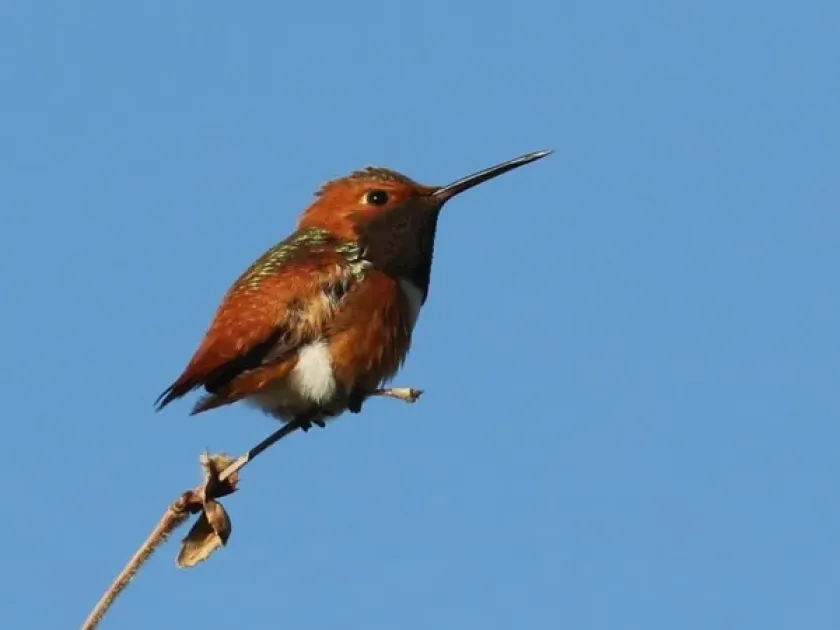
Description
How to identify
The genus Selasphorus belongs to the Trochilidae family within the order Apodiformes. These are small birds known for their metallic throat feathers and rapid wing beats during flight.
In agronomic terms, these birds are considered pests because their specialized nectar-feeding behavior often leads to physical trauma to flowering plants.
They are visually distinguishable by the iridescent throat patches found in males, which flash brightly under direct sunlight during their aerial maneuvers.
Their ability to hover motionless before a bloom is a key identification feature, though this activity is precisely what causes mechanical injury to delicate plant structures.
Agronomists often identify their presence by the distinctive humming sound produced by their wings as they move rapidly from one plant to another.
What it damages
Selasphorus hummingbirds can cause significant damage to a wide range of horticultural, floral, and small-fruit crops grown in both greenhouses and open fields.
Plants with tubular or nectar-rich flowers, such as salvia, fuchsia, penstemon, and certain berry bushes, are the most frequent targets for these birds.
The primary damage involves the piercing of floral buds or tubes with their sharp beaks to reach nectar, often before the flowers fully open.
High-frequency visitation often results in snapped flower stalks and bruised petals, which severely degrades the aesthetic and market value of the crop.
In large-scale commercial floriculture, such activities can lead to substantial economic losses due to the wilting and rotting of damaged flower buds.
When it appears
The presence and activity of Selasphorus are highly dependent on the vegetation cycles of the host plants, typically peaking during spring and summer months.
Peak damage generally coincides with the maximum bloom period of nectar-producing crops, requiring vigilant monitoring by field managers.
Migratory patterns play a crucial role in the timing of their appearance, as these birds synchronize their movements with the seasonal flowering of local plants.
Temperature fluctuations throughout the day dictate their foraging activity, with most damage occurring during the early morning and late evening hours.
Regular observations confirm that the highest population density on agricultural land occurs when the targeted crops reach their peak blooming stage.
Signs of infestation
A key indicator of their presence is the appearance of microscopic punctures at the base of the flower tubes where nectar has been extracted.
The presence of wilted or prematurely dropped buds near otherwise healthy plants often serves as a sign of mechanical injury caused by foraging hummingbirds.
Visual inspection of the foliage often reveals traces of excrement, which is a reliable indirect indicator of frequent bird visitation in a specific area.
Infected or bruised petals that show irregular tears or holes are symptomatic of an attempt by the bird to force entry into a tightly closed bud.
- Punctures at the base of the floral tube.
- Deformation and premature wilting of unopened buds.
- Visible traces of bird droppings on leaf surfaces.
- Broken flower stalks near the base.
Control measures
Protection against Selasphorus hummingbirds focuses on humane deterrent methods rather than chemical eradication, as these birds are not typical insect pests.
Using reflective tapes or spinning mirrored discs can create glare that effectively discourages the birds from hovering near specific ornamental beds.
Installing fine-mesh exclusion netting over flowering rows provides a physical barrier, preventing birds from reaching the nectar sources.
Ultrasonic bird repellers, tuned to specific frequencies that create acoustic discomfort, are often employed as a supplementary tool in garden management.
Agronomic practices, such as removing damaged plant tissues and selecting less nectar-attractive cultivars, help minimize the overall impact on the production yield.
Taxonomy
- Latin name
- Selasphorus
- Family
- Trochilidae
- EPPO code
- SLSPSP
Discussion
No discussions yet — be the first.