
Scirtes orbiculatus
Scirtes orbiculatus
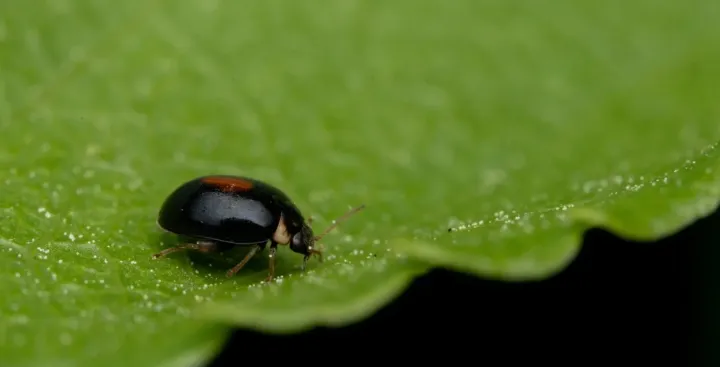
Description
How to identify
Scirtes orbiculatus, commonly known as a type of marsh beetle, belongs to the family Scirtidae. These insects are easily identified by their distinct, rounded, and highly convex bodies.
Adult beetles typically measure between 3 to 5 mm in length. Their coloration ranges from deep brown to black, and they possess a smooth, shiny cuticle without pronounced surface ornamentation.
The lifecycle follows a complete metamorphosis: egg, larva, pupa, and adult. A unique characteristic of the family is that larvae are aquatic or semi-aquatic, thriving in wet conditions.
Adults are known for their hidden, nocturnal behavior, making them elusive during daylight hours when they seek refuge in dense vegetation or moist soil habitats.
Despite their secretive nature, adults are capable of flight, which allows them to migrate efficiently to suitable moist environments when conditions become unfavorable.
What it damages
Damage is primarily caused by larvae residing in waterlogged soil and by adults feeding on the foliage of agricultural crops located in marshy or flood-prone areas.
Cereals, forage grasses, and vegetables grown near river basins or poorly drained lands are most susceptible to attacks from this pest species.
Larvae feed on the delicate root systems of young plants, causing stunted development, nutrient deficiency symptoms, and potential wilting in severe cases of infestation.
Adults consume the leaf blades, creating irregular "shot-hole" patterns. This defoliation reduces the overall photosynthetic capacity of the plant and leaves it vulnerable to secondary infections.
Significant economic loss can occur in fields where drainage is poor, as these conditions are ideal for the development and proliferation of this particular beetle species.
When it appears
The activity period of Scirtes orbiculatus is heavily dictated by ambient temperature and soil moisture levels, which are essential for larval survival and development.
The peak activity of adults usually occurs from late spring through early summer, coinciding with the warming of the environment and increased humidity levels.
Eggs are deposited in moist substrates or near water sources, ensuring that newly emerged larvae have immediate access to the moisture and food sources required for their growth.
Adult beetles overwinter in sheltered locations, such as leaf litter, bark crevices, or shallow soil layers, where they can survive until the next growing season.
As autumn approaches and temperatures drop, the population shifts into a state of diapause, marking the transition from the active growing cycle to the winter rest period.
Signs of infestation
The primary visual sign of infestation is the appearance of numerous small, ragged holes on the foliage, which is characteristic of adult feeding activity during nighttime.
A closer inspection of the soil near the root zone may reveal the presence of larvae, which have a distinct, often elongated appearance compared to other soil-dwelling insects.
Unexplained wilting of crops, especially in areas with stagnant water or high soil moisture, often indicates that larval feeding on roots is hindering water uptake.
Setting up light traps during evening hours is a reliable method for detecting adult presence, as these insects are naturally attracted to light sources in the dark.
The combination of visible defoliation on young leaves and unhealthy root structures provides strong evidence of an active infestation requiring intervention.
Control measures
The most effective long-term control strategy involves land drainage improvement and the management of hydrological systems to prevent soil saturation and stagnant water.
Regular sanitation, including the removal of weeds and dense vegetation surrounding the fields, effectively eliminates breeding grounds and overwintering sites for the beetles.
When infestation levels exceed the economic threshold, the application of systemic insecticides can provide rapid relief and protect the crop during vulnerable growth stages.
Implementing a proper crop rotation system can break the insect's lifecycle, making it difficult for the population to establish a persistent presence in the field.
Deep autumn plowing of the soil is highly recommended as it disrupts the overwintering chambers of the adults, significantly reducing the population density in the following spring.
Taxonomy
- Latin name
- Scirtes orbiculatus
- Order
- Coleoptera (beetles)
- Family
- Scirtidae
- EPPO code
- SCISOR
Discussion
No discussions yet — be the first.