
Scirtes
Scirtes
Description
How to identify
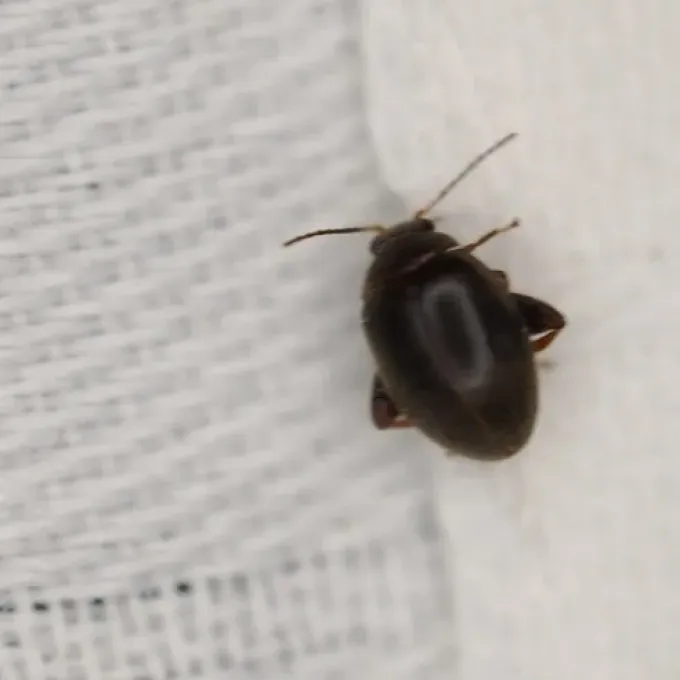
The genus Scirtes belongs to the family Scirtidae, commonly known as marsh beetles. These beetles are easily recognized by their oval, convex body shape and the ability of the adults to leap using their enlarged hind femora.
Adult beetles are typically small, ranging in color from yellowish-brown to dark brown. Their bodies are often covered with fine hairs, which help them blend into the vegetation in wet or marshy habitats.
Larvae have a distinct morphology, often featuring long antennae and specialized respiratory structures that allow them to survive in aquatic or semi-aquatic environments. They are predominantly detritivores but can become opportunistic plant feeders.
The life cycle involves complete metamorphosis. Adults are frequently observed on foliage near water bodies, while larvae remain hidden in moisture-rich substrates, making them difficult to detect during early infestations.
Understanding the habitat requirements of Scirtidae is essential for identification, as their presence is a clear indicator of high humidity levels within the agricultural ecosystem.
What it damages
Damage to crops is primarily caused by both larvae and adults in areas with poor drainage. Larvae can feed on the soft tissues of young seedlings near the soil surface, leading to stunted growth or total plant loss.
Adult beetles damage plants by grazing on leaves, creating numerous small, irregular holes. This leaf perforation reduces the photosynthetic efficiency of the crop, impacting overall yield and quality.
The risk of infestation is highest in low-lying fields or during seasons with excessive rainfall. Damaged tissue provides an entry point for various plant pathogens, further exacerbating the initial injury.
Seedling stages of row crops are the most vulnerable to Scirtes attacks. If the soil remains saturated for prolonged periods, the population of these beetles can rapidly expand, leading to patchy crop stands.
Farmers should look for "shot-hole" damage on leaves and observe plant bases for larvae if they notice unexpected wilting in areas with high soil moisture.
Control measures
Effective management begins with improving soil drainage and land leveling to prevent the accumulation of water, which is critical for the survival of Scirtes larvae.
Cultural practices such as removing aquatic and riparian weeds around field margins reduce the refuge areas where adult beetles overwinter and reproduce.
When populations exceed economic injury levels, chemical control using systemic or contact insecticides is recommended. Proper timing of application is crucial to target adults before they lay eggs.
Biological control options, including the application of entomopathogenic nematodes to the soil, can help suppress larval populations in highly infested areas without the need for broad-spectrum chemicals.
Regular monitoring with yellow sticky traps during the peak growth season allows for early detection of adult activity, enabling prompt intervention before significant crop damage occurs.
Taxonomy
- Latin name
- Scirtes
- Order
- Coleoptera (beetles)
- Family
- Scirtidae
- EPPO code
- SCISSP
Discussion
No discussions yet — be the first.