
African white grub
Schizonycha africana
Description
How to identify
The African white grub (Schizonycha africana) is a beetle belonging to the family Scarabaeidae within the order Coleoptera. This species is a significant subterranean pest primarily recognized for causing extensive damage to agricultural crops throughout various regions of Africa.
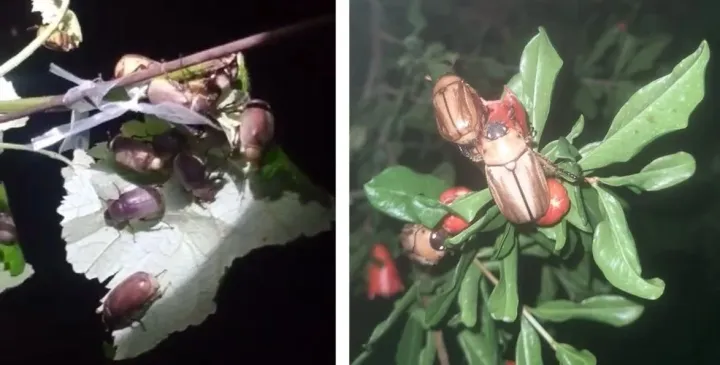
The adult beetle is typical of the scarab family, generally possessing a dark brown or reddish-brown coloration and a robust, somewhat hairy body. They are nocturnal insects, making direct observation of adult populations difficult during daylight hours.
The larvae are characterized by a curved, C-shaped body, which is whitish or creamy in color, paired with a distinct, hardened dark head capsule. These larvae are highly specialized for feeding on the roots of plants while remaining hidden underground.
The life cycle involves several distinct stages: egg, larval instars, pupa, and adult. The developmental period is heavily influenced by environmental factors such as soil temperature and moisture levels, which determine the rate of growth and potential generation cycles.
Females prioritize laying eggs in fertile soils that contain organic matter. Proper soil moisture is essential for egg development, meaning that areas with high humus content or fresh manure are particularly attractive sites for oviposition.
What it damages
As a polyphagous pest, the African white grub is capable of feeding on a wide variety of plants, which complicates pest management. Key food crops like maize, sorghum, and pearl millet are frequently attacked, leading to significant yield losses in subsistence and commercial farming.
Vegetable production is also severely affected by these grubs. Crops such as potatoes, sweet potatoes, and tomatoes often sustain heavy root damage, causing stunted growth or the total collapse of the plants due to the disruption of water and nutrient uptake.
Industrial crops, including cotton, are prone to infestation, particularly during the seedling stage. The larvae consume primary and lateral roots, leaving the plant unable to anchor itself or absorb essential resources, leading to rapid wilting.
Seedlings in forestry nurseries are also targets for this pest. The destruction of root systems by grubs can wipe out entire batches of young plants, causing considerable economic setbacks in nursery and afforestation projects.
The severity of damage is amplified during periods of drought, as plants with already compromised root systems have little to no ability to recover from water stress, leading to high mortality rates across the field.
Signs of infestation
The primary visual indicator of an infestation is the sudden and unexplained wilting of plants. When affected plants are pulled, they come out of the soil very easily, revealing that their root systems have been pruned or entirely consumed by the larvae.
Large patches of dead or dying crops often appear in affected fields. Upon digging into these areas, farmers can usually find several larvae feeding within the root zone, confirming the presence of the pest.
Yellowing of foliage is a common symptom in young crops, which occurs because the larvae have severed the main root. This damage prevents the plant from accessing the necessary nutrients from the soil, causing it to weaken and eventually perish.
Adult activity can be observed in the evening, particularly near light sources. Monitoring for these adults is crucial for predicting the potential density of larvae that will be present in the soil during the subsequent growing season.
Soil disturbance during tillage can often reveal the presence of larvae. Finding large numbers of these grubs during field preparation is a clear warning sign that proactive control measures are required before planting.
Control measures
Deep tillage or plowing is a highly effective mechanical control method. By turning the soil, larvae are exposed to the surface, where they succumb to desiccation from the sun or become easy prey for insectivorous birds and small mammals.
Crop rotation is essential for long-term management. By alternating host crops with plants that the grubs find less palatable, farmers can significantly reduce the soil population density of the pest over multiple seasons.
Chemical control involving the application of insecticides to the soil at the time of planting is often necessary in areas with high larval populations. These treatments target the larvae in the root zone before they can cause extensive damage to the crop.
Biological control options, such as the application of entomopathogenic fungi or nematodes, are becoming increasingly popular. These agents specifically infect and kill the larvae, offering a more sustainable and environmentally friendly alternative to chemical pesticides.
- Monitor soil before planting to determine larval population density.
- Avoid using fresh, uncomposted manure that attracts egg-laying adults.
- Implement integrated pest management (IPM) to combine biological and mechanical methods.
Taxonomy
- Latin name
- Schizonycha africana
- Order
- Coleoptera (beetles)
- Family
- Scarabaeidae
- EPPO code
- SHIZAF
Discussion
No discussions yet — be the first.