
Elm-pear aphid
Schizoneura lanuginosum
Description
How to identify
The elm-pear aphid (Schizoneura lanuginosum) is a specialized aphid species belonging to the Aphididae family. It is known for its heteroecious lifecycle, meaning it alternates between two different host plants.
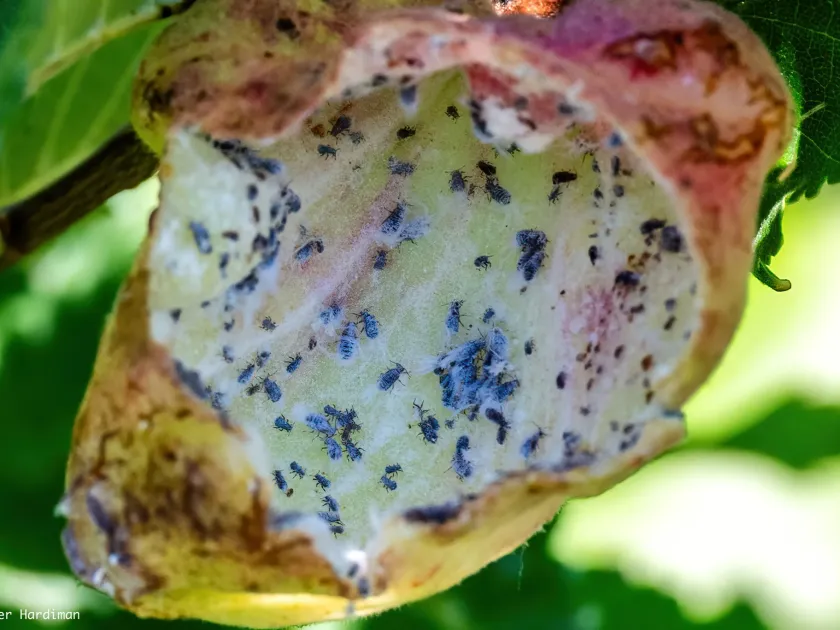
The insect is microscopic, but it causes significant physiological changes in the host plants. The most distinct identification feature is the formation of large, pouch-like galls on the leaves of the primary host, the elm.
These galls serve as a sanctuary for the aphid colonies, providing protection against environmental stress and predators. Inside these structures, the aphids reproduce rapidly.
The winged morphs, known as migrants, play a crucial role in the species' dispersal, moving from elms to pear trees during the summer months.
The overwintering stage consists of eggs laid by sexual females in the crevices of elm bark, ensuring the species survives the winter until the next spring.
What it damages
The primary host, the elm tree, sustains damage through the formation of leaf galls. These structures divert nutrients and reduce the photosynthetic capacity of the tree, weakening it over time.
Pear trees serve as secondary hosts. The aphids colonize the undersides of young leaves, causing severe curling, distortion, and yellowing, which restricts the growth of the shoots.
By feeding on the sap, the aphids deplete the tree's energy reserves. This stress can lead to reduced fruit size, lower sugar content, and overall poor tree health.
In addition to direct feeding damage, the aphids secrete honeydew, which promotes the growth of sooty mold, further blocking photosynthesis and reducing fruit quality.
Persistent infestations over multiple seasons can lead to the decline of pear tree vigor and may significantly impact the tree's ability to produce fruit in subsequent years.
When it appears
The cycle begins in early spring on the elm tree. Once the buds open, the fundatrices emerge from overwintering eggs and initiate gall formation on developing leaves.
During the summer, winged migrants are produced. They fly to pear trees to establish secondary colonies, where they undergo several generations of rapid reproduction.
The population on pear trees peaks during the summer, coinciding with active shoot development, which provides abundant food resources for the aphids.
In the autumn, winged sexual forms return to the primary host (the elm) to mate and lay overwintering eggs in the bark, completing the annual lifecycle.
Understanding this migratory timeline is essential for timing orchard interventions effectively and preventing widespread colonization of pear trees.
Signs of infestation
The most prominent sign of infestation on elm trees is the presence of large, fleshy galls that look like swollen sacks on the leaves.
On pear trees, look for tightly curled leaves that appear stunted or deformed. Within these clusters, one can often find a white, woolly substance secreted by the aphids.
The presence of ants on the bark or leaves is a strong indicator of aphid activity, as ants are attracted to the sweet honeydew produced by the colony.
Leaf yellowing and premature leaf drop in mid-summer are common symptoms of heavy infestation, indicating significant stress on the host tree.
The presence of sooty mold on the foliage is another clear sign that aphids have been feeding in the tree canopy for a considerable period.
Control measures
Managing the elm-pear aphid requires a strategic approach that targets the pest at vulnerable points in its lifecycle.
- Remove and destroy elm leaves containing galls early in the season to prevent the migration of winged aphids to your pear trees.
- Apply dormant oil sprays on elm trees in late winter or early spring to destroy overwintering eggs before they hatch.
- Utilize systemic insecticides on pear trees only when monitoring indicates threshold levels of infestation, focusing on the undersides of leaves.
- Encourage natural predators such as ladybugs, lacewings, and hoverflies, which can significantly reduce aphid populations in the orchard.
- Maintain tree vigor through proper irrigation and balanced fertilization to help trees recover more quickly from aphid-related stress.
Taxonomy
- Latin name
- Schizoneura lanuginosum
- Order
- Hemiptera (bugs, aphids, leafhoppers)
- Family
- Aphididae
- EPPO code
- SCHZLA
Discussion
No discussions yet — be the first.