
Pine needle aphid
Schizolachnus tusoca
Description
How to identify
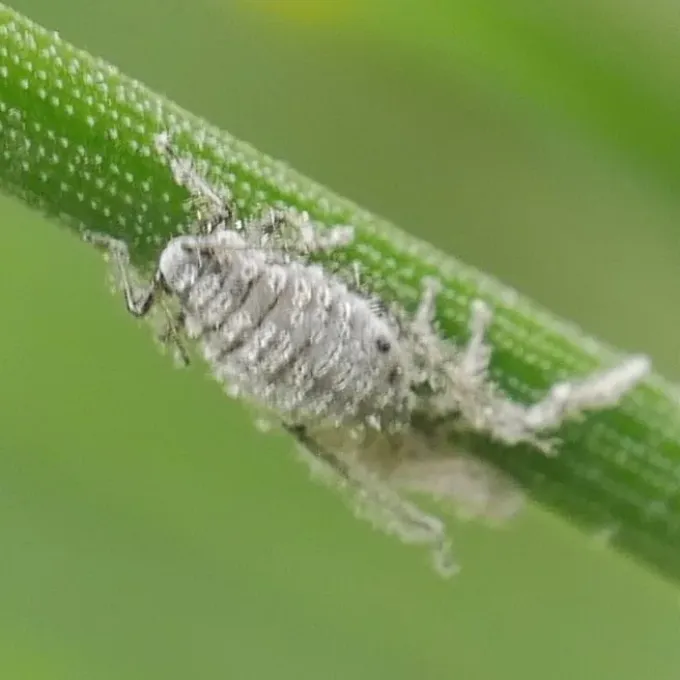
Schizolachnus tusoca is a specialized species of aphid within the family Aphididae, order Hemiptera. These insects are small, with an elongated body shape and coloration that provides excellent camouflage against pine needles.
The insect's body is covered in a fine, powdery wax layer, giving it a dull, greyish appearance. Their antennae are relatively short, and their legs are adapted to maintain a secure grip on the narrow surface of pine needles.
This species reproduces through parthenogenesis for most of the season, allowing for rapid population growth and the formation of dense colonies on host plants.
They lead a colonial lifestyle, usually settling in rows along the needles of new or established shoots, which provides them with easy access to plant sap.
A notable behavioral trait is their synchronized movement in response to disturbances, which is a defensive strategy designed to deter predators and parasitoids.
What it damages
The primary hosts for this aphid are various species of pine (genus Pinus), including the Scots pine and several ornamental conifers commonly found in landscaping.
By piercing the needles with their mouthparts, they drain plant sap, which weakens the needles and causes physiological stress to the tree.
The excretion of honeydew promotes the growth of sooty mold, which coats the foliage in a black, powdery substance that inhibits photosynthesis and ruins the plant's aesthetic value.
Severe infestations lead to yellowing, needle curling, and premature leaf drop, which can significantly stunt the growth of young trees in nursery settings.
If left unmanaged, the decline in tree health makes the plant more susceptible to secondary pathogens and further stress from environmental factors.
When it appears
The activity begins in early spring as larvae hatch from overwintered eggs, coinciding with the flushing of new growth on pine trees.
Population density typically reaches its peak during late spring and early summer, when environmental conditions are optimal for rapid reproduction.
Multiple generations are produced throughout the growing season, enabling the species to quickly spread across different parts of the canopy.
During the peak of summer heat, while feeding activity may slow down, the colonies often persist in sheltered areas of the tree canopy.
By autumn, sexual morphs emerge to lay eggs that will survive the winter, ensuring the survival of the species until the following spring.
Signs of infestation
The most immediate sign of infestation is the presence of sticky honeydew on the needles and branches, often accompanied by heavy ant activity.
Close inspection of the foliage will reveal rows of small, greyish insects aligned along the length of the needles, often blending in with the background.
The growth of black sooty mold on the undersides of branches is a clear indicator that the colony has been active for an extended period of time.
Discoloration or yellowing starting from the tips of the needles is a common symptom of the localized damage caused by aphid feeding.
- Needle drop when branches are shaken.
- The presence of white cast skins (exuviae) on the foliage.
- Stunted or distorted growth of young pine candles.
- Attraction of ants or wasps to the tree.
Control measures
Cultural control measures, such as providing adequate irrigation and balanced fertilization, are essential for maintaining tree vigor and enabling the plant to withstand aphid feeding.
Mechanical control, such as washing the foliage with a high-pressure water spray, can be effective in reducing colony numbers if the infestation is caught early.
For more severe cases, systemic insecticides applied to the roots or foliage can provide effective long-term protection by translocating the toxin within the plant tissues.
It is important to rotate chemical classes when applying treatments to prevent the development of insecticide resistance, especially in intensive forestry or nursery environments.
Biological control through the encouragement of beneficial insects like lady beetles and lacewings is a sustainable way to keep populations below damaging levels in garden settings.
Taxonomy
- Latin name
- Schizolachnus tusoca
- Order
- Hemiptera (bugs, aphids, leafhoppers)
- Family
- Aphididae
- EPPO code
- SCHLTU
Discussion
No discussions yet — be the first.