
Eastern fence lizard
Sceloporus undulatus
Description
How to identify
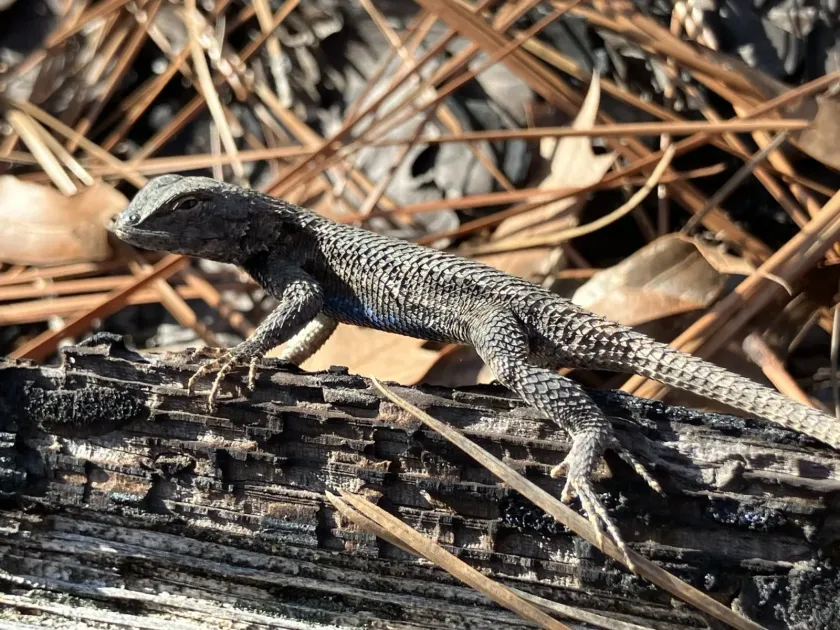
The Eastern fence lizard (Sceloporus undulatus) is a medium-sized reptile belonging to the Phrynosomatidae family. Typically measuring 10–18 cm, these lizards are known for their rough, keeled scales that provide effective camouflage against tree bark and rocks.
Their coloration is generally a blend of gray or brown, featuring a distinct wavy, dark pattern across their backs. During the breeding season, males display vibrant blue patches on their abdomens, framed by bold black lines.
These lizards are primarily diurnal and are often found basking in the sun on fence posts, rock piles, or old wooden structures. They are agile climbers and are highly adapted to human-altered landscapes.
Their biological lifecycle is temperature-dependent, as they rely on external heat sources to maintain metabolic processes. They are essentially opportunistic predators that thrive in environments with abundant insect populations.
In agricultural settings, they are often perceived as part of the local biodiversity rather than a nuisance, though their high density can occasionally lead to conflicts with horticultural practices.
What it damages
The Eastern fence lizard is not a crop pest in the traditional sense, as it does not consume plant matter. Its diet consists entirely of arthropods, including beetles, caterpillars, and crickets, making it an insectivore.
However, their presence can be undesirable in intensive horticultural operations due to the potential for sanitation issues. Like many reptiles, they may carry Salmonella, which necessitates careful handling of produce near their habitats.
Mechanical damage to garden beds can occur if they dig nesting holes in loose, fertile soil. While these excavations are small, they can sometimes disturb the root systems of delicate seedlings or newly planted vegetables.
Additionally, their constant movement across garden soil can contribute to minor soil compaction or disturbance of mulch layers, which might interfere with the moisture retention strategies of certain crops.
Ultimately, these lizards should be viewed as beneficial insect controllers that help mitigate the impact of other true pests on the farm or garden.
When it appears
Activity for the Eastern fence lizard begins in early spring, as soon as ambient temperatures are sufficient for them to emerge from hibernation. Sunny days in late March or April trigger their initial emergence.
Peak activity occurs throughout the summer months (June and July), when both the lizards and their insect prey are most active. This is the time when they are most frequently observed basking and hunting.
As autumn approaches, their metabolism begins to slow in response to cooler temperatures and shorter days. By late September or October, they seek out deep retreats such as hollow logs or underground burrows to hibernate.
Seasonal fluctuations in their population are closely tied to moisture levels and food availability. In drought years, they may aggregate near irrigated fields or water sources, increasing local density.
Understanding these cycles helps garden managers identify when the lizards are most likely to be active and when their nesting behavior might impact the planting of susceptible crops.
Signs of infestation
The most common sign of their presence is a quick, darting movement near fences or garden structures. They are shy creatures that flee rapidly when they detect vibrations or large movements nearby.
Droppings left behind are a reliable indicator of their residency. These are typically dark, elongated pellets with a white cap, often found on flat, sun-exposed surfaces like patio stones or wooden beams.
Shed skin or sloughs are another sign. If you find translucent, papery remnants of skin near rock piles or ornamental bushes, it indicates that the area is being used for regular molting and habitation.
Small, inconspicuous holes in the soil, particularly in areas with good sun exposure, are signs of nesting activity. These burrows are where females deposit their eggs during the warmer months of the year.
A noticeable decline in the number of garden insects might also point to the presence of a lizard colony, as they are highly efficient predators that hunt within a defined territorial radius.
Control measures
Direct eradication is rarely recommended, as Eastern fence lizards provide natural pest control services. Management focuses on habitat modification to discourage them from specific sensitive areas.
Removing garden debris, clearing brush piles, and sealing gaps in retaining walls are effective ways to reduce the number of suitable shelters, encouraging the lizards to move into non-cultivated areas.
Installing physical barriers like fine-mesh screening around greenhouses or raised beds is the best strategy to keep them out of areas where food safety or aesthetic concerns are prioritized.
If they become a nuisance, humane capture and relocation to a nearby wild habitat is a more ethical and sustainable solution than extermination, preserving the ecological balance of the area.
- Clear garden waste and unnecessary debris.
- Install mesh barriers around sensitive planting zones.
- Reduce access to warm, sheltered nesting sites.
- Maintain proper sanitation standards for fresh produce.
Taxonomy
- Latin name
- Sceloporus undulatus
- Family
- Phrynosomatidae
- EPPO code
- SKEPUN
Discussion
No discussions yet — be the first.