
Horned lizard
Phrynosoma
Description
How to identify
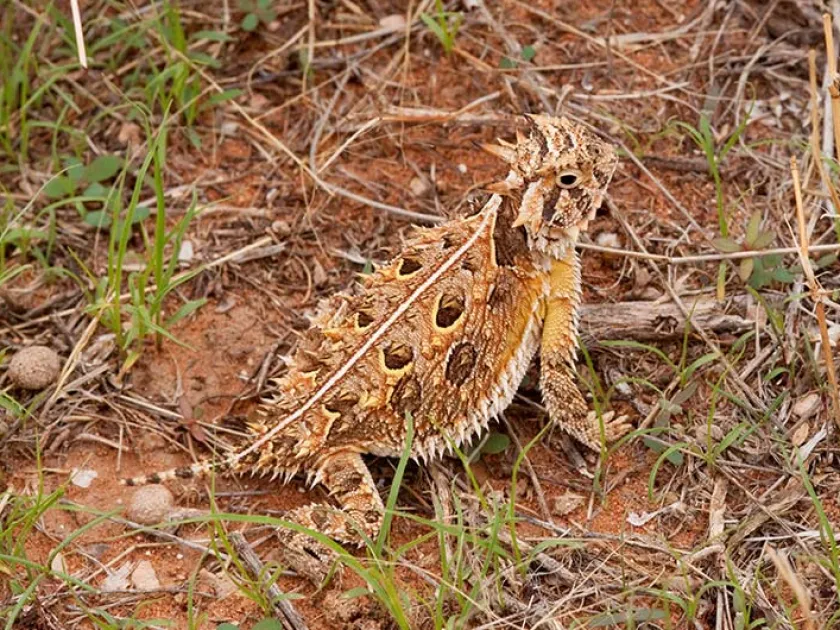
Horned lizards, belonging to the genus Phrynosoma, are distinct reptiles within the Phrynosomatidae family, recognizable by their flattened, toad-like bodies.
They are famous for the array of sharp, horn-like spikes located on their heads and the sides of their bodies, serving as a primary defense against predators.
These lizards have highly specialized camouflage abilities, with skin patterns that blend perfectly into arid, sandy, or rocky environments.
Their morphological adaptations, including short, sturdy legs, allow them to move swiftly across desert sands and burrow into the earth for thermal regulation.
It is crucial for agronomists to distinguish them from agricultural pests, as they are non-pest vertebrates that play a role in natural food webs.
What it damages
Horned lizards are not agricultural pests and pose zero threat to any crops, vegetable gardens, or orchard plants.
Their diet is strictly insectivorous, focusing primarily on ants and other small invertebrates found in the wild, rather than plant tissue.
They do not consume foliage, fruits, or stems, and they lack the physiological capacity to damage irrigation systems or agricultural infrastructure.
In fact, their presence indicates a healthy, undisturbed environment where natural biological controls are still active and functional.
Any claims suggesting that these reptiles are harmful to farming are scientifically unfounded and likely stem from misidentification of other garden fauna.
When it appears
As ectothermic animals, their seasonal activity is highly dictated by ambient temperature and sunlight exposure throughout the year.
They are most frequently sighted during the warm spring and summer months when they actively bask in the sun to reach optimal metabolism temperatures.
During the cooler autumn season, their metabolism slows down, and they begin to seek refuge in soil or under rocks to prepare for winter dormancy.
Their daily behavior is synced with the movement of ants, which serves as their primary caloric source throughout the active season.
Periods of extreme heat may also cause them to burrow underground to avoid desiccation and overheating during midday hours.
Signs of infestation
Signs of their presence in an area are limited to visual sightings, as they do not leave behind damage marks typically associated with agricultural pests.
You may observe shallow indentations in loose soil or sand where the lizards have burrowed for protection or thermoregulation purposes.
Small, irregular footprints or tail drag marks might be visible in fine, dusty, or sandy soil conditions during the peak of the season.
Because they are shy and reclusive, observing them usually requires quiet observation in undisturbed, sunny sections of the property.
Absence of crop injury or plant stress is the most reliable indicator that your garden's residents are harmless to your production.
Control measures
There is absolutely no need for control measures, as horned lizards are ecologically beneficial and non-destructive to agriculture.
Many Phrynosoma species are protected by state or federal laws due to declining populations caused by habitat loss and pesticide overuse.
Broad-spectrum pesticide use is strongly discouraged, as it can eliminate their prey base or lead to secondary poisoning if the lizards consume contaminated insects.
Sustainable farming practices that maintain natural vegetation strips are the best way to support these creatures and promote a healthy ecosystem.
- Avoid the use of toxic, broad-spectrum insecticides.
- Preserve natural soil surfaces and rocky habitats.
- Monitor for genuine pests instead of harming non-pest wildlife.
Taxonomy
- Latin name
- Phrynosoma
- Family
- Phrynosomatidae
- EPPO code
- PRYNSP
Discussion
No discussions yet — be the first.