
Lake trout
Salvelinus namaycush
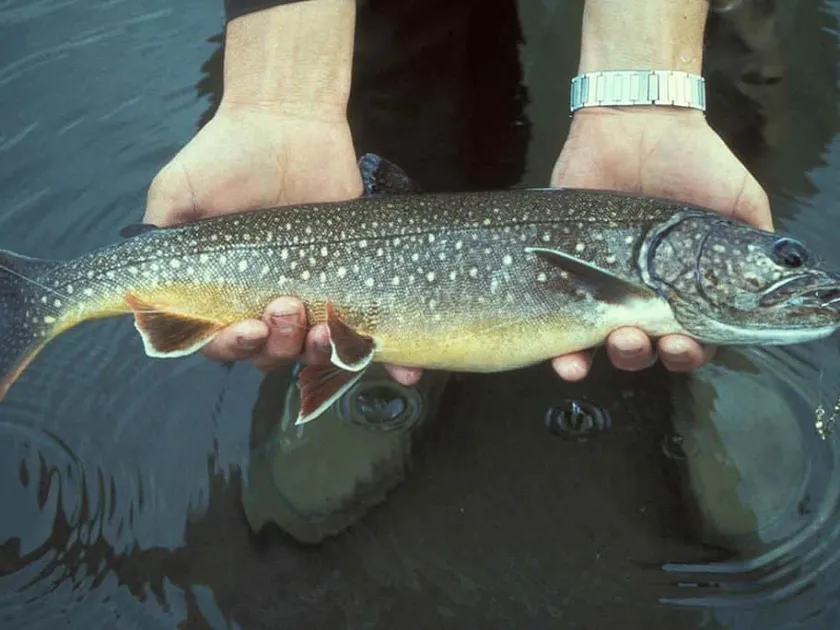
Description
How to identify
The Lake trout, scientifically known as Salvelinus namaycush, belongs to the Salmonidae family. It is a predatory freshwater fish native to large, deep lakes in North America.
The body of Salvelinus namaycush is elongated and covered with small scales. It typically displays a dark grey or olive background with light-colored spots scattered across the body and fins.
The tail of the Lake trout is deeply forked, which differentiates it from other char species. As an apex predator, it plays a vital role in the aquatic food web of its natural habitat.
It is crucial to state that Lake trout is an aquatic organism and does not affect terrestrial plants. It is not an agricultural pest and poses no threat to crops, vegetables, or commercial orchards.
Taxonomically, the species is placed within the genus Salvelinus. Its biological significance lies in fisheries and conservation management rather than in agricultural pest control protocols.
When it appears
Lake trout are highly sensitive to water temperature. During the warmer months, they are strictly found in the deep, cold waters of oligotrophic lakes where oxygen levels are high.
Spawning takes place during the autumn months when water temperatures decrease significantly. They typically choose rocky areas in the lake to deposit their eggs.
Throughout the winter, these fish remain active and continue to feed in their deep-water habitats. They are well-adapted to surviving under ice covers, maintaining a steady metabolism.
The life cycle of the Lake trout is long, with individuals taking several years to reach maturity. Their development is slow due to the low-temperature conditions they inhabit.
There is no seasonal correlation between the life cycle of Salvelinus namaycush and agricultural plant growth cycles, as these organisms exist in fundamentally different biomes.
Taxonomy
- Latin name
- Salvelinus namaycush
- Family
- Salmonidae
- EPPO code
- SALVNA
Discussion
No discussions yet — be the first.