
Brown trout
Salmo trutta
Description
How to identify
Brown trout (Salmo trutta) is a prominent species of the Salmonidae family, known for its preference for cold, high-oxygenated freshwater environments with stony or gravel substrates.
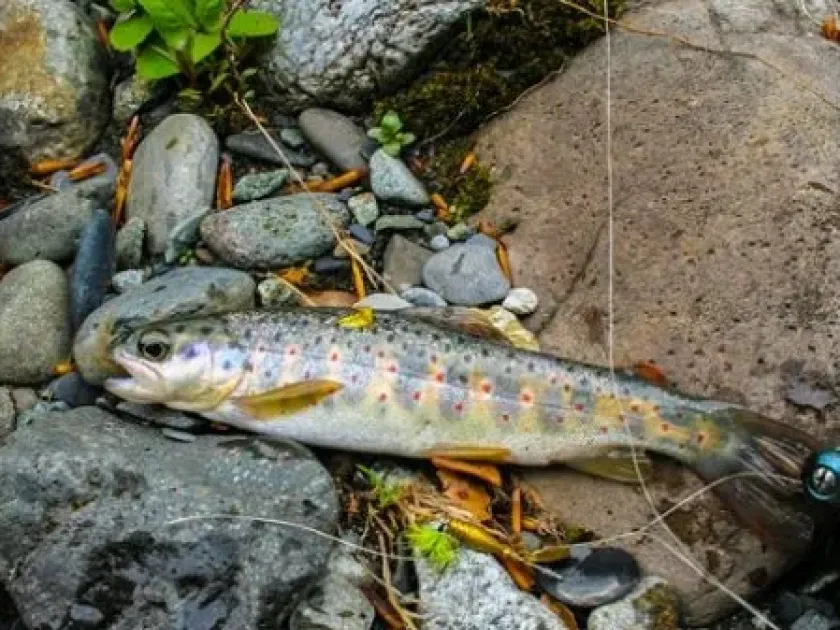
The body is elongated and covered with small scales, typically exhibiting a brownish-olive hue with distinctive red and black spots that serve as camouflage.
Biological success of the species is strictly linked to water temperature and quality; they are highly intolerant to polluted or stagnant waters.
The reproductive cycle involves excavating spawning redds (nests) in the riverbed or canal bottom, which is a key factor in their environmental impact on man-made structures.
In agricultural settings, they are often encountered in streams redirected for irrigation, making them a point of interest for agronomists managing water infrastructure.
What it damages
The primary concern for agriculture is the mechanical destruction of irrigation canal beds caused by trout spawning behavior, which involves digging deep depressions in the substrate.
This activity can lead to the erosion of canal banks, potentially resulting in water leakage and the instability of surrounding agricultural structures.
Presence of brown trout in water systems creates rigid environmental constraints, limiting the use of standard herbicides and pesticides in adjacent fields due to the fish's sensitivity.
The fish's activities may disturb the silt balance, leading to turbidity that can interfere with mechanical filters and pumps essential for crop irrigation.
There is also a management cost involved in balancing fish habitat protection with the operational needs of high-yield farming near salmonid-bearing waters.
When it appears
Trout activity peaks during the spawning season, which usually occurs from autumn to early winter, depending on the specific water temperature and geographical region.
During the spring and summer months, the fish move more freely to feed, requiring consistent monitoring of intake pipes and canal systems.
The temperature-sensitive nature of the species means that their activity levels fluctuate significantly with the seasonal thermal shifts in water bodies.
Maintenance of irrigation canals is most effective during periods when fish are less active or when spawning sites are not yet established.
Agronomists should keep a calendar of trout spawning periods to avoid major mechanical disturbances in water flow during critical crop growth stages.
Signs of infestation
Evidence of trout activity is most recognizable through the appearance of spawning redds, which look like clean, oval patches of gravel on the bottom of the canal.
Localized water turbidity can indicate active digging behavior, which can also signal to an operator that irrigation flow might be compromised.
Structural subsidence along the edges of small irrigation channels may indicate that the ground has been undermined by fish activities at the base.
- Presence of clean, bright gravel patches on the canal bed.
- Unusual silting patterns downstream from spawning areas.
- Visible bank erosion inconsistent with natural flow velocity.
Observations of altered current patterns can indicate where fish have modified the morphology of the channel bed over time.
Control measures
Installing fine-mesh screens at intake points prevents trout from entering pump systems, protecting both the machinery and the fish population.
Hardening the bed of the irrigation canals with concrete or geogrids prevents the formation of spawning redds and significantly reduces bank erosion.
Maintaining strict buffer zones for the application of fertilizers and pesticides is essential to prevent runoff that could prove lethal to fish populations.
Regular inspections of canal structural integrity help identify potential damage before it impacts the water supply for crops.
Collaboration between farmers and local environmental agencies ensures that water usage remains compliant with regulations while protecting the essential irrigation infrastructure.
Taxonomy
- Latin name
- Salmo trutta
- Family
- Salmonidae
- EPPO code
- SALMTF
Discussion
No discussions yet — be the first.