
Rainbow trout
Salmo gairdneri
Description
How to identify
Rainbow trout (Oncorhynchus mykiss, formerly known as Salmo gairdneri) is a cold-water fish species belonging to the family Salmonidae and order Salmoniformes.
This species is an aquatic organism that occupies freshwater habitats, fundamentally preventing any direct interaction with crops or agricultural vegetation.
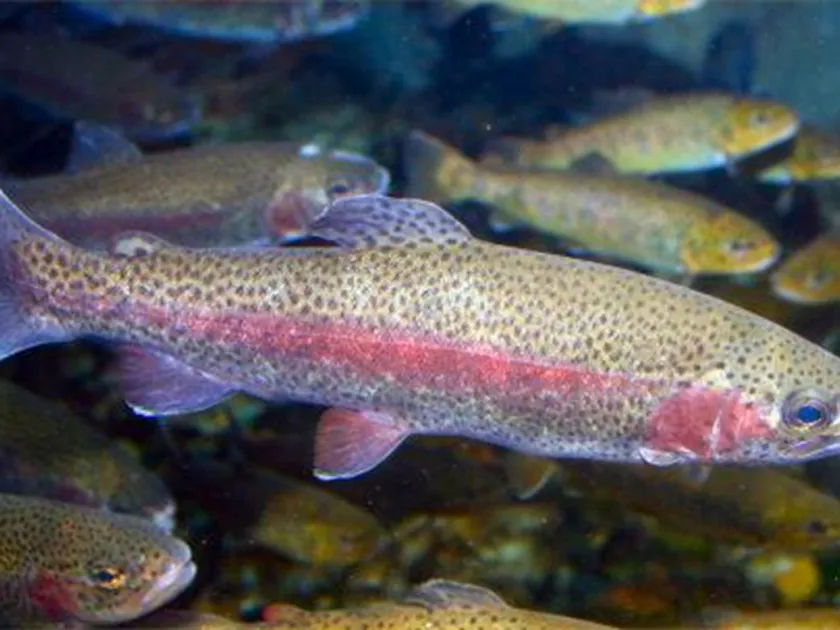
The fish is identified by its iridescent lateral stripe, which creates a rainbow-like appearance, a trait that serves as a key diagnostic feature.
Biologically, it functions as a predator or opportunistic feeder within its aquatic environment, targeting small invertebrates and insects.
It is scientifically inaccurate to categorize this species as a plant pest, as it possesses neither the biological apparatus nor the behavior to damage plants.
What it damages
Rainbow trout causes no direct damage to crops, as its dietary habits do not include consumption of plant tissues, leaves, or roots.
In the context of agriculture, damage is limited to mechanical risks associated with irrigation infrastructure when trout escape from aquaculture facilities.
High-density fish farming can lead to effluent discharge, which, if not properly managed, might alter the nutrient load in irrigation waters.
Excessive organic nutrients in irrigation canals can promote the growth of aquatic plants and algae, potentially clogging water delivery systems.
Therefore, any perceived harm is indirect and stems from technical management issues rather than the fish's biological activity as a pest.
Control measures
Control measures primarily focus on structural containment to ensure that fish remain within designated pond boundaries during their life cycle.
The installation of fine-mesh screens and barriers on all water discharge outlets is a critical engineering standard for salmonid aquaculture.
Regular maintenance of dams and irrigation canals is essential to prevent unintended cross-contamination between aquaculture and farming sectors.
Implementing effective filtration and waste treatment systems helps mitigate any negative impact of fish effluent on irrigation water quality.
Cooperation between water resource managers and farmers ensures that aquaculture practices do not interfere with downstream agricultural requirements.
Taxonomy
- Latin name
- Salmo gairdneri
- Family
- Salmonidae
- EPPO code
- SALMGA
Discussion
No discussions yet — be the first.