
Cutthroat trout
Salmo clarki
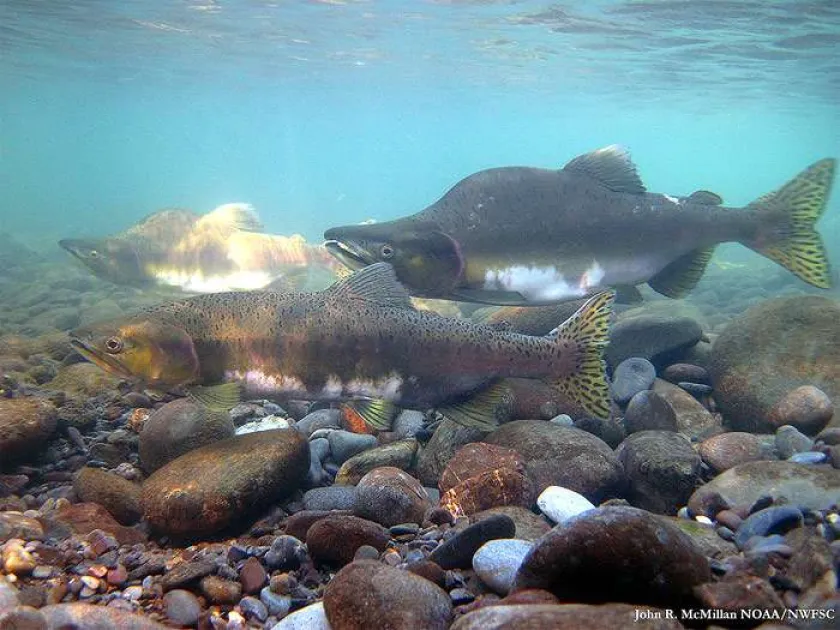
Description
How to identify
The Cutthroat trout (Oncorhynchus clarkii) is a prominent salmonid species native to the western regions of North America, known for its significant ecological diversity.
The name "Cutthroat" refers to the distinctive red or orange slash-like markings found beneath the lower jaw, which serve as the primary visual identification feature for the species.
These fish possess a streamlined body shape, typical of river-dwelling salmonids, allowing them to navigate through cold, high-energy mountain streams and coastal environments.
The species belongs to the order Salmoniformes and the family Salmonidae, exhibiting a wide range of phenotypic variation depending on its specific geographic range and habitat.
While the Cutthroat trout is a vital component of aquatic food webs, it is important to clarify that it has no negative impact on agricultural crops and is not considered a crop pest.
What it damages
As a fish species, the Cutthroat trout does not consume plants, nor does it cause damage to agricultural fields, crops, or farming infrastructure in a direct manner.
The only intersection between this species and agricultural practices occurs when aquaculture activities take place within proximity to irrigation systems, requiring careful water management.
Potential risks are strictly limited to the alteration of water chemistry or flow patterns if fish rearing operations are not managed according to environmental standards.
In irrigation systems, the presence of fish can occasionally lead to issues if intake screens are not properly maintained, as they may become clogged with biological debris.
Labeling this species as an agricultural pest is biologically incorrect, as it poses no threat to vegetation and plays a complex, largely beneficial role in riverine ecosystems.
When it appears
The life cycle of the Cutthroat trout is deeply influenced by seasonal changes, particularly regarding temperature-dependent spawning migrations during the spring months.
During the warmer months, these trout typically migrate toward cooler headwaters to avoid thermal stress, which helps keep them separated from agricultural water usage zones.
Activity levels fluctuate throughout the year, with peak biological movement occurring during spawning periods and reduced activity during the coldest winter months.
Managing the interaction between agricultural water use and fish habitats requires understanding these seasonal migratory patterns to protect both the species and the water quality.
Monitoring the seasonal behavior of the species is a standard procedure for environmental agencies and water resource managers in regions where trout populations exist.
Signs of infestation
Visual identification of trout presence in a water body often involves observing surface disturbances during feeding bouts in the early mornings or late evenings.
The presence of spawning redds—depressions in the gravelly substrate of stream beds—is a clear indicator of a resident or spawning trout population.
Water quality monitoring, specifically testing for nitrogen and phosphorus levels, can help managers identify if aquaculture activities are impacting the surrounding environment.
In some cases, changes in turbidity during spring runoff can influence where fish are located within a stream or canal network.
Professional biological surveys, including electrofishing and census counts, are the most accurate methods for confirming the density and health of a trout population.
Control measures
Management strategies focus on habitat conservation and the implementation of fish-friendly water intake systems to prevent incidental impacts on the population.
Using mesh screens on irrigation intakes ensures that juvenile trout are not drawn into canals, which protects the species and maintains the efficiency of irrigation systems.
Maintaining riparian buffers around agricultural fields helps regulate water temperature and prevents sediment runoff, which is beneficial for the trout's habitat.
Regulatory compliance regarding water use and waste management is essential for operators managing reservoirs or ponds that support trout populations.
- Install fish screens on all intake pipes.
- Maintain riparian zones to protect water quality.
- Monitor water temperature and flow rates.
- Follow local conservation guidelines for water management.
Taxonomy
- Latin name
- Salmo clarki
- Family
- Salmonidae
- EPPO code
- SALMCL
Discussion
No discussions yet — be the first.