
Manila clam
Ruditapes philippinarum
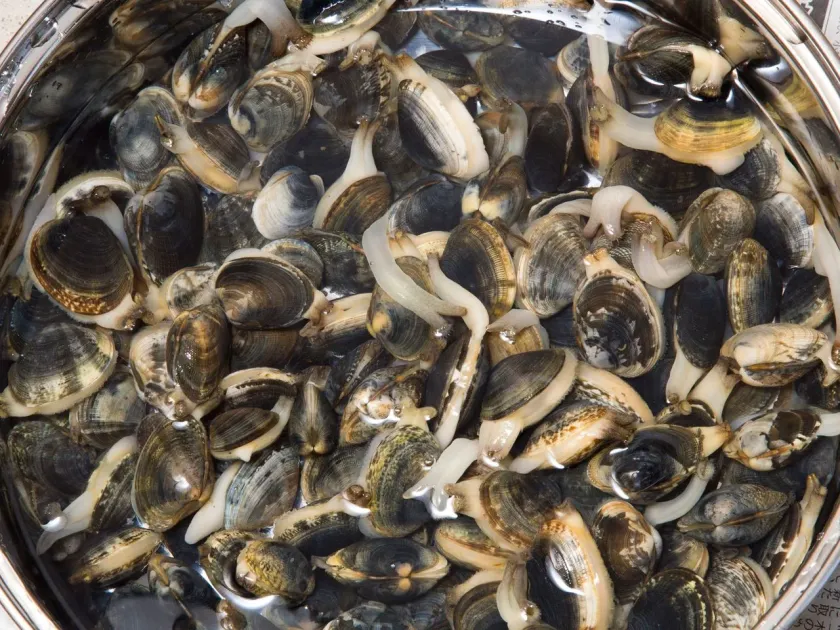
Description
How to identify
The Manila clam, scientifically known as Ruditapes philippinarum, is a bivalve mollusk belonging to the family Veneridae. It features a sturdy shell that is oval to triangular in shape, marked by distinct radiating and concentric ribs.
Adult individuals typically measure between 4 and 6 centimeters in length. The shell's coloration is highly variable, ranging from light gray to brown, often adorned with complex zigzag patterns that serve as effective camouflage within the sandy substrate.
Taxonomically placed in the order Venerida, the species is equipped with a strong muscular foot. This adaptation allows the clam to burrow into the sediment to depths of up to 10 centimeters, protecting it from both predators and tidal fluctuations.
The biology of this species is defined by its extreme environmental tolerance. It is euryhaline and eurythermal, meaning it can thrive in a wide range of salinity and temperature conditions, which facilitates its rapid global spread.
The life cycle begins with a planktonic larval stage. After settling on the bottom, the young clams grow rapidly, filtering large volumes of seawater to feed on microscopic algae and phytoplankton in their environment.
What it damages
While not a traditional agricultural pest, the Manila clam is considered a significant invasive species that poses ecological and economic threats to native biodiversity and established aquaculture systems.
The primary damage is caused by competition for space and food resources, leading to the displacement of native bivalve species. Its ability to dominate the habitat often reduces the local species richness.
In aquaculture, the presence of these clams can severely impact the growth rates of other commercially important species such as oysters and mussels, as they deplete the local plankton population available for feeding.
The species also alters the benthic environment through intensive bio-filtration and excretion. This modification of sediment chemistry can indirectly affect the health of seagrass meadows and other bottom-dwelling organisms.
Furthermore, uncontrolled expansion of populations may lead to shifts in the community structure of microalgae, potentially increasing the risk of harmful algal blooms in coastal areas affected by these invasions.
Control measures
The most effective strategy for control is the implementation of strict biosecurity protocols for the movement of shellfish for aquaculture, preventing the intentional or accidental introduction of the species into new areas.
Targeted harvesting is the primary method for reducing high population densities. By promoting the Manila clam as a commercial product, managers can effectively keep populations at levels that prevent ecological disruption.
Resource management involves using selective harvesting techniques that minimize habitat disturbance. This approach ensures that the ecosystem remains functional while simultaneously suppressing the invasive clam population.
Continuous monitoring programs in estuaries and coastal bays are essential for detecting early signs of colonization. Early response actions are crucial for preventing the long-term establishment of the species in vulnerable areas.
Economic utilization of the harvested resource, including market development for human consumption, provides a sustainable financial incentive for maintaining low population levels and protecting indigenous ecosystems.
Taxonomy
- Latin name
- Ruditapes philippinarum
- Family
- Veneridae
- EPPO code
- RUDIPH
Discussion
No discussions yet — be the first.