
Ruditapes
Ruditapes
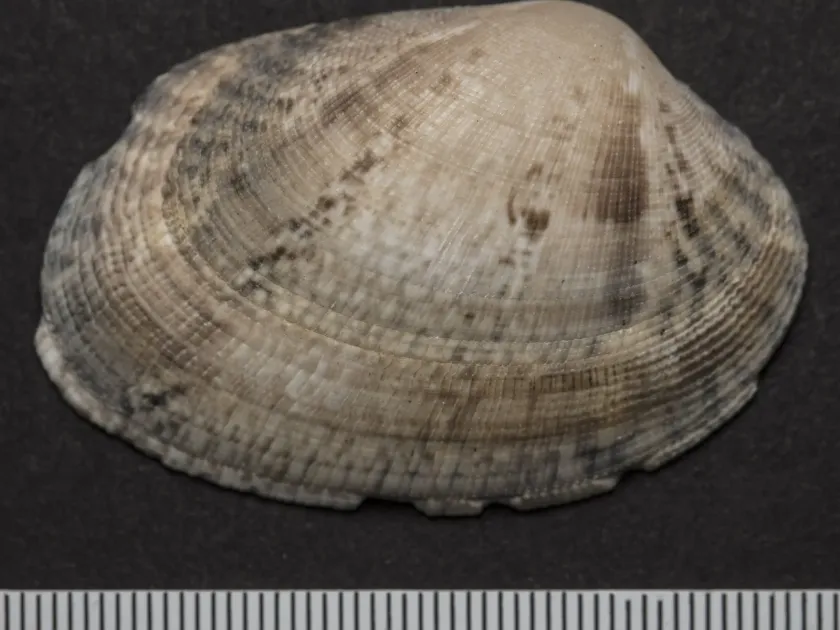
Description
How to identify
Ruditapes is a genus of marine bivalve mollusks belonging to the family Veneridae. While commercially valued in some regions, they can act as pests or invasive competitors in aquaculture systems dedicated to other species.
The shells of Ruditapes are characterized by a sturdy, oval shape with distinct concentric growth lines and a complex exterior pattern, providing excellent protection against environmental stress.
Taxonomically, they are classified under the order Veneroida. They exhibit a high level of environmental adaptability, allowing them to thrive in diverse substrate types ranging from fine sand to muddy silt.
Their life cycle consists of planktonic larval stages that disperse with currents, followed by settling on the seafloor where they undergo metamorphosis and develop into juvenile clams.
Their rapid growth rate and high reproductive output make them highly effective at occupying available ecological niches, often outpacing other species in crowded farming environments.
What it damages
The primary impact of Ruditapes in aquaculture is intense competition for nutrients, specifically phytoplankton, which depletes the food supply for desired commercial shellfish species.
High densities of these clams can physically alter the seabed, creating conditions that are suboptimal for the settlement and growth of other cultivated organisms.
Their presence often leads to reduced harvest yields and overall lower productivity in farming units due to the exhaustion of local nutritional resources.
Furthermore, dense populations can introduce environmental changes, such as the accumulation of waste products, which may negatively affect water quality within the aquaculture site.
There is also a risk of vectoring parasites or pathogens that can compromise the health of the primary crop within the farming facility.
Control measures
Managing Ruditapes populations involves systematic hydrobiological monitoring to detect early colonization stages within aquaculture production areas.
The use of physical exclusion methods, such as fine-mesh netting and barrier systems, is essential to prevent the larvae from settling in areas reserved for commercial stock.
Routine maintenance and cleaning of cages and collectors are necessary to mitigate the buildup of unwanted biomass, ensuring optimal conditions for the primary crop.
Integrated management plans, which include mechanical removal and periodic site audits, are effective in controlling the numbers of unwanted bivalves.
- Regular site monitoring.
- Physical barrier deployment.
- Mechanical maintenance of equipment.
Taxonomy
- Latin name
- Ruditapes
- Family
- Veneridae
- EPPO code
- RUDISP
Discussion
No discussions yet — be the first.