
Root aphid
Rhopalosiphum rufiabdominale
Description
How to identify
The Rhopalosiphum rufiabdominale, commonly known as the rice root aphid or red-tailed aphid, belongs to the Aphididae family. It is a distinct species with specific diagnostic features that aid in its identification.
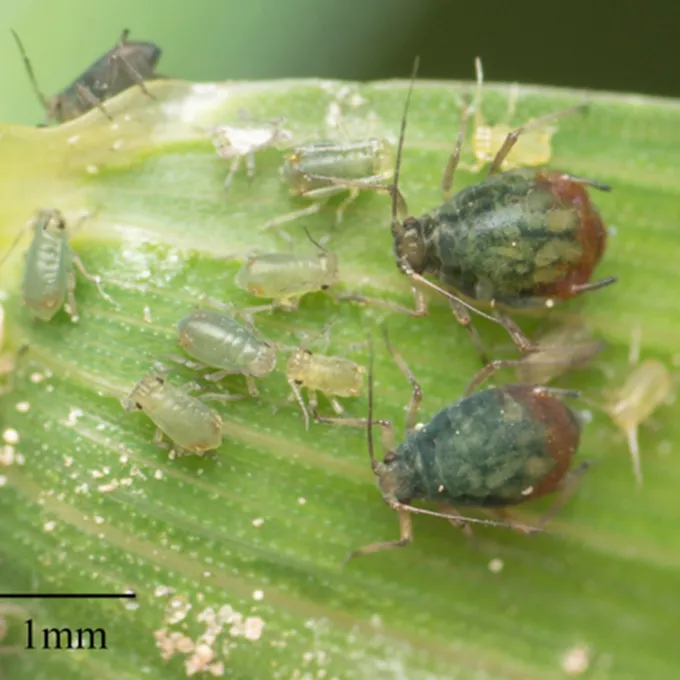
Adult aphids exhibit an oval body shape with colors ranging from olive-green to dark brown. The most recognizable characteristic is a distinct reddish or orange patch around the siphunculi at the rear of the abdomen.
The siphunculi are dark and conical. Both winged and wingless forms exist within a population, with the winged adults being primarily responsible for dispersing the infestation across agricultural fields.
Measuring between 1.5 and 2.5 mm in length, these pests often go unnoticed due to their small size and their preference for feeding at the base of the plant or even on the roots themselves.
Nymphs develop through several instars, closely resembling the adults in appearance but significantly smaller in size. They actively feed on plant sap throughout their developmental stages.
What it damages
This aphid species primarily affects cereal crops such as wheat, barley, oats, and rice. It is also commonly found on various wild grasses which serve as secondary hosts during the off-season.
The primary damage is caused by the aphid feeding on the roots and the base of the stem. This hidden feeding pattern often leads to significant yield losses without immediate visible signs of foliage damage.
Infested plants exhibit stunted growth, yellowing of leaves, and reduced vitality. Because the feeding occurs below the soil line, the impact on plant nutrient uptake is severe and often irreversible.
Beyond direct damage, this species acts as a vector for several plant viruses, most notably the Barley Yellow Dwarf Virus (BYDV), which can devastate cereal yields across large geographic areas.
Weakened plants are less capable of surviving environmental stresses such as drought or frost, leading to stand thinning and overall decline in the quality of the harvested grain.
When it appears
The seasonal activity of this aphid is highly dependent on temperature. In early spring, overwintering populations become active and begin colonizing young cereal seedlings.
Multiple generations are produced during the growing season. Warm and dry weather conditions are particularly favorable for rapid population growth, often leading to outbreaks if natural enemies are absent.
During the autumn, the aphids migrate to newly emerged winter crops. They continue feeding as long as temperatures remain above the threshold for insect activity, sometimes persisting through mild winters.
Peak populations are usually observed during the stem elongation and heading phases of cereals, when the plants provide high levels of nutrients that support large aphid colonies.
The life cycle can involve migration between different host plants, making it a persistent threat in regions where both summer and winter cereals are grown in close proximity.
Signs of infestation
Initial signs of infestation may include chlorosis or yellowing spots on the lower leaves. As the population grows, the entire plant may appear wilted or stunted despite adequate soil moisture.
A major indicator is the presence of honeydew, a sticky substance secreted by the aphids. This provides a medium for sooty mold to grow, which appears as a black coating on the leaves and stems.
Careful inspection of the root zone is crucial for early detection. The presence of aphids on the roots or crown often coincides with a reduction in root volume and plant vigor.
- Yellowing or curling of lower leaves
- Sticky honeydew accumulation on foliage
- Black sooty mold growth on stems
- Stunted plant height and reduced tillering
- Ant activity around the base of the plants
Field scouting should involve digging up a few plants to inspect the root system directly, as visual checks of the leaves alone may not reveal an ongoing root aphid infestation.
Control measures
Integrated pest management (IPM) is essential. Cultural practices include crop rotation, the elimination of weed hosts, and ensuring that no volunteer cereals are left in the field before planting.
Planting resistant or tolerant cereal varieties can significantly reduce the impact of aphid feeding. Proper fertilization and irrigation help plants maintain enough vigor to withstand moderate aphid pressure.
Biological control plays a key role, with natural predators such as lady beetles, lacewings, and parasitic wasps playing a vital role in keeping populations below economic threshold levels.
Chemical control should be implemented only when scouting confirms that the population has exceeded the economic threshold. Systemic insecticides are generally preferred due to their ability to reach aphids feeding on roots.
Regular monitoring of weather patterns and field conditions helps in timing the application of insecticides to maximize their efficiency and prevent the development of insecticide resistance.
Taxonomy
- Latin name
- Rhopalosiphum rufiabdominale
- Order
- Hemiptera (bugs, aphids, leafhoppers)
- Family
- Aphididae
- EPPO code
- RHOPRU
Discussion
No discussions yet — be the first.