
Sumac aphid
Rhopalosiphum rhois
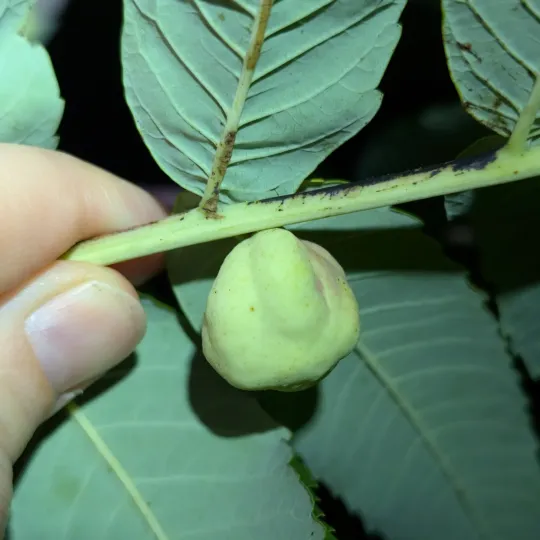
Description
How to identify
The sumac aphid (Rhopalosiphum rhois) is a small insect belonging to the family Aphididae. It is a specialist pest primarily found on species of the genus Rhus (sumac).
Adult aphids are typically pear-shaped, measuring about 1.5 to 2 millimeters in length. Their coloration ranges from pale green to brownish, allowing them to blend in with the young stems and foliage of the host plant.
The life cycle of this species involves complex transitions. Eggs typically overwinter in bark crevices or near buds, providing a stable foundation for the next generation in the spring.
Reproduction is rapid, often involving both asexual and sexual phases. During the growing season, populations can expand quickly, particularly in warm and dry conditions.
These insects are frequently attended by ants, which protect the aphids from predators in exchange for the sugary honeydew they secrete.
What it damages
The sumac aphid causes damage by piercing the plant tissues and extracting sap from young leaves and shoots. This nutrient depletion significantly impacts the overall vigor of the plant.
Affected leaves tend to curl, twist, and show signs of chlorosis due to the loss of cell contents. This distortion impairs the plant's photosynthetic efficiency.
In addition to direct damage, aphids act as vectors for various plant pathogens. The accumulation of honeydew on the leaf surface often leads to the growth of sooty mold, which blocks light and further hinders plant health.
Young shrubs in nurseries or landscape plantings suffer the most, often experiencing stunted growth and a decline in aesthetic value due to the aphid infestation.
Continuous feeding over the summer leads to the weakening of the plant's root system, making the shrubs more susceptible to environmental stress and secondary diseases.
Signs of infestation
The most noticeable sign of a sumac aphid infestation is the curling and distortion of new leaf tips. Inspecting the underside of these leaves usually reveals dense colonies of the pest.
A sticky residue on the foliage, known as honeydew, is a classic indication of aphid presence. This often attracts ants, which can be seen trailing up and down the plant stems.
The presence of white, cast-off aphid skins (exuviae) on the leaves or stems is another visual clue that a population has been established for some time.
Leaf yellowing or early defoliation suggests that the colony has grown quite large and the damage to the vascular system of the leaves is significant.
Monitoring for the presence of winged aphids in the autumn indicates the species' preparation for migration or egg-laying for the next season.
Control measures
Effective management begins with regular scouting. Detecting aphid colonies early in the season allows for localized control before a full-scale outbreak occurs.
Promoting natural biological control agents such as lady beetles, lacewings, and syrphid fly larvae is essential. Minimizing the use of broad-spectrum insecticides helps maintain these beneficial predator populations.
For severe infestations, systemic insecticides can be used to treat the plant. These chemicals are absorbed into the plant's tissues, providing effective control against aphids hidden within curled leaves.
Cultural practices, such as providing adequate water and avoiding excessive nitrogen fertilization (which encourages succulent growth favored by aphids), can help keep the plants resilient.
- Use insecticidal soaps for contact killing of small colonies.
- Manage ant activity to reduce aphid protection.
- Prune and destroy heavily infested terminals.
- Apply horticultural oils during the dormant season to target overwintering eggs.
Taxonomy
- Latin name
- Rhopalosiphum rhois
- Order
- Hemiptera (bugs, aphids, leafhoppers)
- Family
- Aphididae
- EPPO code
- RHOPRH
Discussion
No discussions yet — be the first.