
Bird cherry-oat aphid
Rhopalosiphum padi
Description
How to identify
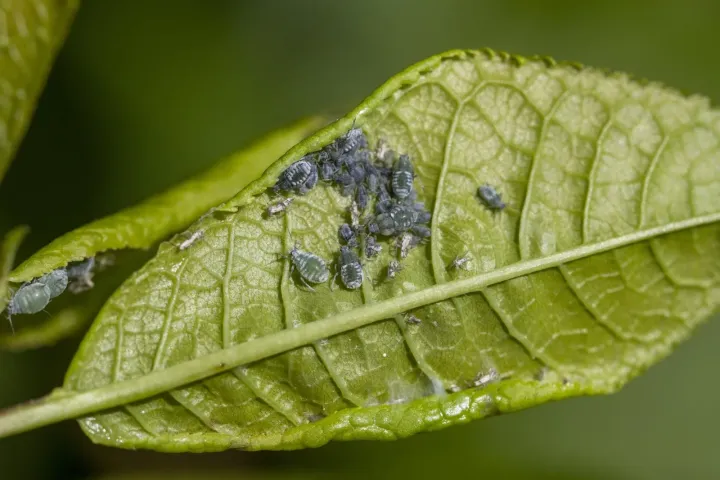
The bird cherry-oat aphid, scientifically known as Rhopalosiphum padi, belongs to the order Hemiptera and the family Aphididae. These are small insects, typically measuring between 1.5 and 2.5 millimeters in length.
The coloration of the adults ranges from olive green to nearly black, often with a distinct dark patch located at the base of the cornicles. Winged individuals possess transparent wings with a clear venation pattern.
The species overwinters in the egg stage on the bark of young bird cherry shoots. During the season, they go through multiple generations, producing both wingless and winged forms that facilitate dispersal.
To identify the species in the field, scouts examine the cornicles and the color of the legs, which are generally lighter than the rest of the body. Observation of colony placement on the underside of leaves is essential.
It is a migratory species, making it a significant threat to cereal crops. Spring populations develop on their primary host before winged individuals migrate to grasses and various cereal crops.
What it damages
The primary crops affected by this pest include wheat, barley, oats, and rye. It also inhabits a wide range of wild grass species, which can serve as alternative hosts throughout the growing season.
Initially, the aphids concentrate on the bird cherry, causing leaf curling and deformation. As the season progresses, colonies migrate to cereal fields, where they feed on stems, leaves, and developing grain heads.
Damage is caused by both direct feeding, which drains plant nutrients, and the injection of toxic saliva. This weakens the plants, leading to chlorosis, stunted growth, and in severe cases, the death of individual tillers.
A critical aspect of the damage is the aphid's role as a vector for Barley Yellow Dwarf Virus (BYDV). This viral infection is often more economically devastating than direct feeding, as it severely impacts yield and grain quality.
In high-pressure years, crop losses can reach 15-30%. The infestation of the grain head specifically interferes with grain filling, significantly reducing the thousand-kernel weight and overall market value.
When it appears
The annual cycle begins in early spring with the hatching of nymphs from overwintered eggs on bird cherry trees. Moderate temperatures and adequate humidity are optimal for rapid colony expansion.
Migration to cereal fields typically occurs in late spring or early summer, coinciding with the active vegetative growth phase of the crops. This provides the pest with an abundant food source.
During the summer months, the aphids reproduce parthenogenetically on cereal crops, allowing them to produce several generations in a short period and quickly colonize large field areas.
As autumn approaches, signaled by cooler temperatures and shorter days, sexual morphs are produced. These migrate back to the bird cherry host to mate and lay eggs for the winter.
Scouting programs should be implemented consistently from the tillering stage through to the milk development phase of the grain. Monitoring is crucial during periods of stable, warm weather.
Signs of infestation
The first indicator of the pest's presence is the curling and distortion of bird cherry leaves in the spring. Leaves may turn yellow and drop prematurely due to the stress exerted by aphid colonies.
On cereals, signs include the visible accumulation of small insects on the underside of leaves and within leaf sheaths. Affected plants often exhibit a yellowish tint and a lack of vigor.
Aphid activity is frequently accompanied by the excretion of honeydew, a sticky substance. This substance promotes the growth of sooty mold, which can cover the foliage and impede photosynthesis.
Symptoms of viral infection transmitted by the aphid manifest as characteristic patches, streaks, or general yellowing of the leaves. High levels of aphid infestation coupled with these symptoms indicate a high risk of infection.
Progressive wilting of lower leaves and an overall suppressed appearance of the stand are clear warning signs that prompt a detailed assessment of the crop for aphid density.
Control measures
Preventive measures include the removal of bird cherry hedges or thickets near agricultural fields, which eliminates the primary overwintering and early-season reservoir for the population.
Adjusting planting dates can help the crop avoid the peak migration window of winged aphids. Early planting or choosing varieties with higher tolerance levels can reduce the impact of potential infestations.
Chemical control is required when the economic threshold for the pest is exceeded. Systemic insecticides are typically the most effective choice when applied during the period of active field colonization.
Biological control methods rely on conserving beneficial predators such as lady beetles, lacewings, and parasitic wasps. Judicious use of pesticides helps maintain these natural enemies in the ecosystem.
The use of yellow sticky traps is a valuable tool for monitoring the migration timeline. Accurate data allows for better decision-making, ensuring that interventions occur at the most effective time.
Taxonomy
- Latin name
- Rhopalosiphum padi
- Order
- Hemiptera (bugs, aphids, leafhoppers)
- Family
- Aphididae
- EPPO code
- RHOPPA
Discussion
No discussions yet — be the first.