
Banana aphid
Rhopalosiphum musae
Description
How to identify
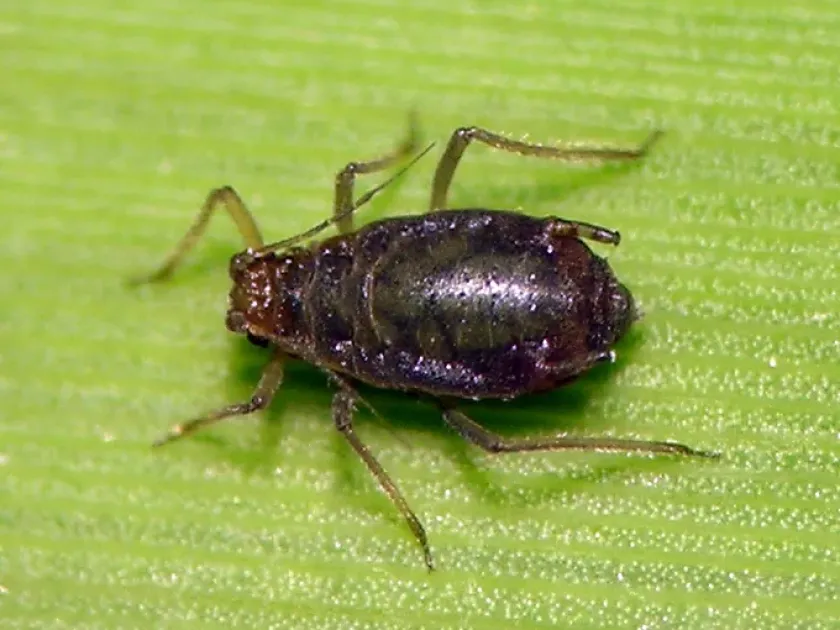
The banana aphid (Rhopalosiphum musae) belongs to the order Hemiptera and the family Aphididae. It is a small insect that exists in both winged and wingless forms, facilitating easy spread within a plantation.
The insects are typically dark brown or black, providing excellent camouflage against the foliage and stems of banana plants, which makes early detection challenging for field workers.
They possess characteristic siphunculi (cornicles) on their abdomen, which are used to excrete defensive substances when the colony is disturbed or threatened by predators.
Their life cycle is primarily parthenogenetic, meaning females can produce offspring without mating, leading to an extremely rapid increase in population density under favorable conditions.
Detailed examination often reveals dense colonies nestled deep within the leaf sheaths or near the central axis of the banana plant where the tissues are most tender.
What it damages
The primary hosts of this aphid are banana plants and related species within the Musaceae family, where they cause significant economic impact in tropical regions.
Damage is primarily caused by the extraction of sap from the phloem, which stunts plant growth, reduces leaf vigor, and negatively affects overall fruit development.
Crucially, the banana aphid acts as a primary vector for severe viral diseases, such as the Banana Bunchy Top Virus (BBTV), which can be devastating to commercial plantations.
The accumulation of honeydew secreted by the aphids provides a substrate for the growth of sooty mold, which further interferes with the plant's photosynthesis and lowers market quality.
Severe infestations can lead to the wilting and premature yellowing of leaves, significantly reducing the lifespan and productivity of the banana mat.
When it appears
In tropical and subtropical climates, the banana aphid remains active throughout the year, as there are no harsh winters to interrupt their reproductive cycles.
Population spikes are frequently correlated with periods of active plant growth and the onset of rainy seasons, which provide optimal environmental conditions for rapid development.
Temperatures ranging between 22°C and 28°C are considered optimal for the metabolism and reproduction of the aphid, aligning perfectly with the growing season of the host plant.
While environmental fluctuations can influence population dynamics, the aphids often seek refuge in the protected environment of the leaf base, buffering them from minor weather changes.
Continuous monitoring is essential because, in the absence of natural control agents, the population can remain at high levels indefinitely within a stable climate.
Signs of infestation
One of the earliest signs of an infestation is the presence of sticky honeydew deposits on the upper surface of leaves, often accompanied by the development of black sooty mold.
Visible clusters of small, dark insects at the base of the petioles or within the unfurled central leaf are definitive indicators of a banana aphid colony.
Distorted, curled, or stunted leaf growth is a common physiological response observed in plants that have been heavily infested by aphid colonies for an extended period.
The presence of attendant ants, which visit the aphids to feed on their honeydew, is a strong field sign that should prompt a closer inspection of the plant.
Yellowing of the foliage, particularly on younger leaves, often suggests that the plant's vascular system has been compromised by the feeding activities of the insects.
Control measures
Effective management requires an Integrated Pest Management (IPM) approach that emphasizes prevention, monitoring, and the use of targeted control methods.
Biological control agents, including lady beetles (Coccinellidae) and lacewings, are highly effective at suppressing aphid populations and should be preserved in the field.
Good agricultural practices, such as controlling weeds that may host aphid populations during the off-season, are fundamental to reducing the risk of re-infestation.
Chemical control involving systemic insecticides should be utilized judiciously and only when the pest threshold is exceeded to protect beneficial insect populations.
- Regular field scouting to identify and treat early localized infestation spots.
- Application of horticultural oils or soaps to provide physical control without persistent chemical residues.
- Quarantine measures and the use of clean planting material to prevent the introduction of aphids into new areas.
Taxonomy
- Latin name
- Rhopalosiphum musae
- Order
- Hemiptera (bugs, aphids, leafhoppers)
- Family
- Aphididae
- EPPO code
- RHOPMU
Discussion
No discussions yet — be the first.