
Honeydew aphid
Rhopalosiphum melliferum
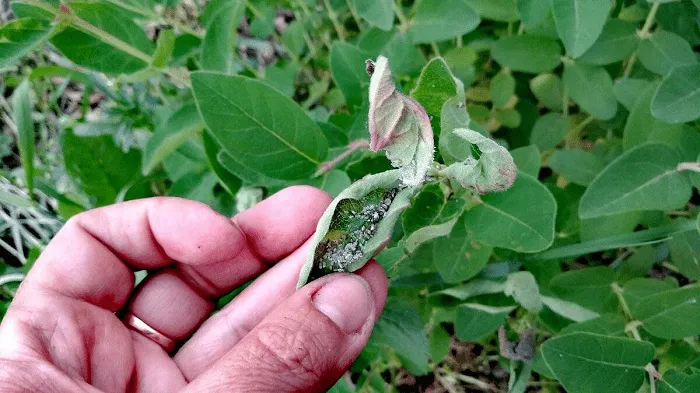
Description
How to identify
The honeydew aphid (Rhopalosiphum melliferum) is a small insect belonging to the family Aphididae, order Hemiptera. It is named for the significant amount of sweet, sticky excrement, known as honeydew, produced by the insects during feeding.
These insects possess soft, oval-shaped bodies ranging in color from pale green to yellowish-brown, which provides camouflage on the host plants' foliage.
Equipped with specialized piercing-sucking mouthparts, they feed primarily on the phloem sap of tender plant tissues, which they extract by piercing the plant epidermis.
The life cycle of this species is highly efficient, often involving parthenogenetic reproduction that allows populations to expand rapidly during favorable conditions.
Environmental factors such as temperature and humidity significantly influence their development rate, with warmer weather facilitating faster maturation and colonization.
What it damages
Honeydew aphids target a variety of woody plants and shrubs, as well as some herbaceous crops, causing direct physiological stress to the hosts.
Feeding results in stunted growth, leaf curling, and the deformation of new shoots, which are particularly susceptible to damage due to their high nutrient content.
The extraction of vital plant fluids weakens the overall immune system of the plant, making it more susceptible to environmental stress and opportunistic pathogens.
The accumulation of honeydew on the leaves blocks stomata, which interferes with gas exchange and reduces the efficiency of photosynthesis.
In addition to direct mechanical damage, heavy infestations can lead to a significant decline in plant vigor and a reduction in the overall yield quality.
Signs of infestation
Common symptoms of an aphid infestation include the curling and yellowing of young leaves, which often hide the developing colonies underneath.
The presence of a sticky, shiny substance on the leaf surfaces is a clear indicator of honeydew production and active aphid feeding.
Sooty mold frequently develops on the honeydew deposits, appearing as a dark, black coating that hinders the plant's ability to process sunlight.
A surge in ant activity on stems and branches is often a strong signal, as ants tend to farm aphids to collect the nutrient-rich honeydew.
Physical inspection of tender shoots often reveals dense clusters of aphids, which can quickly spread across the entire canopy if left unmanaged.
Control measures
Effective management of the honeydew aphid requires an integrated approach that prioritizes long-term prevention and sustainable intervention.
Biological control, such as encouraging natural predators like ladybugs, lacewings, and parasitic wasps, is highly recommended for organic garden management.
Chemical intervention should be reserved for periods of high infestation, using systemic insecticides that ensure comprehensive protection throughout the plant tissues.
Cultural practices, including the regular removal of weeds and unwanted basal shoots, help eliminate the primary breeding sites for the aphids.
- Frequent monitoring of plant health throughout the growing season.
- Application of horticultural oils or insecticidal soaps as early intervention measures.
- Ensuring proper plant nutrition to boost inherent resistance against pests.
Taxonomy
- Latin name
- Rhopalosiphum melliferum
- Order
- Hemiptera (bugs, aphids, leafhoppers)
- Family
- Aphididae
- EPPO code
- RHOPME
Discussion
No discussions yet — be the first.