
Cherry aphid
Rhopalosiphum cerasifoliae
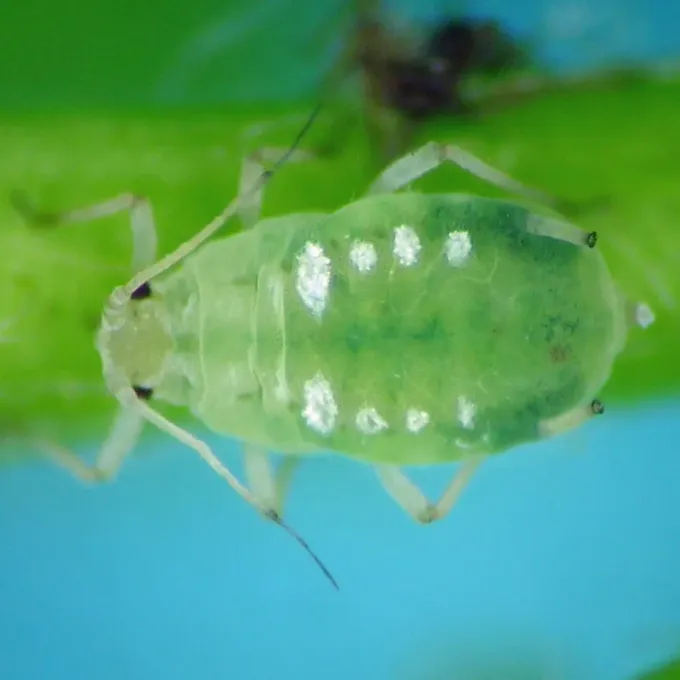
Description
How to identify
The cherry aphid (Rhopalosiphum cerasifoliae) belongs to the family Aphididae. It is a small sap-sucking insect that specializes in feeding on cherry trees and their relatives.
The body of the aphid varies in color, typically ranging from yellowish-green to brownish. They are distinguished by their characteristic club-shaped siphunculi located on the abdomen.
This species exhibits a complex lifecycle, alternating between asexual reproduction during the spring and summer and sexual reproduction in the autumn.
The overwintering stage is the egg, which is deposited in bark crevices and around buds. These eggs are highly resistant to cold temperatures, ensuring the population's survival.
Being a specialist feeder, it typically stays on the host plant throughout its development, which makes monitoring this specific tree species very effective.
What it damages
The primary host for this pest is the bird cherry (Prunus padus) and its ornamental varieties. They feed on the succulent tissues of young leaves and shoots.
Heavy infestations can cause severe stress to the tree. By removing plant juices, the aphids interfere with the normal nutrient flow of the developing branches.
As a result, leaves become curled, twisted, and distorted. This damage not only affects the aesthetic appeal but also impairs the plant's ability to photosynthesize.
The weakened tree becomes susceptible to secondary infections, such as viral diseases transmitted by the aphids during the feeding process.
In young nursery stock, severe aphid damage can lead to stunted growth and permanent deformation of the tree crown, reducing the overall economic value.
When it appears
The development cycle begins in early spring when the first nymphs emerge from overwintering eggs. This aligns perfectly with the bud-break of the cherry tree.
During the late spring and early summer, the population grows exponentially due to asexual reproduction. Multiple generations are produced in a single season.
As summer progresses and the leaf tissue hardens, winged individuals are produced. These aphids migrate to other parts of the canopy or nearby suitable hosts.
In autumn, as day length decreases and temperatures drop, sexual individuals are produced. Mating occurs, and eggs are laid for the winter period.
The entire life cycle is completed within the seasonal window of the tree's growth, making the aphid a persistent visitor throughout the summer months.
Signs of infestation
The most obvious symptom of an infestation is the curling of leaves. Leaves curl inward, creating a sheltered environment for the aphid colonies to thrive.
Examining the underside of these curled leaves will reveal clusters of aphids. They are often found in high density, feeding on the tender plant tissues.
Honeydew, a sticky, sugar-rich substance, is excreted by the aphids. It covers the foliage and can lead to the growth of sooty mold, appearing as black patches.
Increased ant activity on the tree trunk and branches is a strong indicator of aphid presence, as ants feed on the honeydew and protect the aphid colonies.
Yellowing or chlorosis of the affected leaves can also be observed as a result of chronic feeding, indicating a significant loss of nutrients by the tree.
Control measures
Integrated pest management begins with proper cultural practices. Keeping trees healthy and avoiding excessive nitrogen fertilization reduces their attractiveness to aphids.
During the dormant season, applying horticultural oils can effectively suffocate the overwintering eggs before they hatch in the spring.
When monitoring reveals an increasing population, targeted systemic insecticides can be used. These chemicals are absorbed by the tree and provide long-lasting control.
Encouraging natural predators, such as ladybugs and lacewings, is an excellent way to maintain low aphid populations without chemical intervention.
- Apply dormant oil sprays in early spring.
- Prune and destroy heavily infested branches.
- Use organic insecticidal soaps for immediate contact control.
- Introduce or protect native predatory insects.
Taxonomy
- Latin name
- Rhopalosiphum cerasifoliae
- Order
- Hemiptera (bugs, aphids, leafhoppers)
- Family
- Aphididae
- EPPO code
- RHOPCE
Discussion
No discussions yet — be the first.