
Honeysuckle aphid
Rhopalomyzus lonicerae
Description
How to identify
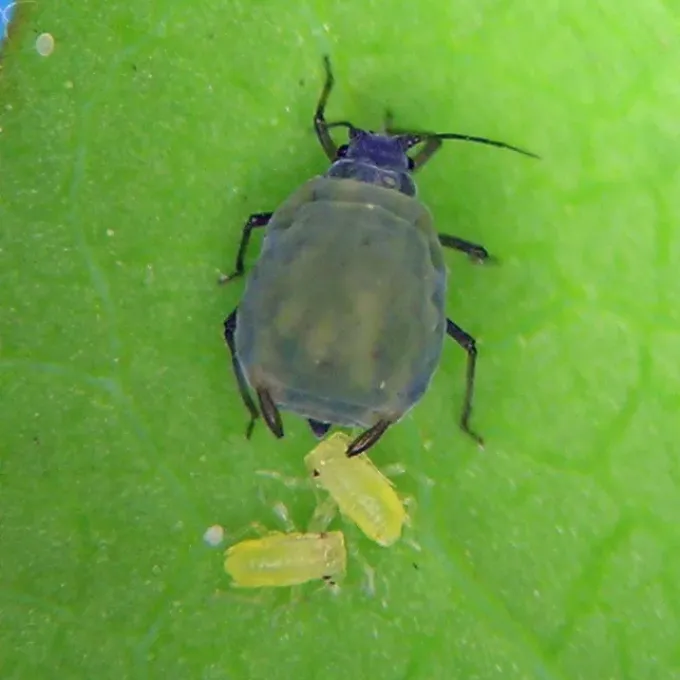
The honeysuckle aphid, scientifically known as Rhopalomyzus lonicerae, is a small insect belonging to the family Aphididae. It is a specialized pest that targets various species of the Lonicera genus.
Adult aphids measure between 1.5 and 2.5 mm in length. Their bodies are soft and vary in color from pale green to yellowish-green, providing excellent camouflage against young foliage.
The species exhibits a complex lifecycle, including both winged and wingless morphs. Winged forms are primarily responsible for spreading the infestation to new plants.
They are characterized by high reproductive rates through parthenogenesis, allowing populations to explode within weeks during the favorable spring months.
As a member of the Rhopalomyzus genus, this aphid is anatomically adapted to feeding on the nutrient-rich phloem of honeysuckle stems and leaves.
What it damages
The primary damage is caused by the aphids inserting their stylets into the leaf tissue to extract plant sap. This process severely depletes the host plant.
Infected leaves become distorted, curled, and chlorotic, which significantly reduces the plant's photosynthetic capacity and weakens its overall physiological state.
The accumulation of honeydew, an aphid byproduct, often promotes the growth of sooty mold. This fungus further blocks light and air access to the leaf surface.
Yield loss is common in edible honeysuckle varieties. Fruits may become undersized, misshapen, and suffer from poor sugar development due to the stress placed on the plant.
Severe infestations can lead to premature leaf drop and stunted growth of shoots, making the plant more vulnerable to harsh winter conditions and pests in the subsequent year.
When it appears
The lifecycle begins in early spring when overwintered eggs hatch as the buds of the honeysuckle plant begin to swell and burst.
The period from May through June is typically the time of peak aphid activity, with populations reaching their maximum density as temperatures climb.
After a series of summer generations, some winged individuals may migrate, while in autumn, sexual forms return to the honeysuckle to lay dormant eggs.
These eggs are tucked into bark crevices and near bud scales, remaining protected throughout the winter season until the following spring arrival.
Weather conditions significantly impact population size; mild, humid springs are particularly favorable for rapid development of multiple generations of R. lonicerae.
Signs of infestation
Curled and twisted leaves at the tips of new shoots are the most characteristic sign of an infestation by this aphid species.
Visible colonies of aphids can be found on the undersides of leaves, often appearing as dense clusters of tiny, green insects.
Sticky, shiny foliage caused by honeydew secretions is a telltale sign. This substance often attracts ants, which act as defenders of the aphid colonies.
Stunted shoot tips that stop elongating are a symptom of severe sap depletion. If the plant stops growing during the vegetative phase, aphid pressure is likely high.
A darkening of the foliage, caused by the buildup of black sooty mold fungus on the sugary honeydew, indicates a mature and persistent aphid infestation.
Control measures
Effective management involves an integrated strategy that balances preventative horticulture with necessary chemical interventions.
- Regular pruning to improve air circulation and light penetration within the shrub.
- Removing unwanted root suckers and weeds that can harbor early-season aphid populations.
- Encouraging natural predators such as ladybugs, lacewings, and hoverflies by minimizing broad-spectrum pesticide use.
- Applying systemic insecticides early in the spring, specifically before the flowering stage.
- Utilizing organic soaps or horticultural oils for targeted contact control during the growing season.
Timely application of systemic treatments before flowering is the most effective way to eliminate the pest without affecting pollinators.
If aphids are discovered during the fruiting phase, avoid heavy chemicals and rely on manual cleaning or gentle botanical soaps to ensure fruit safety.
Taxonomy
- Latin name
- Rhopalomyzus lonicerae
- Order
- Hemiptera (bugs, aphids, leafhoppers)
- Family
- Aphididae
- EPPO code
- RHOMLO
Discussion
No discussions yet — be the first.