
Gooseberry gall midge
Rhopalomyia grossulariae
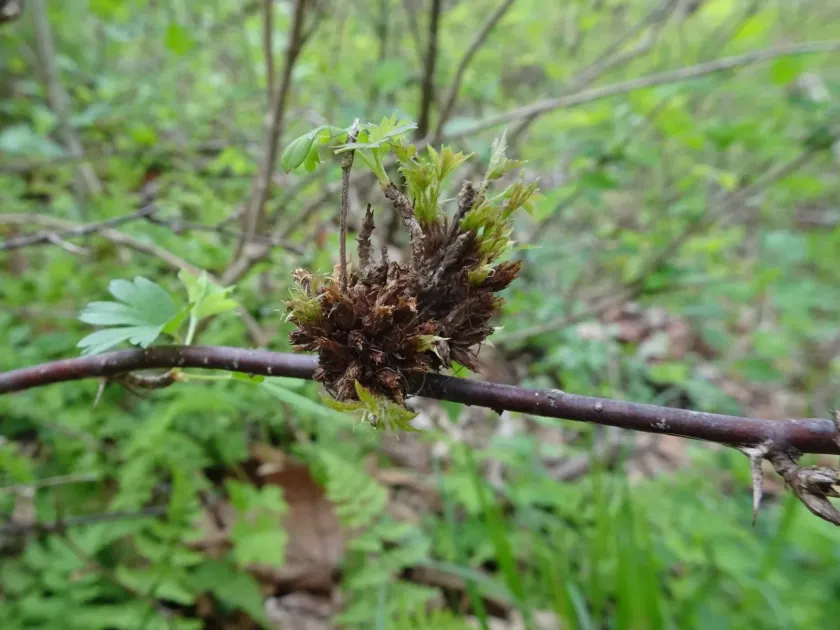
Description
How to identify
The gooseberry gall midge (lat. Rhopalomyia grossulariae) is a tiny insect belonging to the order Diptera and the family Cecidomyiidae. Adult midges are very small, resembling tiny gnats, making them difficult to spot with the naked eye.
The primary damage is caused by the larval stage. These larvae are white or yellowish, legless, and sedentary, living deep within the plant tissues where they are protected from environmental stresses and predators.
The life cycle of this pest is synchronized with the growth phases of its host plants. Females lay eggs in the tissues of developing buds or young shoots, triggering the formation of characteristic swellings known as galls.
As a specialist pest, this species has evolved to rely exclusively on the nutrient-rich sap of Ribes species, specifically gooseberries and various types of currants, establishing itself as a consistent threat to these crops.
For professional identification, entomologists analyze the shape of the galls and the morphology of the larvae under a microscope, as different gall midge species can produce similar-looking growths on plant tissues.
What it damages
Gooseberry gall midges primarily attack members of the Grossulariaceae family, including the common gooseberry, black currants, red currants, and white currants.
The pest causes significant structural damage by inducing pathological growth in plant tissues. The resulting galls disrupt the flow of water and nutrients, leading to physiological stress within the plant.
Affected buds often dry out or fail to bloom properly, producing stunted or deformed shoots. This chronic stress drains the plant's energy, resulting in reduced yields over consecutive seasons.
In cases of heavy infestation, the curling and distortion of young shoots are severe. Such weakened plants become highly susceptible to secondary fungal infections and are less resilient to winter frost.
The economic impact is particularly high in nurseries, where the aesthetic and growth damage caused by gall midges renders young bushes unsuitable for sale or healthy transplantation.
When it appears
Adult activity begins in the spring, timed with the start of the plant's vegetation period. The emergence of adults typically coincides with the bud break stage of gooseberry bushes.
The flight period of the adults lasts several weeks. During this time, females actively seek out tender young shoots to deposit their eggs, ensuring the next generation has immediate access to food.
Larval development occurs inside the galls throughout the first half of the summer. During this time, the larvae feed continuously, causing the characteristic swellings to expand and become clearly visible.
Pupation may occur either within the gall itself or in the soil beneath the bush, depending on the generation and environmental conditions. Multiple generations can occur within a single growing season.
The pest overwinters in a state of diapause, either as larvae inside the hardened galls on the stems or within the surface layer of the soil among leaf litter and plant debris.
Signs of infestation
The most obvious sign of an infestation is the presence of galls—abnormal swellings on leaves or young shoots. These structures can vary in shape and often change color to reddish or brownish hues.
When inspecting your bushes, look for shoots that appear stunted, curled, or prematurely wilted. Carefully slicing open a gall will usually reveal one or more white larvae feeding inside.
Infested bushes often show overall signs of weakness. They may grow more slowly than neighboring healthy plants, and terminal buds may fail to develop, forcing the plant to branch out in an unnatural pattern.
Early-stage infestations are challenging to detect. Agricultural experts recommend conducting frequent checks on dormant and emerging buds throughout the early spring to catch the pest before damage spreads.
- Characteristic swellings (galls) on stems and leaves
- Distorted, curled, or stunted terminal shoots
- Premature drying of buds in the spring
- General lack of vigor and slow development of the bush
Control measures
The most effective cultural control is the manual removal and destruction of infested shoots. Pruning and burning galls before the adult midges emerge is crucial to limiting the population size.
Sanitation is vital; clearing fallen leaves and debris from the base of the bushes in late autumn helps remove overwintering sites, significantly reducing the pest pressure for the following year.
Biological control, including the use of entomopathogenic nematodes or encouraging natural predators, can be a sustainable option for integrated pest management in berry orchards.
Chemical control involving systemic insecticides is an option for severe infestations. Treatments should be timed with the spring flight of adults to prevent egg-laying and the subsequent formation of new galls.
Prevention focuses on choosing resistant cultivars and maintaining optimal plant health. A well-nourished, properly pruned bush is more resilient and less attractive to gall midge colonization.
Taxonomy
- Latin name
- Rhopalomyia grossulariae
- Order
- Diptera (flies)
- Family
- Cecidomyiidae
- EPPO code
- RHOYGR
Discussion
No discussions yet — be the first.