
California sagebrush gall midge
Rhopalomyia californica
Description
How to identify
The California sagebrush gall midge is a small insect belonging to the order Diptera and the family Cecidomyiidae. Adult midges are characterized by their delicate, fragile bodies and short adult lifespans.
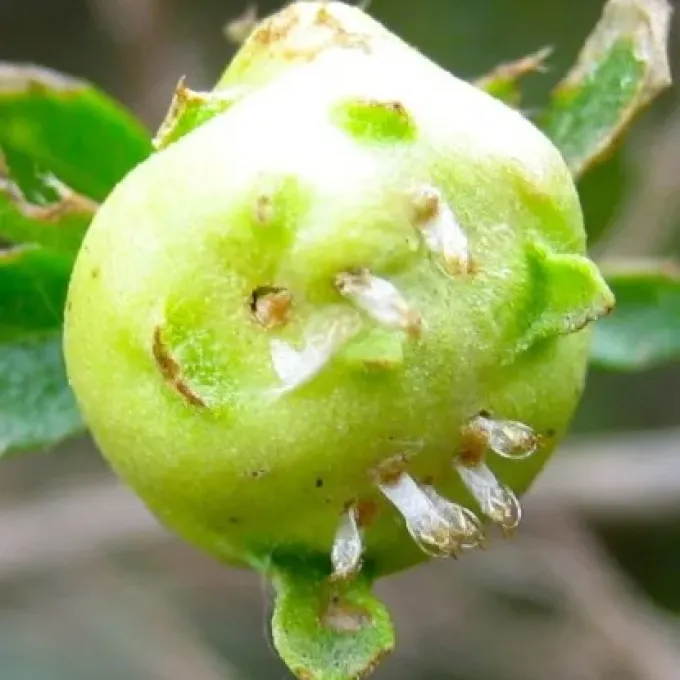
Identification is primarily based on the presence of distinct plant growths known as galls. These structures are specifically formed due to the physiological impact of midge larvae on the host plant tissues.
Adult midges are rarely observed in the field due to their extremely small size and their nocturnal or secretive behavior during the adult stage.
The larvae, which are responsible for the damage, possess an elongated and soft body, usually appearing white or pale yellow. They live entirely contained within the protective environment of the gall.
Professional diagnosis often involves cutting open the galls to inspect the larval stage inside, which helps distinguish this species from other gall-forming organisms on the same host.
What it damages
The primary host for this pest is the California sagebrush (Artemisia californica). The midge has evolved to be highly host-specific, interacting uniquely with the plant's growth hormones.
Damage manifests as the depletion of plant energy due to the development of numerous galls. Larvae consume plant fluids, which disrupts nutrient transport and general shoot development.
Heavily infested plants lose their aesthetic and structural integrity. Deformed growth patterns and stunted branches are common symptoms associated with long-term infestation.
The presence of galls creates potential entry points for secondary infections, such as fungal pathogens, further weakening the plant's overall health and physiological resilience.
While this midge typically does not destroy commercial crops, it is a significant concern for native plant nurseries and restoration projects where specific Artemisia health is critical.
When it appears
The lifecycle of the midge is tightly synchronized with the growth phases of the sagebrush. Adult activity usually commences during the spring when new, succulent growth begins to appear.
Females deposit eggs on the buds or young stems. Upon hatching, the larvae immediately initiate the development of the gall by stimulating abnormal cell growth in the host tissue.
The number of generations per year is largely determined by local climatic conditions, with multiple generations possible in the warm Mediterranean climates of California.
Overwintering occurs primarily in the larval stage, residing inside the galls or within the debris layer at the base of the plant during the dormant period.
As temperatures rise in the spring, the overwintered larvae undergo pupation, leading to the emergence of adults to restart the reproductive cycle on fresh host tissue.
Signs of infestation
The most prominent sign of infestation is the presence of abnormal, wart-like growths on stems, leaves, or axils of the sagebrush. These galls can vary in size and shape.
The surface texture of these galls often differs significantly from the surrounding plant tissue, sometimes appearing hairy or showing irregular discoloration.
Opening a gall will reveal a central chamber containing one or more larvae, providing definitive proof of the midge's presence and activity within the plant.
Yellowing or premature senescence of leaves near the gall sites is a common indicator that the transport of water and minerals has been significantly hampered.
- Noticeable swellings or bumps on branches.
- Stunted shoot growth or reduced overall plant vigor.
- Presence of exit holes in older galls where adults emerged.
- Increased susceptibility to secondary pathogens.
Control measures
The most effective management practice is physical removal. Pruning and disposing of infested plant parts before the midges emerge can significantly reduce the local population.
Proper sanitation is essential; all pruned material should be destroyed by burning or deep burial to prevent the pest from completing its development in the pile.
Chemical control is rarely recommended because the larvae are protected inside the galls, making contact insecticides ineffective unless timed perfectly with adult emergence.
Encouraging natural predators, such as parasitic wasps that target gall midge larvae, provides a sustainable biological approach to managing the infestation.
Ensuring that the plants are well-watered and not under drought stress helps them maintain enough vigor to withstand moderate midge pressure without suffering excessive damage.
Taxonomy
- Latin name
- Rhopalomyia californica
- Order
- Diptera (flies)
- Family
- Cecidomyiidae
- EPPO code
- RHOYCA
Discussion
No discussions yet — be the first.