
Rhopaea magnicornis
Rhopaea magnicornis
Description
How to identify
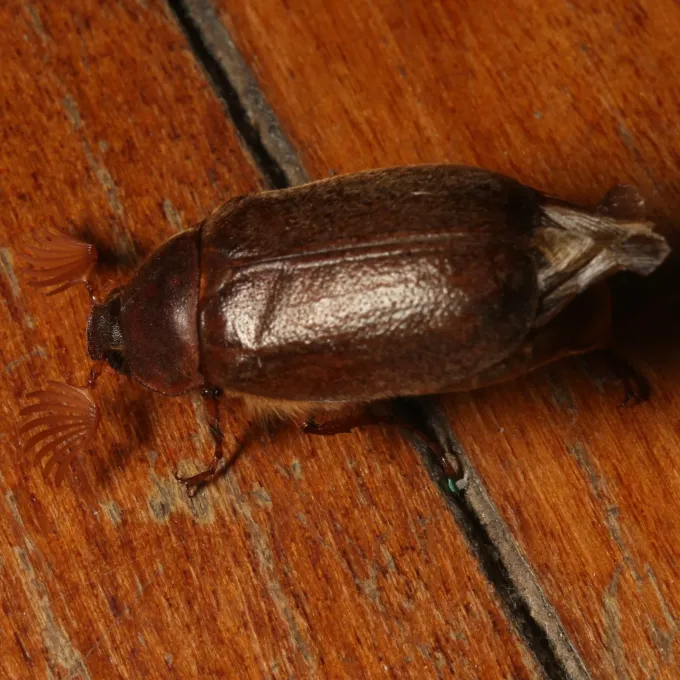
Rhopaea magnicornis is a species of scarab beetle belonging to the family Scarabaeidae. These beetles are primarily known for their destructive larval stage that inhabits the soil and feeds on the root systems of various plants.
Adult beetles are robust insects, typically brown or reddish-brown in color. They feature distinctively large antennae, or clubs, which is a diagnostic morphological characteristic of this specific species.
The larvae are typical of the scarab family: white, fleshy, and C-shaped. They possess well-developed mandibles specialized for cutting through plant roots and organic matter buried in the soil profile.
The lifecycle includes a complete metamorphosis, comprising the egg, larval, pupal, and adult stages. The larval stage is the most prolonged phase and occurs entirely underground.
Adult beetles exhibit nocturnal behavior and are strongly attracted to artificial lights, a trait that serves as a useful indicator for monitoring population density during the swarming season.
What it damages
The primary damage is caused by the larvae, which reside in the root zone and feed extensively on the root systems of crops. This feeding disrupts nutrient and water uptake, leading to plant decline.
Commonly affected crops include pastures, grasses, and certain vegetables planted in open fields. High larval populations can destroy entire swaths of crops within a short timeframe.
Besides direct mechanical damage, the feeding activities create entry points for soil-borne pathogens, including bacteria and fungi, which exacerbate root rot and eventual plant death.
Symptoms are often delayed until the plant shows signs of moisture stress. Because the damage is subterranean, growers may not realize the extent of the infestation until the plants start to wilt.
Economic damage is particularly significant in intensive agricultural systems where the loss of plant density directly translates into reduced yields and the need for costly reseeding operations.
When it appears
The emergence of adult beetles typically occurs in late spring or early summer, following significant rain events or when soil temperatures reach a specific threshold favorable for development.
Larvae remain active throughout the summer months, feeding aggressively as crops grow. Their activity level is tightly linked to the soil moisture levels and the availability of healthy roots.
As the weather cools in autumn, larvae move deeper into the soil profile to avoid freezing temperatures, where they remain in a state of diapause during the winter months.
The developmental cycle can span over several seasons, meaning that overlapping generations of larvae may be present in the soil simultaneously, increasing the overall risk to seasonal crops.
Predictive monitoring is essential for agricultural management. Sampling the soil before planting provides a baseline for determining whether control measures are necessary for the upcoming crop cycle.
Signs of infestation
The earliest signs of infestation include patches of yellowing or wilting plants that fail to recover after irrigation. This indicates that the primary water intake system—the roots—is compromised.
When inspecting the soil around affected plants, growers will find C-shaped white larvae. The roots themselves often appear severed or missing, lacking the fine root hairs required for proper nutrition.
Patches of dead turf or dying plants in field rows are classic signs of a high-density larval population, suggesting that the larvae have consumed the root network in that specific area.
Disturbed soil structure, characterized by tunnels or loose patches, can also occur when larval density is high, leading to uneven moisture retention in the soil.
- Sudden yellowing or wilting of plant clusters.
- Presence of large, white C-shaped larvae in the topsoil.
- Severed or completely destroyed root systems.
- Mass swarming of adult beetles around lights at night.
Control measures
Cultural control is the first line of defense; deep plowing can expose larvae to the surface, where they become prey for birds or perish from desiccation and UV exposure.
Chemical control involves the application of soil insecticides during planting. This creates a protective zone around the seeds and roots, preventing larvae from feeding on the crop during its vulnerable stages.
Biological controls, including the use of entomopathogenic nematodes or fungi like Metarhizium, are increasingly popular for environmentally friendly management of subterranean scarab larvae.
Crop rotation helps interrupt the pest's life cycle by replacing susceptible hosts with plants that the larvae do not thrive on, effectively reducing the population in the long term.
Light traps are useful for monitoring the presence of adult beetles, helping farmers time their interventions correctly to suppress the next generation before the eggs are laid.
Taxonomy
- Latin name
- Rhopaea magnicornis
- Order
- Coleoptera (beetles)
- Family
- Scarabaeidae
- EPPO code
- RHOAMA
Discussion
No discussions yet — be the first.