
Raspberry cane midge
Resseliella theobaldi
Description
How to identify
The raspberry cane midge (Resseliella theobaldi) is a small insect belonging to the Cecidomyiidae family, order Diptera. The adult is a tiny, delicate fly about 2–3 mm long, with a light-brown body, which is rarely noticed due to its size and cryptic behavior.
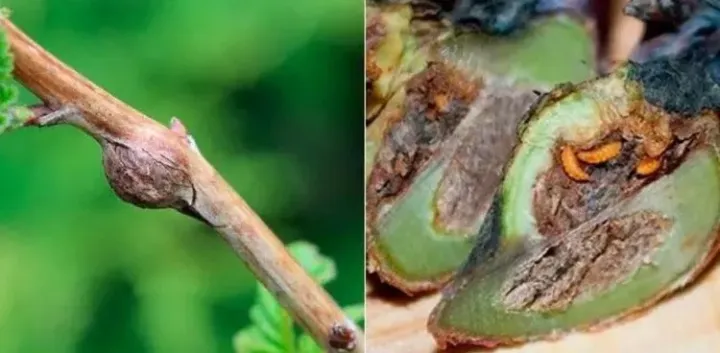
The immature stages are the primary cause of damage. The larvae are legless, spindle-shaped, and evolve from white to a characteristic bright orange or reddish color. They typically reach 3–4 mm in length and reside beneath the outer layer (epidermis) of the raspberry stems.
This pest completes several generations per year. The female midge lays eggs in the cracks of young canes. Once hatched, the larvae congregate beneath the bark to feed, which is facilitated by the plant's natural growth or physical damage to the cane surface.
Overwintering occurs as larvae in cocoons, either in the soil beneath the raspberry bushes or within the bark of infested canes. As temperatures rise in spring, they pupate and emerge as adults to begin the new reproductive cycle.
The timing of adult emergence is often extended, making it difficult to target them with a single spray application. Proper monitoring is essential to predict peak activity based on local weather data and temperature accumulation.
What it damages
This pest specifically targets Rubus species, primarily raspberries. It exploits existing damage or natural fissures in the bark of young, developing canes, making the plant highly susceptible during the rapid growth phase.
Larval feeding causes the disruption of the cambium and phloem layers. This process creates necrotic lesions on the stem, which effectively restricts the flow of water and nutrients to the upper parts of the plant.
The feeding sites act as entry points for secondary fungal infections, such as spur blight (Didymella applanata). These fungi rapidly colonize the weakened tissue, which often causes more structural damage to the cane than the larvae themselves.
The primary symptom of damage is the wilting and eventual death of the affected canes. Significant infestations can lead to substantial yield losses, as the plant cannot support fruit development on dying stems.
In severe cases, entire sections of a plantation may be compromised, leading to premature plant death and severe economic losses if preventative measures are not strictly observed.
Signs of infestation
The earliest signs of infestation are subtle fissures or small, darkened patches on the bark of new canes, particularly near the base or where leaves have dropped.
When the bark is carefully peeled back at a suspected site, one can observe clusters of small, orange-colored larvae actively feeding on the underlying tissue.
During the growing season, a key indicator is the premature yellowing and wilting of the cane tips, especially during periods of high heat or water stress, even when soil moisture is adequate.
Affected canes often show signs of structural weakness and may snap easily in the wind. The internal tissue at the site of injury usually turns dark brown or black, showing visible signs of necrosis.
Post-harvest surveys often reveal scarred, sunken lesions on the lower parts of the canes. These areas are the remnants of larval colonization and are prime sites for overwintering pathogens.
Control measures
Cultural control is the cornerstone of management. Pruning and immediate removal of all infested canes should be done throughout the season to reduce the larval population before they migrate to the soil to pupate.
Soil cultivation, such as shallow hoeing or tilling between rows, can disrupt the pupation cycle of the midge, significantly reducing the survival rate of the next generation.
Chemical control can be effective if timed precisely with the peak adult flight period. Systemic insecticides can provide a barrier against egg-laying, though application must comply with local regulations and bee safety guidelines.
Maintaining vigorous plant health through balanced fertilization and weed management helps the canes develop stronger bark, which is less prone to the cracking required by the midge for egg-laying.
- Rigorous sanitary pruning and destruction of infested material.
- Mulching or cultivation of soil to prevent adult emergence.
- Targeted application of insecticides during the midge flight season.
- Selection of resistant varieties with smooth or less prone-to-cracking bark.
Taxonomy
- Latin name
- Resseliella theobaldi
- Order
- Diptera (flies)
- Family
- Cecidomyiidae
- EPPO code
- THOMTE
Discussion
No discussions yet — be the first.