
Soybean gall midge
Resseliella soya
Description
How to identify
The soybean gall midge (Resseliella soya) belongs to the Cecidomyiidae family, order Diptera. This tiny insect is virtually invisible to the naked eye during its adult phase, which makes field monitoring and population assessment significantly challenging.
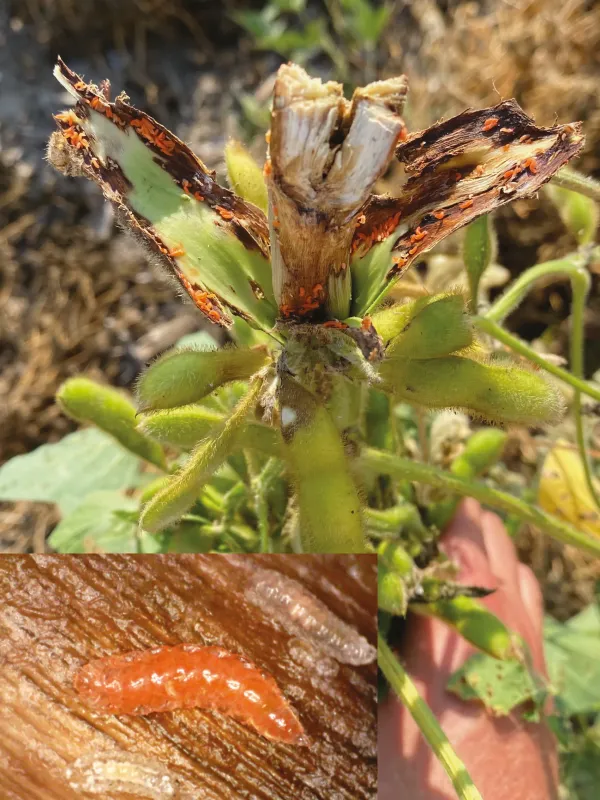
The larvae are elongated, measuring 2–3 mm, and typically have a whitish or pale pink coloration. The larval stage is the most destructive, as they lead a cryptic, concealed lifestyle inside the plant's stem tissues.
The species' biology is characterized by rapid generational turnover during the growing season. Females oviposit directly into micro-cracks or natural openings at the base of the soybean stem, often targeting root emergence points or mechanical ruptures in the epidermis.
After hatching, the larvae penetrate the stem tissues and begin feeding on plant sap, excavating tunnels beneath the bark. This disrupts the plant's vascular system and severely weakens the entire organism.
Once the larval cycle is complete, they exit the stem and pupate in the upper soil layer, where they undergo metamorphosis into the next generation of adults. This life cycle allows the pest to rapidly increase its population under favorable temperature conditions.
What it damages
Soybeans (Glycine max) are the primary host plant for this species. Damage typically occurs during the stage of intense stem elongation, making the crop particularly vulnerable during the flowering and pod formation phases.
The harm manifests as deep stem lesions that obstruct the transport of nutrients and water from the root system to vegetative and reproductive organs. This often leads to premature senescence and plant death in areas with high pest density.
In addition to direct damage, the tunnels created by larvae serve as infection courts for secondary pathogens, including fungal and bacterial stem rots. This synergy exacerbates the damage and significantly reduces yield metrics such as seed weight.
During heavy infestations, lodging is common, particularly during strong winds, as damaged stems lose their structural integrity and easily snap at the base.
Ultimately, the economic impact is observed through grain yield loss, decreased grain quality, and reduced marketability of the crop due to premature maturation or pod shriveling.
Signs of infestation
A visual indicator of infestation is the emergence of characteristic dark spots or lesions at the base of the soybean stem, often accompanied by epidermal cracking. Close inspection beneath the stem skin usually reveals colonies of larvae.
Infested plants often show stunted growth compared to healthy ones and may develop chlorotic leaves, which might be misidentified as micronutrient deficiencies or signs of root rot diseases.
- Yellowing of lower leaves during mid-season.
- Darkening and softening of tissues in the basal zone of the stem.
- Presence of pink larvae under the epidermis when splitting the stem.
- Premature drying of the entire plant without clear symptoms of root diseases.
- Breaks in the epidermis where larvae have completed their development.
Infestation intensity is often higher near field edges or shelterbelts, where microclimates favor earlier adult emergence in the spring. Regular examination of the lower stem area throughout June and July is a critical diagnostic step.
It is necessary to differentiate gall midge symptoms from damage caused by other pests, such as stem borers or wireworms, as the management strategies for these pests differ significantly.
Control measures
Agronomic control practices include crop rotation, ensuring that soybeans are not planted in the same field for at least 3–4 years. Thorough burial of crop residues is essential, as the pest pupates within the soil profile.
Utilizing resistant soybean varieties with thicker or denser epidermis can discourage females from ovipositing. Furthermore, optimizing planting dates can help the crop avoid the most vulnerable growth stages during the pest's peak activity window.
Chemical control is complicated by the larvae's protected habitat under the bark. Contact insecticides have limited efficacy, so the strategy focuses on targeting the adults during their emergence and egg-laying period.
Monitoring using yellow sticky traps is vital to pinpoint the start of adult flight, which is the optimal window for targeted applications. The use of systemic insecticides during this period can reduce subsequent generation populations.
Complementing these methods with high-level agronomic practices, such as balanced fertilization, promotes rapid plant development, allowing the crop to partially compensate for the damage caused by the pest through more intense tissue recovery.
Taxonomy
- Latin name
- Resseliella soya
- Order
- Diptera (flies)
- Family
- Cecidomyiidae
- EPPO code
- PROFSO
Discussion
No discussions yet — be the first.