
Currant stem midge
Resseliella ribis
Description
How to identify
The currant stem midge is a small dipteran insect belonging to the Cecidomyiidae family. The adult form is a tiny gnat-like insect about 2 mm long with brown coloration and delicate wings.
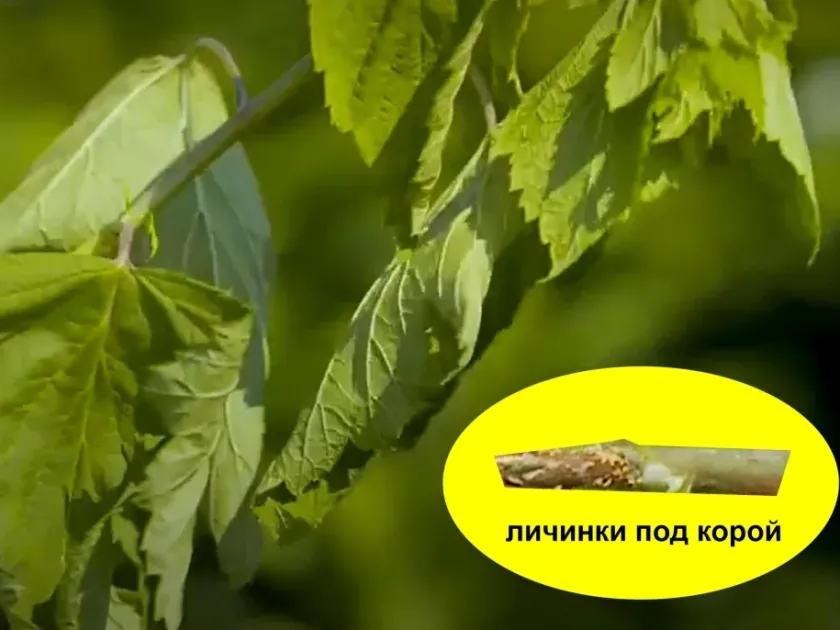
The biological cycle is strictly dependent on the growth stages of the currant bush. The larval stage is the most damaging, during which the insects are white or yellowish and live hidden under the bark.
Females lay eggs in small cracks or fissures in the bark of one- to two-year-old stems. These cracks often appear naturally during the plant's rapid growth phases in spring.
There can be up to three generations per year, making it a persistent pest throughout the summer season if environmental conditions are favorable for their development.
The winter is spent as larvae in the soil beneath the bushes, where they pupate in silk-like cocoons to survive the cold temperatures until the following spring.
What it damages
The pest primarily targets black currants, although red currants, white currants, and occasionally gooseberries can also be heavily infested by these midges.
Larvae consume the cambium layer and soft tissues of the bark, which severely disrupts the plant's nutrient transport system and significantly weakens the branches.
Damaged stems become highly susceptible to fungal pathogens, particularly Nectria species, which rapidly colonize the wounds and cause branch dieback.
High infestation levels lead to reduced yields, stunted growth of new shoots, and eventually the death of entire branches or even the whole bush if left untreated.
The economic impact is significant in berry production, as the hidden nature of the larvae makes early detection difficult without careful orchard management.
Signs of infestation
The first signs of infestation appear as sunken, dark, discolored patches on the bark of stems, often becoming noticeable during the middle of the growing season.
By peeling back a small layer of the affected bark, one can observe small, yellowish larvae actively feeding, confirming the presence of the midge colony.
A common symptom in summer is the sudden wilting and browning of shoot tips, which later become brittle and break off easily during strong winds or harvesting.
Necrotic tissue surrounding the site of infestation is a telltale sign of long-term damage, often accompanied by secondary infections that further stress the plant.
The overall vigor of the bush declines, and leaves may turn yellow and drop prematurely, signalling a systemic issue with the plant's vascular health.
Control measures
The most critical control measure is rigorous sanitary pruning, involving the removal and immediate burning of all infested branches to eliminate larvae before they pupate.
Cultivating the soil surface around the bushes during the pupation period helps disrupt the cocoons and reduces the number of emerging adults in the subsequent season.
- Use of mulch or fabric barriers to physically block emerging adults.
- Applying balanced fertilizers to boost the bush's natural resistance.
- Selecting resistant or less susceptible cultivars for new plantings.
Chemical intervention with systemic insecticides may be applied during the period of adult emergence, though it must be completed before flowering to avoid impact on pollinators.
Frequent monitoring of stems during the spring months allows for early intervention, keeping the pest population below the economic threshold for the plantation.
Taxonomy
- Latin name
- Resseliella ribis
- Order
- Diptera (flies)
- Family
- Cecidomyiidae
- EPPO code
- THOMRI
Discussion
No discussions yet — be the first.