
Rose rose midge
Resseliella oculiperda
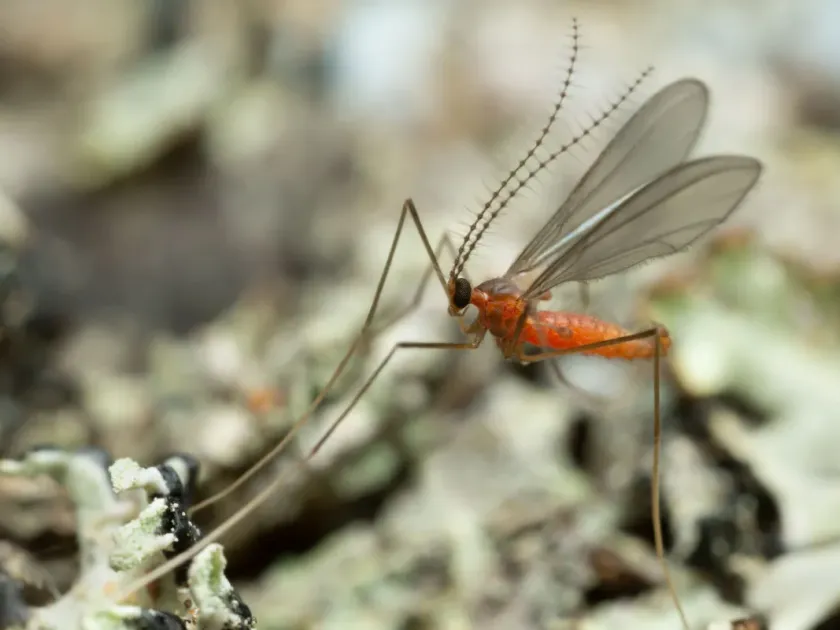
Description
How to identify
The rose rose midge (lat. Resseliella oculiperda) belongs to the order Diptera and the family Cecidomyiidae. It is a tiny, delicate insect that primarily affects the cambium layer of woody plants.
The adult midge is rarely noticed by gardeners due to its small size and nocturnal habits. The damage is exclusively caused by the larvae, which are small, cylindrical, and white to pale orange in color.
The life cycle of this pest is intrinsically linked to grafting practices. Female midges are attracted to the scent of sap flowing from fresh bark incisions made during budding or grafting.
Once the female lays eggs in the grafting wound, the larvae hatch and begin feeding on the delicate cambium tissues. This feeding interrupts the successful union of the rootstock and scion.
The larvae overwinter in the soil beneath the host plant. In the spring, they pupate and emerge as adults to restart the cycle as the grafting season begins.
What it damages
This pest is a significant threat to commercial nurseries and home gardens that graft roses, apples, pears, cherries, and plums. It specifically targets the grafting point.
The larvae feed on the cambium, creating tunnels that prevent the graft union from healing. Without a successful union, the grafted bud dries out and dies.
In cases of heavy infestation, the bark around the grafting site may peel away entirely. This leads to the total loss of the grafted cultivar and often stunts the growth of the rootstock.
Symptoms in the nursery include poor budding success rates, yellowing of leaves on the grafted shoot, and the eventual death of the bud within days or weeks of the operation.
The economic impact is high because the damage is often discovered too late to re-graft the plant within the same growing season, resulting in a year of wasted effort.
When it appears
The activity of the rose rose midge coincides with the peak grafting season, typically occurring from mid-summer through late summer, specifically July and August.
During these months, the plants are in active growth, and gardeners frequently perform T-budding. The fresh incisions provide the perfect entry point for the midges.
Multi-voltine in nature, the midge can produce several generations during a warm, humid summer. High humidity significantly increases the survival rate of the larvae.
Activity tapers off as temperatures drop in early autumn. By late August, the larvae migrate into the soil to seek refuge for the coming winter months.
Monitoring the flight of adults is crucial during the bud-grafting period, as immediate protection of the graft wound is the only way to ensure success.
Signs of infestation
The primary sign of infestation is the shriveling and browning of the grafted bud. If the bud turns dark or fails to stay green, it indicates a failed graft union.
When peeling back the protective tape used for grafting, one may find small, pale larvae crawling in the cambium area. These larvae are often clustered around the bud site.
The bark at the graft union may exhibit discolored patches, ranging from light brown to reddish. Upon removal of the bark, visible larval galleries are usually present.
Secondary infections often follow larval damage. The tissue may become slimy or rot, which further hinders any chance of the graft successfully "taking."
Checking the graft tape for signs of disturbance or moisture accumulation can provide early warning of potential midge activity before the bud dies completely.
Control measures
The most effective management strategy is the complete and airtight wrapping of the graft site. Proper grafting technique leaves no gap for the midge to insert its ovipositor.
Using high-quality elastic grafting tape creates a barrier that prevents the midge from detecting the sap scent and reaching the wound site.
In nursery settings, applications of systemic or contact insecticides during the flight period can effectively reduce the adult midge population.
Cultural practices include deep cultivation of the soil around the base of the rootstocks in late autumn to disrupt the overwintering pupae.
- Ensure professional, airtight grafting techniques.
- Use specialized grafting tape to seal the bud union.
- Monitor graft success frequently during the first three weeks.
- Apply appropriate insecticides if high midge activity is observed.
Taxonomy
- Latin name
- Resseliella oculiperda
- Order
- Diptera (flies)
- Family
- Cecidomyiidae
- EPPO code
- THOMOC
Discussion
No discussions yet — be the first.