
Soybean stem gall midge
Resseliella maxima
Description
How to identify
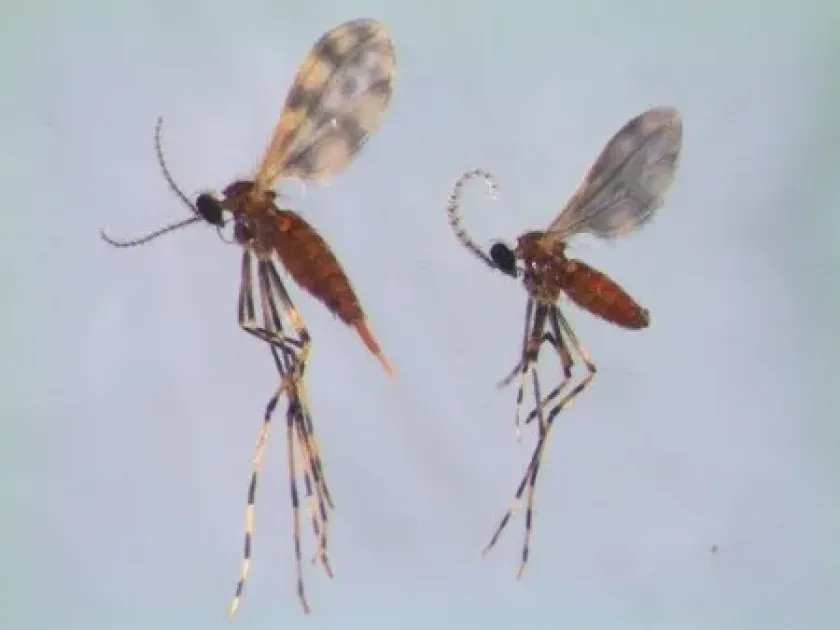
The soybean stem gall midge (Resseliella maxima) is a small dipteran insect belonging to the Cecidomyiidae family. While the adults are small and fly during the night or twilight, the larvae are the destructive stage, living and feeding under the epidermis of the soybean stem.
What it damages
This pest is a significant threat to soybean (Glycine max) cultivation. Larvae settle in the basal part of the stem, feeding on internal tissues, which leads to structural damage that impairs water and nutrient transport throughout the entire soybean plant.
When it appears
The life cycle of the midge is synchronized with the soybean growing season. The emergence of adults typically coincides with the plant's vegetative stage, and the presence of larvae is most noticeable during the reproductive stages of crop development, causing stress to the plant.
Signs of infestation
The main visible sign of infestation is the necrosis and discoloration of the lower stem. The epidermis in affected areas may crack, revealing the presence of tiny, mobile orange larvae underneath. Severe infestations lead to yellowing, wilting, and eventually the death of the plant.
Control measures
Managing this pest requires a combination of strategies, including crop rotation to break the cycle and the removal of crop residues. Chemical control is challenging because larvae are hidden inside the stems; therefore, timing insecticide applications during the adult egg-laying phase is critical.
Taxonomy
- Latin name
- Resseliella maxima
- Order
- Diptera (flies)
- Family
- Cecidomyiidae
- EPPO code
- RESSMA
Discussion
No discussions yet — be the first.