
Liriodendron gall midge
Resseliella liriodendri
Description
How to identify
The Liriodendron gall midge, Resseliella liriodendri, belongs to the family Cecidomyiidae within the order Diptera. These tiny insects are highly specialized pests of the tulip tree.
Adult midges are small, delicate flies that are rarely seen by gardeners due to their short lifespan and small size.
The taxonomic classification reflects their evolution as specialists, perfectly adapted to the biological cycle of the Liriodendron tulipifera.
Their life history involves mating and oviposition on the youngest, softest leaves during the spring flush of new growth.
Understanding their systematic position is crucial for recognizing them as distinct from other leaf-rolling midges found on different tree species.
What it damages
The primary host for this pest is the tulip tree. The larvae feed specifically on the leaf tissues during their development.
By consuming the parenchyma, the larvae cause visible deformities in the leaves, preventing them from developing into healthy, flat surfaces.
Damage is often localized to the leaf margins, which are rolled tightly by the larvae's feeding activity.
In ornamental settings, the aesthetic value of the tulip tree is severely diminished by the presence of these rolled, yellowing leaves.
Severe infestations can lead to canopy thinning and reduced photosynthetic capacity, weakening the tree's overall vigor.
Signs of infestation
The most diagnostic sign of an infestation is the inward curling of leaf margins, which creates a tubular gall or fold.
- Characteristic leaf margin rolling.
- Presence of tiny, pale larvae inside the folds.
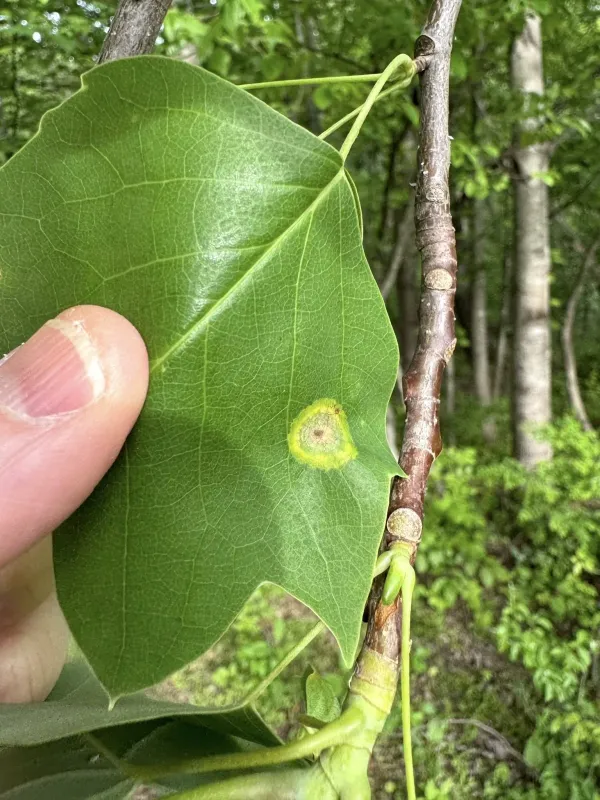
- Yellowing or necrotic patches on the leaves.
- Premature drying of leaf edges.
- Overall stunted growth of young foliage.
These signs usually appear in late spring and early summer when the population of the gall midge is peaking.
Unlike some other diseases, the presence of the larvae themselves inside the rolled sections confirms the infestation by this specific midge.
Control measures
Sanitation is a primary defense; raking and destroying fallen leaves during autumn eliminates the pupae that overwinter in the soil or leaf litter.
Applying systemic insecticides during the early stages of leaf development can effectively prevent the larvae from establishing themselves.
Monitoring the trees for signs of leaf curling as soon as the buds break in the spring is essential for timely intervention.
Promoting tree health through adequate irrigation and nutrient management helps the tulip tree recover from minor infestations more effectively.
Biological control options involve encouraging local predators, although this is generally supplementary to integrated pest management programs.
Taxonomy
- Latin name
- Resseliella liriodendri
- Order
- Diptera (flies)
- Family
- Cecidomyiidae
- EPPO code
- THEOLI
Discussion
No discussions yet — be the first.