
Ash gall midge
Resseliella clavula
Description
How to identify
The ash gall midge (Resseliella clavula) is a tiny insect species within the order Diptera and the family Cecidomyiidae. It is a highly specialized pest that exclusively targets trees belonging to the Fraxinus genus, primarily the common ash.
The adult form is a delicate, small fly that is often overlooked in natural settings due to its minute size and elusive behavior. Its primary impact on the host plant occurs during the larval stage, when the larvae develop inside the plant tissues.
Larvae are typically legless, slender, and pale, adapted for living within protected environments like plant galls. This cryptic lifestyle provides them with essential resources and protection from environmental stress and natural predators.
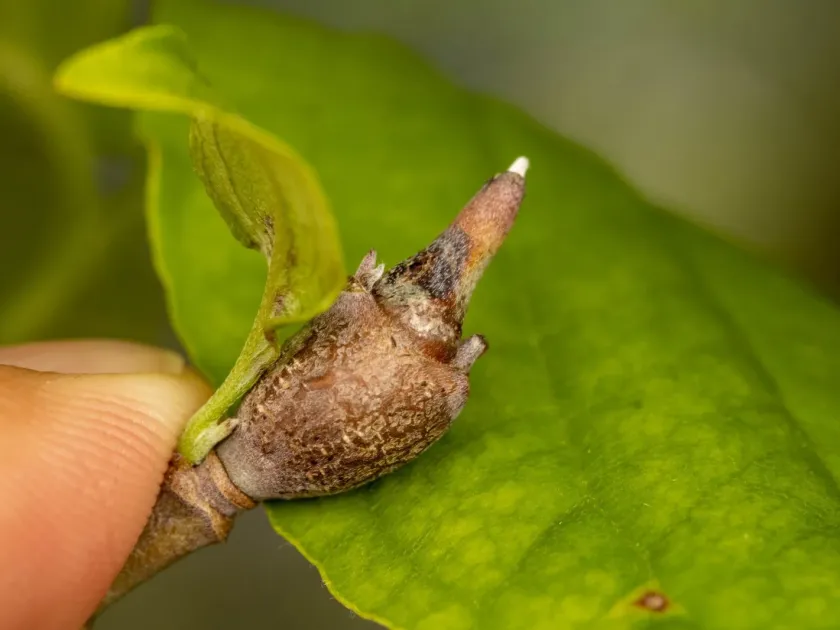
Expert identification of this species is largely based on the characteristic morphology of the galls they induce on the ash tree. The specific shape and location of these structures are definitive markers for confirming the presence of Resseliella clavula.
Systematically, this insect occupies a specific ecological niche, making it a critical subject for forest entomologists. Understanding its development is key to managing its impact on both urban forestry and natural forest stands.
What it damages
The primary host for this pest is the European ash (Fraxinus excelsior). The larvae feed on the tissues of young shoots and leaf petioles, causing the plant to respond by forming distinct structures known as galls.
These galls are abnormal growths induced by the larvae's feeding activity and biochemical secretions. They act as a specialized habitat where the larvae reside, safely hidden from external threats while consuming plant nutrients.
The formation of galls disrupts the normal flow of nutrients and moisture within the plant. This interference often results in the deformation and stunted growth of the affected shoots or leaf structures.
While the ash gall midge rarely causes the total mortality of a mature tree, significant infestations can severely affect the development of seedlings and young saplings. This reduces the vigor and overall health of the tree.
The damage caused by these insects can also lead to secondary infections, as the weakened plant tissues become more susceptible to fungi and other pests. Effective management is essential for maintaining the health of young ash plantations.
When it appears
The life cycle of the ash gall midge is tightly linked to the phenology of the ash tree. Adults typically emerge in the spring, coinciding with the initiation of the tree's spring foliage and new growth.
Females lay eggs on the tender tissues of newly developing shoots. This ensures that the newly hatched larvae have immediate access to soft, nutritious plant matter as they begin to create their characteristic galls.
The larvae develop inside the galls throughout the summer months. As they grow, the galls expand, providing a sheltered environment until the larvae are ready to move to the next stage of their life cycle.
After reaching maturity, the larvae exit the galls and drop to the soil to pupate. The soil serves as an overwintering site, protecting the pupae from cold temperatures and desiccation during the winter months.
The number of generations per year can vary depending on local climatic conditions. Monitoring during the early part of the growing season is crucial for identifying the emergence patterns of the midge and taking early action.
Signs of infestation
The most prominent sign of an infestation is the appearance of club-shaped swellings, or galls, on the leaf petioles or near the base of young shoots. These galls are firm and clearly visible upon closer inspection.
- Club-shaped galls on the petioles.
- Deformation or curling of young shoots.
- Chlorosis or premature browning of leaves near the gall site.
- Reduced growth rate of the apical shoots.
- Small exit holes on the galls indicating larvae have departed.
When surveying trees, it is helpful to look for these irregular growths on the new spring growth. Even if the insects have emerged, the empty galls remain on the tree as evidence of past infestation.
Severe infestations can lead to a noticeable decline in crown quality, which is particularly detrimental for trees being grown for aesthetic or ornamental purposes. The deformed shoots often wither and fall off prematurely.
Regular inspection of nurseries during May and June allows for early detection. Identifying the pest at the onset of gall formation provides the best window for physical removal and containment.
Control measures
The most practical control measure is the manual removal and destruction of infested shoots. Since the larvae remain inside the galls for most of the season, pruning these structures is an effective way to reduce the population.
In nursery settings, systemic insecticides may be applied if the infestation level is high and threatens the health of the stock. These treatments should be timed precisely to coincide with the larval feeding stage.
Biological control plays a significant role in nature, as various parasitoid wasps often target midge larvae. Encouraging a balanced ecosystem with diverse beneficial insects can naturally help to suppress midge population numbers.
Cultivation practices, such as clearing leaf litter and tilling the soil around the base of the trees, can help destroy the pupae overwintering in the ground. This reduces the likelihood of a major emergence the following year.
Ensuring the tree receives proper hydration and care promotes strong growth, which can help ash trees withstand the stress of insect feeding. Healthy trees are generally more resilient to the midges and better able to recover from injury.
Taxonomy
- Latin name
- Resseliella clavula
- Order
- Diptera (flies)
- Family
- Cecidomyiidae
- EPPO code
- RESSCL
Discussion
No discussions yet — be the first.