
Snakefly
Raphidia ophiopsis
Description
How to identify
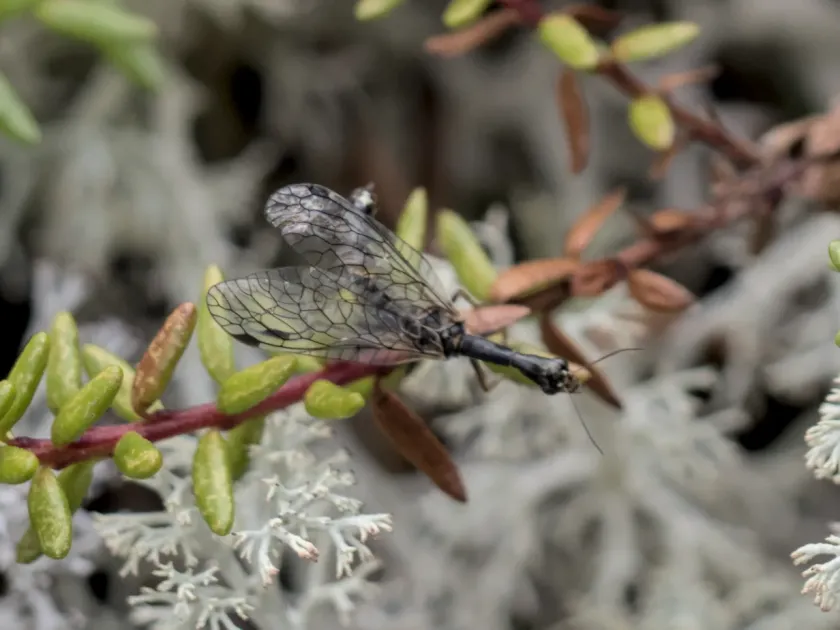
The snakefly (Raphidia ophiopsis), belonging to the order Raphidioptera, is a highly distinctive insect known for its elongated prothorax, which gives it a snake-like appearance.
These insects are characterized by two pairs of transparent, net-veined wings that rest over their bodies like a roof. They are generally dark-colored and reach lengths of approximately 10 to 15 millimeters.
The head is highly mobile and equipped with strong mandibles adapted for grasping prey. The larvae have an elongated, flattened body, which allows them to navigate easily under the bark of trees.
The life cycle involves a complete metamorphosis, including egg, larva, pupa, and adult stages. Females possess a long, sword-like ovipositor used for laying eggs in deep crevices of tree bark.
Due to their unique morphology and behavior, snakeflies are easily recognized by gardeners and entomologists as a distinct group of predatory insects.
What it damages
Snakeflies are not considered agricultural pests; rather, they are highly beneficial predators. They play a significant role in maintaining the ecological balance in gardens and orchards.
Their diet consists primarily of small, harmful insects such as aphids, mites, and various caterpillars that feed on leaves and young buds of fruit trees.
They do not cause any damage to fruits, foliage, or roots of plants. As carnivores, they lack the mouthparts necessary for feeding on plant tissues.
Larvae are equally beneficial, as they hunt for other pests underneath the tree bark and in decaying wood, effectively cleaning the tree surface of harmful organisms.
By preying on various crop pests, snakeflies serve as natural biological control agents, reducing the reliance on synthetic insecticides in horticulture.
When it appears
Adult snakeflies typically emerge in the spring, usually during April or May. This timing coincides with the period when most garden pests begin their own life cycles.
The developmental process is quite slow, often spanning one or two years depending on environmental conditions and the availability of food sources.
Larvae remain active throughout the warmer months, roaming across branches and trunks in search of prey. They are resilient insects capable of surviving varied weather conditions.
Overwintering occurs at the larval or pupal stage. They seek refuge in sheltered areas, such as deep cracks in wood, to survive the winter temperatures.
The population remains stable in healthy garden ecosystems where they can fulfill their role as natural predators without the pressure of harsh chemicals.
Signs of infestation
Since the snakefly is a beneficial insect, there are no "signs of infestation" such as plant tissue damage or yield loss associated with this species.
Observing a snakefly in your garden is a positive indicator of high biodiversity and a healthy, well-functioning ecosystem that keeps pests under natural control.
You can spot them sitting motionless on trunks or twigs during sunny spring days, waiting to ambush their prey. Their behavior is calm and calculated.
Their presence is often overlooked by gardeners, but they are essential silent guardians of fruit trees, contributing to the overall health of the orchard.
If you encounter these insects, it is best to leave them undisturbed as they provide free and effective pest control services for your crops.
Control measures
There is no need for control measures against the snakefly because it does not harm crops. Instead, efforts should focus on preserving their habitat.
To encourage their population, gardeners should minimize the use of broad-spectrum insecticides, especially during the spring season when adults are active.
Maintaining a clean, balanced environment with natural vegetation allows snakeflies to find adequate shelter and alternative prey during different times of the year.
When applying plant protection products, use selective treatments that target specific pests without harming beneficial insects like the snakefly.
By protecting snakeflies, growers can enhance the natural resilience of their orchards and create a more sustainable agricultural environment.
Taxonomy
- Latin name
- Raphidia ophiopsis
- Family
- Raphidiidae
- EPPO code
- RAPHOP
Discussion
No discussions yet — be the first.