
Snakefly
Raphidia
Description
How to identify
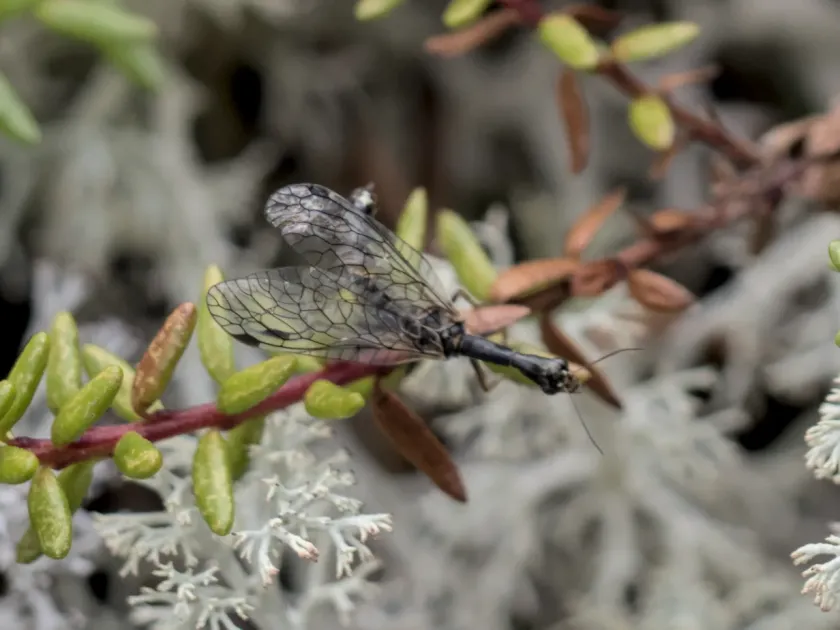
The snakefly (Raphidia) belongs to the order Raphidioptera. It gets its common name from the elongated prothorax, which resembles the neck of a snake or a camel, giving the insect a very distinct and recognizable silhouette.
Adult snakeflies feature transparent, membranous wings with a dense pattern of veins. Females are characterized by a long, needle-like ovipositor, which they use to insert eggs into crevices of tree bark, where their offspring will later hunt.
Larvae are flattened and highly mobile, equipped with powerful mandibles. They typically reside under the bark of coniferous or deciduous trees, where they hunt for smaller insects and larvae, staying protected from weather and predators.
The life cycle of a snakefly is relatively slow, often spanning one to two years. This extended development means that stable environments with mature trees are essential for the survival of their populations.
While their appearance might seem intimidating to some, snakeflies are strictly predatory insects. They play a significant role in maintaining the biological balance within forest and garden ecosystems.
What it damages
From an agronomic perspective, the snakefly is not a pest. It does not feed on plant tissues, does not damage foliage or fruit, and poses no threat to the commercial or home garden harvest. Categorizing it as a pest is scientifically incorrect.
On the contrary, snakeflies are considered valuable beneficial insects. They are voracious predators that feed on aphids, mites, and various small caterpillars, acting as a natural check on common agricultural pests.
The main issue concerning snakeflies in agriculture is misidentification. When gardeners treat them as pests, they often employ unnecessary chemical sprays, which can cause more damage by killing these natural allies.
By disrupting the food chain through indiscriminate chemical application, farmers lose the free biological control services provided by predators like the snakefly, which can lead to rapid outbreaks of actual pest species.
A professional approach to gardening involves recognizing these predators and protecting them, rather than attempting to eradicate them. They contribute to a healthier, more resilient plant ecosystem.
Control measures
Since the snakefly is an entirely beneficial insect, no control or extermination measures should be implemented. The goal of an integrated pest management (IPM) program should be the conservation of this species.
Agronomic support for the snakefly involves preserving habitats and avoiding the use of broad-spectrum pesticides, especially during their active periods in the spring and early summer.
- Avoid the use of toxic, broad-spectrum insecticides in orchard areas.
- Maintain natural habitats such as woodpiles or older tree patches where larvae can develop.
- Adopt IPM practices that prioritize the presence of predatory species over total chemical coverage.
- Educate garden staff to distinguish beneficial insects from real crop pests.
Encouraging the presence of snakeflies is a smart, sustainable way to enhance the health of your garden or orchard, naturally reducing the need for artificial interventions in pest management.
Taxonomy
- Latin name
- Raphidia
- Family
- Raphidiidae
- EPPO code
- RAPHSP
Discussion
No discussions yet — be the first.