
Snakefly
Raphidia maculicollis
Description
How to identify
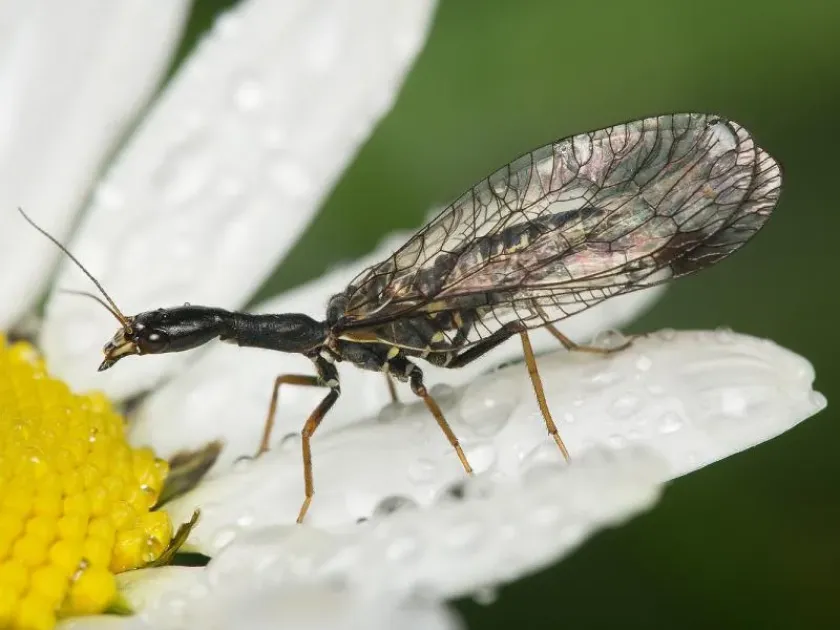
The snakefly (Raphidia maculicollis) is a member of the order Raphidioptera. They are easily recognized by their long prothorax, which resembles the neck of a snake, giving them a distinct appearance.
Adults possess two pairs of clear, netted wings with complex venation. Females have a long, needle-like ovipositor that is often mistaken for a stinger, though it is used exclusively for laying eggs.
Larvae are flattened and have a heavily sclerotized body. They are equipped with strong, chewing mouthparts, allowing them to navigate and hunt efficiently within crevices in tree bark.
The life cycle involves complete metamorphosis, including the egg, larva, pupa, and adult stages. The total development period can span up to two years under certain climatic conditions.
While often categorized as a minor pest, the snakefly is primarily a predator in many ecosystems, contributing to the control of other small arthropods in the orchard environment.
What it damages
Snakeflies are typically found on woody plants with fissured bark, such as apple, pear, plum, and oak trees. They prefer habitats that provide both shelter and a source of prey.
The larvae are primarily predatory, feeding on various small insects and mites found in bark crevices. However, they may cause incidental damage to buds and young shoots when prey density is low.
Damage symptoms include small holes or pits in bark and swelling buds, which can lead to localized tissue death or facilitate the entry of secondary pathogens like fungi.
In most commercial orchard settings, snakefly damage is considered negligible compared to the impact of major pests like codling moths or aphids. Economic losses are rare.
The pest is essentially opportunistic, and their role as beneficial predators often outweighs the minor damage they inflict on younger trees or nursery stock.
When it appears
Adult snakeflies typically emerge in late spring or early summer, generally between May and June. Their activity peaks during sunny, warm weather when they move along the trunk.
Mating occurs shortly after emergence, and females proceed to lay eggs in deep cracks in the bark. This strategic placement ensures protection for the developing larvae during the initial stages.
Larvae remain active throughout the growing season. They are skilled at moving under bark scales, which serves as both their hunting ground and their protection from environmental stress.
Overwintering occurs at the larval stage. They retreat into deeper sections of the bark or into the leaf litter at the base of the tree to survive cold winter temperatures.
Pupation takes place in the spring of the second year. After a brief period as a pupa, the adult emerges to restart the life cycle, often during the bloom period of many trees.
Signs of infestation
Visible detection of adults is easiest in late spring, as they forage on the trunks of trees. They are often spotted sunning themselves on the bark during early morning hours.
The presence of larvae is indicated by small piles of frass or debris left near bark crevices. These signs are subtle and often require close inspection to be identified correctly.
During the early growth stage of the orchard, look for damaged buds or small entry holes. These can be indicators that larvae are present in the immediate vicinity of the shoots.
Using bark traps or sticky bands on trunks can assist in monitoring the population. These tools allow for a better understanding of their density within the specific orchard block.
Because they often follow other pests, the presence of aphids or mites on a tree can also indicate a higher likelihood of finding snakefly larvae nearby.
Control measures
Direct chemical control is rarely necessary for snakeflies. In fact, aggressive pesticide use may be counterproductive, as it eliminates their role as natural insect predators.
Cultural control via bark maintenance is the most effective approach. Cleaning tree trunks of dead, exfoliating bark removes the primary habitat required for larval survival and development.
Promoting a healthy orchard ecosystem is key. Encouraging natural predators, such as birds and parasitoid wasps, helps maintain snakefly populations at a balanced level.
If management is required, use selective insecticides that target specific pests rather than broad-spectrum chemicals. This preserves the beneficial entomofauna within the orchard.
Maintaining strong, vigorous tree growth through proper irrigation and fertilization ensures that trees can tolerate minor feeding damage without significant loss of productivity.
Taxonomy
- Latin name
- Raphidia maculicollis
- Family
- Raphidiidae
- EPPO code
- RAPHMA
Discussion
No discussions yet — be the first.