
Willow terminal gall midge
Rabdophaga terminalis
Description
How to identify
The willow terminal gall midge (Rabdophaga terminalis) is a small dipteran insect belonging to the family Cecidomyiidae, known for its specific impact on willow species.
Adults are small, fragile flies. The larvae, which are orange to red in color, are the life stage responsible for creating the characteristic galls on the host plants.
The life cycle is closely synchronized with the growth phases of the willow, particularly the spring bud break and initial development of terminal shoots.
Overwintering occurs as larvae in the soil or in leaf litter, where they undergo pupation when temperatures rise sufficiently in the spring.
The species may exhibit one or multiple generations per year depending on the regional climate and the length of the growing season.
What it damages
The primary host for this pest is the willow (Salix), with a preference for fast-growing varieties and those used in basketry or biomass production.
Feeding by larvae disrupts the hormonal balance of the terminal shoot, leading to the inhibition of apical growth and the formation of distorted leaf clusters.
Significant infestations can lead to a severe reduction in biomass yield and compromise the structural integrity of the willow stems.
Continuous damage weakens the plant, making it more susceptible to secondary pathogenic infections and environmental stressors like drought.
In commercial plantations, the loss of terminal growth reduces the quality of the harvestable material, directly impacting economic output.
Signs of infestation
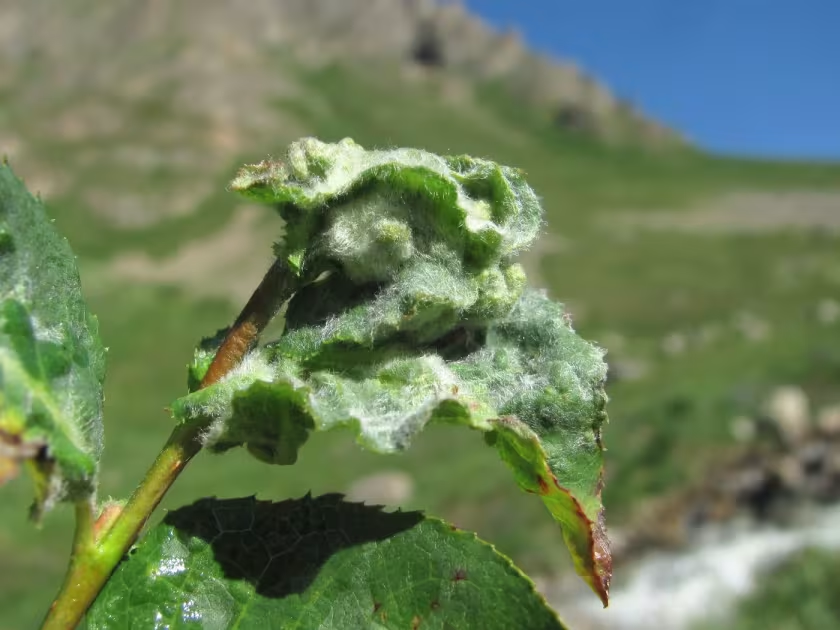
The most diagnostic sign of an infestation is the formation of terminal galls, often described as leaf "rosettes" or thickened buds at the end of the shoots.
As the season progresses, these infested tips typically blacken and die, leading to the loss of the primary growth point and subsequent lateral branching.
Inside the galls, clusters of larvae can be found feeding on the succulent plant tissues, causing localized tissue swelling and stunted growth.
The visual impact of the infestation is marked by a bushy appearance of the affected branches due to the proliferation of lateral buds in response to terminal death.
- Formation of leaf rosettes
- Stunted terminal shoot growth
- Blackening and necrosis of shoot tips
- Proliferation of lateral shoots
- Presence of larvae within swollen tissues
Control measures
Mechanical removal and destruction of the infested tips during the early stages of infestation is a highly effective control measure to prevent population spread.
Removing leaf litter and organic debris in the autumn significantly reduces the number of larvae successfully overwintering in the soil.
Chemical control is most effective when targeted at the adult flight period, applying systemic insecticides to prevent successful egg-laying.
Site management and the selection of resistant willow clones are essential strategies for minimizing damage in long-term willow plantations.
Biological control, including the protection of parasitic wasps that predate on the midge larvae, helps maintain ecological balance and suppresses outbreaks.
Taxonomy
- Latin name
- Rabdophaga terminalis
- Order
- Diptera (flies)
- Family
- Cecidomyiidae
- EPPO code
- RHABTE
Discussion
No discussions yet — be the first.