
Willow gall midge
Rabdophaga salicis
Description
How to identify
The willow gall midge is a small insect belonging to the family Cecidomyiidae within the order Diptera. The adult stage resembles a tiny mosquito, typically measuring about 3–4 mm in length.
The larvae are characterized by their bright orange or reddish color and their legless bodies. They are the primary life stage responsible for causing damage to willow trees.
Females possess an elongated ovipositor, enabling them to insert eggs deep into the tissues of young willow stems. Adults are rarely seen due to their secretive nature and small size.
Pupae develop safely inside the galls, which are abnormal tissue growths formed on the tree branches. This environment provides excellent protection from predators and environmental stress.
The life cycle is strictly synchronized with the phenology of the willow, ensuring that larvae emerge when the plant's sap is flowing and new growth is developing.
What it damages
The primary hosts for this pest are various species of willow (Salix), including both ornamental and weeping varieties. Damage is most commonly observed on young shoots and current-season growth.
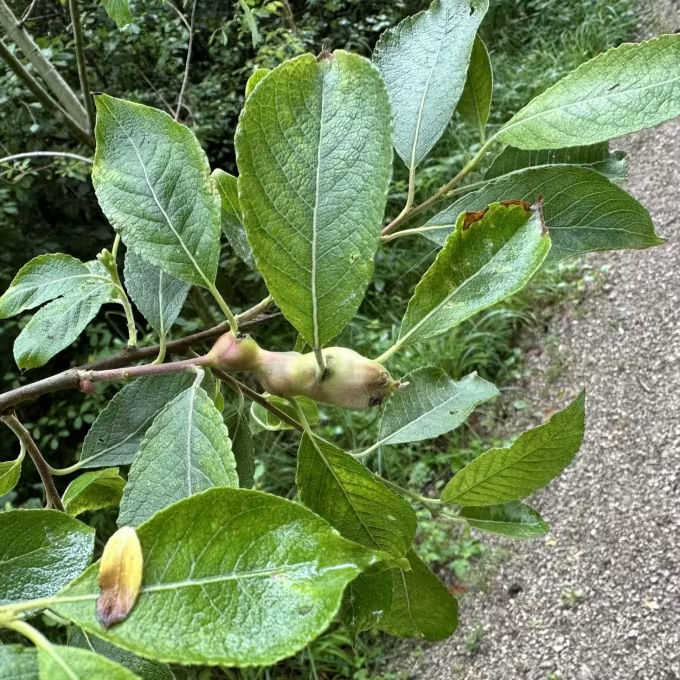
The larvae induce abnormal cell division, resulting in the formation of galls — swelling or knots along the branches. These galls can appear singly or in clusters.
As the larvae feed on plant fluids inside the galls, the tree's health is severely compromised. Nutrient transport is blocked in the affected areas, leading to the gradual dieback of twigs.
Mass infestations ruin the aesthetic appearance of the trees, causing thinning crowns, distorted shoots, and inhibited terminal growth.
In nurseries, affected willow stock often loses its commercial value due to structural damage to the wood and a lack of proper shape development.
When it appears
Adult emergence typically occurs in the spring, coinciding with bud burst and early shoot growth, usually between April and May depending on the local climate.
Females lay eggs in the bark of young stems. Upon hatching, the larvae initiate the gall formation process, which continues throughout the summer months.
Larvae remain protected inside the galls until the onset of cold autumn weather. They overwinter as larvae within these woody growths.
With the return of warmer spring temperatures, the larvae pupate inside the galls, eventually emerging as adults to start the next generation cycle.
Visible galls on the branches are the result of the previous or ongoing season's infestation, becoming apparent to the naked eye by early summer.
Signs of infestation
The primary symptom is the appearance of spindle-shaped or rounded swellings on the willow shoots. The bark covering these galls may become thin, cracked, or discolored.
When inspecting the tree, one may notice that growth has ceased in the affected areas or that shoots have become deformed. Leaves on damaged branches may turn yellow and drop prematurely.
Opening a fresh gall during mid-summer will reveal the presence of one or more orange larvae. These damaged sites are also prone to secondary fungal infections.
During the winter, the galls are easily identified on bare branches, as their shape is distinct from natural buds or stem irregularities.
A lack of healthy spring regrowth on specific branches serves as an indicator that the tree likely suffered from gall midge activity in previous years.
Control measures
The most effective control method is systematic pruning and the destruction of infested branches before the adults emerge in the spring.
It is crucial to dispose of the pruned material by burning it immediately, as larvae can survive within the galls even if the branches are removed from the tree.
Chemical control using systemic insecticides is generally only effective during the brief period when larvae are hatching and beginning to feed.
- Regular monitoring and inspection of the tree canopy.
- Maintaining tree vigor through proper watering and fertilization.
- Using biological control agents that target specific dipteran larvae.
A combination of mechanical removal of galls and appropriate pesticide application can significantly reduce the pest population and restore tree health.
Taxonomy
- Latin name
- Rabdophaga salicis
- Order
- Diptera (flies)
- Family
- Cecidomyiidae
- EPPO code
- RHABSL
Discussion
No discussions yet — be the first.