
Willow rosette gall midge
Rabdophaga rosaria
Description
How to identify
The willow rosette gall midge (Rabdophaga rosaria) is a small fly belonging to the Cecidomyiidae family, commonly found on various willow species.
The adult midge is a delicate, tiny insect, roughly 3-4 millimeters in length, which is rarely noticed due to its short lifespan and small size.
The damage is caused exclusively by the larvae, which secrete substances that alter the growth patterns of the host plant at the terminal buds.
The insect typically completes one generation per year, closely synchronized with the willow's seasonal budding process.
Larvae overwinter inside the mature galls, remaining protected from cold temperatures and predators until the next spring.
What it damages
The larvae primarily target the terminal buds of young willow shoots, preventing normal branch elongation.
By stimulating the plant to produce clusters of deformed leaves, the midge creates a structure often called a "willow rose" or "rosette gall."
This pathological growth acts as a nutrient sink, depriving the rest of the branch of vital resources needed for healthy growth.
While the willow tree rarely dies from this infestation, the crown structure can become severely distorted over several seasons.
Young trees in nurseries or newly landscaped gardens are most significantly affected in terms of visual quality and vigor.
When it appears
Adult midges emerge in spring, coinciding with the first flush of willow foliage, usually between late April and May.
The female midge lays eggs directly onto the developing buds, where the larvae begin their feeding activity upon hatching.
Galls begin to form in early summer, becoming increasingly dense and visible as the season progresses through July and August.
By autumn, the galls harden and may turn brown or reddish, effectively functioning as a nursery for the overwintering larvae.
The emergence of a new generation occurs the following year, completing the midge's annual cycle.
Signs of infestation
The most diagnostic sign is the formation of rosettes of tightly packed, deformed leaves at the tips of the shoots.
- Terminal shoot growth cessation.
- Appearance of rose-like structures at the end of branches.
- Shortened internodes around the gall site.
- Dried, woody appearance of the rosette in winter.
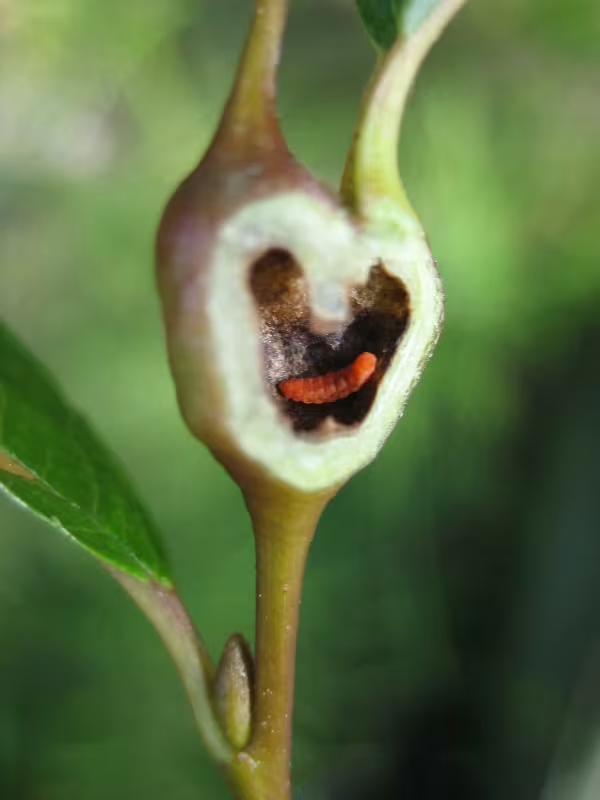
- Presence of tiny reddish larvae inside the gall tissues.
Control measures
Manual removal of the galls during the winter or early spring is the most reliable and environmentally friendly control method.
Pruned galls must be destroyed by burning or disposal away from the garden to ensure larvae do not complete their development.
Maintaining high plant vigor through proper fertilization and irrigation helps the willow withstand and recover from minor infestations.
In cases of severe infestation on valuable specimen trees, systemic insecticide application may be timed to match adult emergence.
Encouraging natural predators, such as parasitic wasps, can help keep the gall midge population in check within a balanced ecosystem.
Taxonomy
- Latin name
- Rabdophaga rosaria
- Order
- Diptera (flies)
- Family
- Cecidomyiidae
- EPPO code
- RHABRO
Discussion
No discussions yet — be the first.