
Willow gall midge
Rabdophaga rigidae
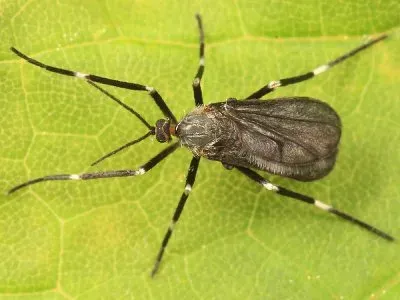
Description
How to identify
The willow gall midge (Rabdophaga rigidae) belongs to the order Diptera, specifically the Cecidomyiidae family, which is well-known for inducing gall formation on plants.
Adult insects are tiny midges measuring only about 2–3 mm in length, making them difficult to detect without careful observation during their short flight period.
The species is highly host-specific, primarily targeting trees within the genus Salix, where they have evolved to manipulate plant growth hormones.
Their biological classification places them among the most specialized gall-forming insects, where the interaction between the larva and the host plant is key to their survival.
Understanding their taxonomy helps in recognizing that various Rabdophaga species create distinct gall types, making R. rigidae identifiable by the shape and location of its galls.
What it damages
The primary damage is caused by larvae that feed internally on the tissues of willow shoots, inducing the plant to create woody, tumor-like growths known as galls.
These galls act as a sink for plant nutrients, diverting resources away from normal shoot growth and leaf production, which stunts the plant's development.
In nurseries, repeated infestations can lead to significant structural deformation of young willow trees, often resulting in them being culled due to poor quality.
Furthermore, the physical damage to the shoot structure reduces the tree's resilience to harsh weather conditions, making it more vulnerable to frost and mechanical breakage.
By disrupting vascular flow within the shoot, the midge creates conditions conducive to secondary infections by pathogens, further compromising the health of the willow.
When it appears
The life cycle is strictly synchronized with the phenology of the willow, with adult emergence occurring during the spring budding and shoot elongation phase.
Females deposit eggs directly into the tender tissues of the new shoots, ensuring that larvae emerge when the plant is most actively growing and nutrient-rich.
Throughout the summer, the larvae continue to grow inside the developing gall, which protects them from predators and environmental stressors during their most vulnerable stage.
Winter is typically spent in the larval stage, safely encased within the hardened gall, which remains attached to the willow shoot until the following spring.
Pupation occurs in early spring, leading to the emergence of the next generation of adults just as the new season's growth cycle begins.
Signs of infestation
The most prominent sign of infestation is the appearance of hard, swollen, and often spindle-shaped galls located along the shoots of the willow.
These galls are distinctly woody in texture compared to the surrounding bark, and they often cause the shoot to become bent or distorted in appearance.
Early in the season, before the gall fully hardens, there might be slight chlorosis or yellowing of the leaves in the immediate vicinity of the infested shoot section.
During the dormant season, the galls are easily identified on bare branches, serving as a clear indicator of a previous season's infestation.
One can also observe exit holes on mature galls, which indicate that the adult midges have successfully emerged and the life cycle has been completed.
Control measures
The most practical control measure involves the systematic removal and destruction of infested shoots before the adult midges emerge in the spring.
Mechanical pruning should be followed by burning or deep burial of the removed material to ensure that larvae do not successfully complete their development.
Biological control can be enhanced by maintaining habitats for natural predators, such as parasitic wasps, which can significantly regulate midge populations.
In large-scale commercial willow production, insecticide application during the peak adult flight period may be considered, though timing is critical for efficacy.
Selecting and planting resistant or less susceptible willow cultivars can be a highly effective preventive strategy to minimize the long-term impact of these pests.
Taxonomy
- Latin name
- Rabdophaga rigidae
- Order
- Diptera (flies)
- Family
- Cecidomyiidae
- EPPO code
- MAYERI
Discussion
No discussions yet — be the first.