
Purple willow gall midge
Rabdophaga purpureaperda
Description
How to identify
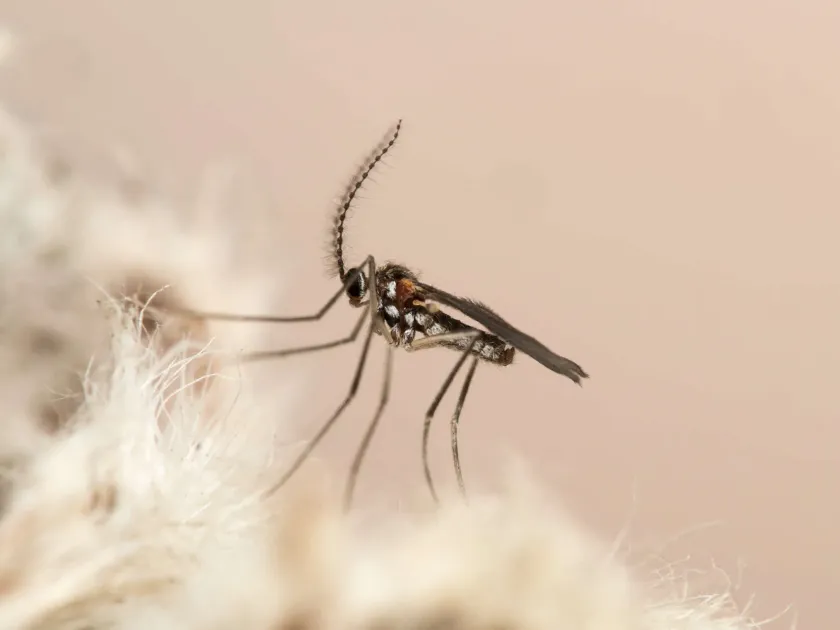
The purple willow gall midge (Rabdophaga purpureaperda) is a small insect species belonging to the Cecidomyiidae family within the order Diptera.
Adult midges are tiny, delicate flies that are rarely noticed by gardeners due to their size and cryptic behavior in the field.
The life cycle involves the female laying eggs into the young bark of willow shoots, where the larvae develop after hatching.
These larvae are typically orange or yellowish, legless maggots that feed specifically on the tissues of the host plant, triggering defensive reactions.
The species is taxonomically distinct due to the specific gall formations it induces on the stems of various willow species (Salix).
What it damages
The primary hosts for this midge are various Salix species, including purple willow (Salix purpurea), which is often cultivated for basketry.
By feeding on the cambium and stem tissue, the larvae cause the formation of characteristic galls, which are tumor-like growths on the woody stems.
The damage significantly impairs the structural integrity of the willow rods, making them unsuitable for high-quality weaving or commercial use.
Repeated infestations lead to a decline in plant vigor, stunted growth, and a reduction in the overall annual harvest of willow stems.
Heavily infested branches often become brittle, making them prone to mechanical damage from wind, snow, or even slight handling.
When it appears
The adult midge emerges in late spring, coinciding with the rapid growth of new succulent willow shoots, which are ideal for egg-laying.
The development phase occurs throughout the summer as the larvae continue to feed and the galls gradually enlarge on the affected shoots.
Pupation typically takes place within or near the gall, following which the adults emerge to start the next generation or prepare for overwintering.
Overwintering usually occurs in the larval stage, protected either inside the gall tissue or within the leaf litter beneath the host shrub.
Active monitoring is most effective during the early spring period, when the emergence of adults and initial oviposition on stems occur.
Signs of infestation
The most reliable sign of an infestation is the presence of irregular, knotty swellings or woody galls on the one- or two-year-old shoots.
- Bark cracks or holes appearing on the surface of the stem.
- Visible distortion or twisting of the main shoot at the site of the gall.
- Premature leaf drop or yellowing on branches heavily affected by the larvae.
- Reduced stem length compared to healthy parts of the same shrub.
- Brittle stem segments that break easily when bent or stressed.
Careful inspection of stems for localized thickenings is the most effective way to identify the presence of this midge in willow plantations.
Control measures
The most effective strategy is the systematic removal and destruction of infested shoots by pruning, ideally before the adult midges emerge.
Sanitation is key; burning or deeply burying the pruned material helps prevent the larvae from completing their life cycle and reinfesting the area.
In cases of severe infestation, chemical control with contact or systemic insecticides can be applied during the peak adult flight period.
Cultural practices, such as maintaining healthy soil conditions and proper spacing, can enhance the natural resistance of the willows to attack.
Consistent monitoring and early detection are essential to prevent the pest from reaching population densities that cause economic losses.
Taxonomy
- Latin name
- Rabdophaga purpureaperda
- Order
- Diptera (flies)
- Family
- Cecidomyiidae
- EPPO code
- RHABPU
Discussion
No discussions yet — be the first.