
Willow gall midge
Rabdophaga
Description
How to identify
The willow gall midge (Rabdophaga spp.) is a small insect belonging to the family Cecidomyiidae within the order Diptera. These are delicate flies, usually measuring only a few millimeters in length.
Adults resemble minute mosquitoes with fragile bodies and transparent wings. The larvae, which are the primary stage causing damage, are typically cylindrical or spindle-shaped and range from whitish to orange in color.
The most distinctive feature of these insects is their ability to induce the formation of galls — abnormal growths on willow tissues where the larvae live and feed.
Each species of Rabdophaga has specific host preferences and targets different parts of the tree, such as buds, leaves, or stems, creating unique gall shapes.
Identification is primarily based on locating these characteristic galls on the host tree, as the tiny adults themselves are rarely seen without specialized equipment.
What it damages
Willows (Salix genus) are the exclusive hosts for this pest. The damage affects both ornamental willow species and those grown for industrial purposes.
The larvae release substances that manipulate the host plant's physiology, causing cells to divide and enlarge excessively, thereby creating the gall structure. This process diverts nutrients away from normal plant growth.
Infested branches become deformed, stunted, and structurally weakened. This ruins the aesthetic quality of the tree, which is a major concern for landscape gardeners.
Severe infestations can lead to premature leaf drop, dieback of shoots, and overall loss of tree vigor, making the willow more susceptible to secondary fungal pathogens.
When galls form on buds, it often prevents the tree from producing normal foliage or blossoms, leading to a thin and sickly crown appearance.
When it appears
The life cycle begins in early spring when adults emerge from their overwintering sites, coinciding with the budding period of the host willow tree.
Depending on the species and regional climate, Rabdophaga may complete one or multiple generations during the single growing season.
Galls become most visible and robust during the summer months, providing shelter for the developing larvae as they feed inside the host's specialized tissues.
Overwintering occurs either as pupae or mature larvae, usually remaining inside the dried galls or within the soil beneath the willow canopy until the next spring.
Timing control efforts requires careful observation of the spring emergence, as this is the period when the pest is most vulnerable to external interventions.
Signs of infestation
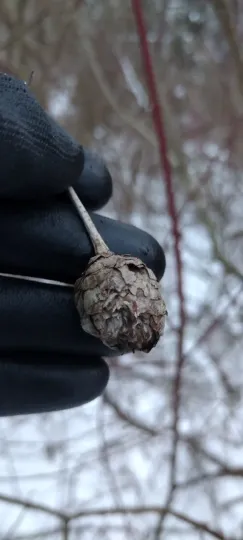
The most obvious sign of infestation is the presence of galls, which can look like small, cone-shaped structures or distorted, rosette-like leaf clusters on the stems.
Young shoots may display noticeable, uneven swellings or bumpy growth patterns, indicating that larvae are actively feeding deep within the branch tissues.
Stunted growth, twisting of stems, and an overall lack of uniformity in the tree's architecture are common symptoms of an ongoing Rabdophaga infestation.
In late summer or autumn, small holes may appear on the surfaces of mature galls, signaling that the adult insects have already emerged for their next phase.
Dying or blackened shoot tips in late spring are also strong indicators that the midge larvae have disrupted the vascular system of those specific branches.
Control measures
The most effective strategy is the manual removal and destruction of infested twigs and galls, which should be done before the adults emerge in the spring.
Pruned material should be burned or disposed of properly to ensure that the overwintering population does not survive to re-infest the tree.
Chemical control with systemic insecticides can be applied during the early spring flight period, though it is often difficult due to the timing and the pest's cryptic nature.
Maintaining tree health through proper fertilization and watering helps the willow withstand the stress caused by gall midge activity throughout the year.
- Regular inspection of willow branches.
- Sanitary pruning of galls in winter or early spring.
- Encouraging natural predators such as parasitic wasps in the garden.
Taxonomy
- Latin name
- Rabdophaga
- Order
- Diptera (flies)
- Family
- Cecidomyiidae
- EPPO code
- RHABSP
Discussion
No discussions yet — be the first.