
Reticulated python
Python reticulatus
Description
How to identify
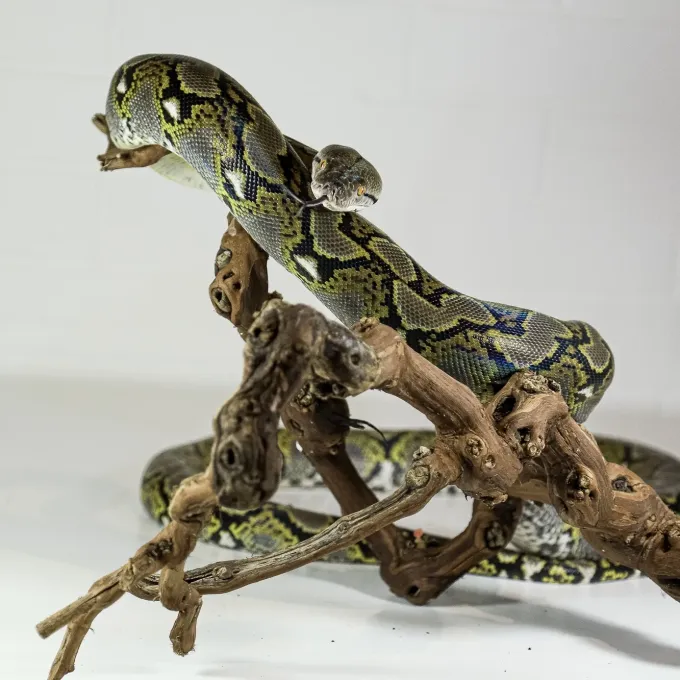
The reticulated python (Python reticulatus) belongs to the Pythonidae family and is considered one of the longest snake species in the world, often reaching lengths of 4 to 8 meters.
Its skin displays a complex geometric pattern of diamond-shaped spots, providing highly effective camouflage in forest undergrowth and tropical foliage.
These snakes are primarily nocturnal and show a strong preference for humid tropical environments, wetlands, and areas surrounding water bodies.
As an egg-laying species, female reticulated pythons exhibit maternal care by coiling around their clutch to regulate incubation temperatures through muscle tremors.
They possess exceptional physical power, utilizing constriction to subdue large prey, which makes them formidable predators in their natural habitat.
What it damages
While the reticulated python is not a direct pest to plants, it poses a significant threat to livestock production by preying on farm animals.
Small to medium-sized livestock, such as poultry, pigs, and goats, are common targets for large pythons, leading to substantial economic losses for farmers.
The mere presence of these large predators near agricultural zones induces stress among workers and disrupts daily field activities and maintenance schedules.
Reticulated pythons frequently inhabit irrigation ditches and drainage systems, which complicates the upkeep of vital hydraulic infrastructure on plantations.
Although they help control rodent populations, the risk they pose to livestock and human safety outweighs their role as a biological rodent suppressant.
When it appears
Activity levels for the reticulated python peak during the rainy season when higher humidity and water levels expand their available hunting range.
During this period, snakes are more frequently observed encroaching on human settlements as they track prey attracted to human agricultural activities.
The breeding season also triggers increased movement and territorial behavior, making individual snakes more visible and aggressive near farm boundaries.
In the dry season, pythons concentrate around permanent water sources, waiting for prey to come to them, which can create dangerous zones near irrigation points.
Agricultural personnel should exercise heightened vigilance during wet months, especially when clearing brush or working near riparian zones.
Signs of infestation
The most common indicator of a python’s presence is the unexplained disappearance of poultry or small livestock from secured pens.
On muddy or wet ground near irrigation canals, one can often find drag marks left by the snake's heavy body, appearing as smooth, distinctive furrows.
Discovering shed skin (slough) around farm outbuildings or storage sheds is a clear sign that a large snake is frequenting the premises.
A strong, musky odor near dark or enclosed areas can indicate the presence of a resting python, especially during the warmer parts of the day.
Unusual behavioral changes in livestock, such as excessive agitation or refusal to approach certain fields, often signal the presence of a predator nearby.
Control measures
Effective management begins with physical exclusion, such as installing snake-proof mesh fencing around vulnerable livestock enclosures.
Maintaining the landscape by regularly clearing dense vegetation and removing piles of debris significantly reduces suitable hiding spots near farm buildings.
Implementing strict rodent control programs in granaries and storage areas reduces the secondary prey base, making the farm less attractive to pythons.
If a snake is sighted, farm workers should avoid confrontation and contact local wildlife rescue or animal control services for professional removal.
Using humane live traps can be an effective way to manage individuals, allowing for the relocation of the animal to a remote, non-agricultural area.
Taxonomy
- Latin name
- Python reticulatus
- Family
- Pythonidae
- EPPO code
- PYTNRE
Discussion
No discussions yet — be the first.