
Python
Python
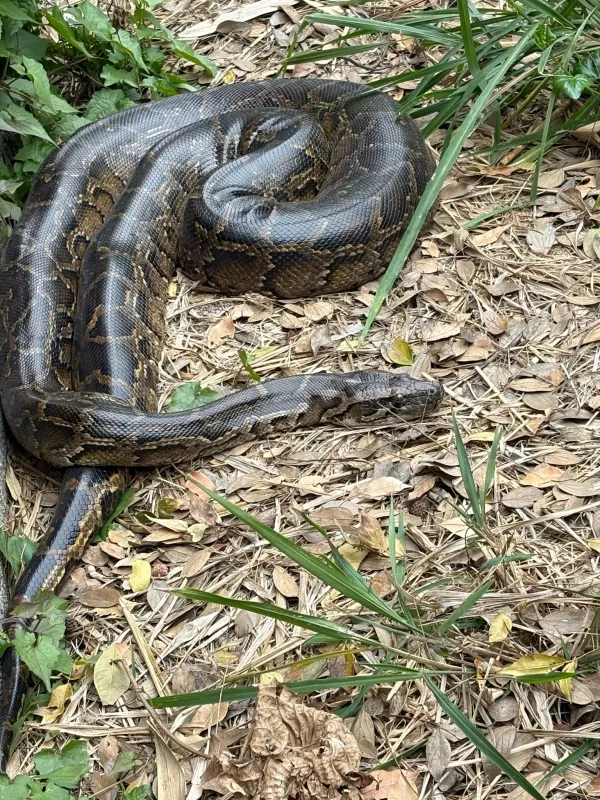
Description
How to identify
The genus Python consists of non-venomous constrictor snakes and is not classified as an agricultural pest.
In agronomic contexts, confusing a python with a plant pest is often a misinterpretation of taxonomic names or technical errors in literature.
These animals belong to the order Squamata and do not possess mouthparts or digestive systems capable of consuming plant matter.
Accurate identification of agricultural pests requires consulting professional entomological guides rather than non-related biological species.
Understanding that these organisms have no trophic relation to crops is essential for correct field management.
What it damages
Pythons do not feed on crops, vegetables, grains, or fruits, therefore they do not inflict damage on agricultural plants.
They do not affect the growth, health, or yield of cultivated species in any direct or indirect manner.
These animals are considered beneficial in an agro-ecosystem because they predate on small rodents that cause significant crop loss.
There are no recorded instances of pythons causing damage that would require phytosanitary measures.
Scientific data consistently categorizes this genus as non-harmful to agricultural production systems.
When it appears
The activity of these reptiles is dictated by environmental temperature and humidity rather than crop development stages.
They remain active during warmer months when their primary prey, such as rodents, is most abundant in agricultural fields.
During cooler seasons, their metabolic rates drop, and they seek shelter, showing no interaction with agricultural activities.
There is no specific seasonal window associated with damage to crops because no such damage exists.
Monitoring for pythons is not part of any standard agricultural crop scouting or protection program.
Signs of infestation
There are no signs of infestation such as leaf skeletonization, root damage, or stem boring associated with the presence of pythons.
Presence may only be noted by the occasional sighting of the animal or shed skin, neither of which affects plant health.
If plant damage occurs in a field where these animals are present, it is caused by insects, fungi, or rodents, not the reptiles.
Visual indicators of pest activity are absent because the species does not interact with the vegetation.
Agronomists should focus on identifying real plant pathogens and pests rather than focusing on non-pest wildlife.
Control measures
No pest control strategies or chemical applications are necessary or recommended for the genus Python in agricultural settings.
The use of pesticides or herbicides against these animals is strictly prohibited as it is ineffective and environmentally hazardous.
Maintaining a healthy population of natural predators is part of integrated pest management (IPM) to control rodent populations naturally.
In cases where animals are found near infrastructure, humane relocation by professionals is the only appropriate course of action.
Farmers are advised to follow standard crop protection protocols focused on authentic harmful organisms.
Taxonomy
- Latin name
- Python
- Family
- Pythonidae
- EPPO code
- PYTNSP
Discussion
No discussions yet — be the first.