
Pyroderces argyrogrammos
Pyroderces argyrogrammos
Description
How to identify
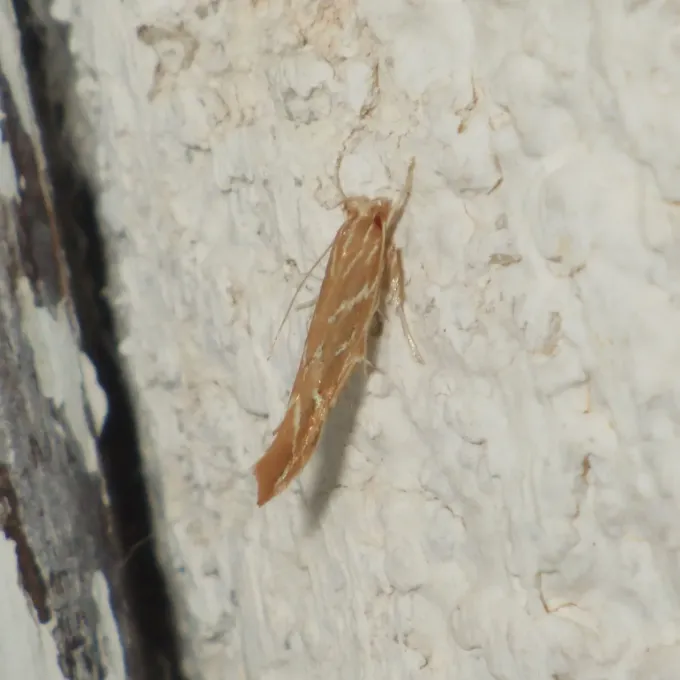
Pyroderces argyrogrammos is a species of moth belonging to the family Cosmopterigidae, commonly known as the silver-spotted moth for its distinctive wing pattern.
The adult moth is small, typically characterized by narrow wings with reddish-brown or golden coloration, accented with vivid, metallic silver patches.
The larvae are small, slender caterpillars that thrive within the heads of composite flowers, where they are well-protected from environmental stressors.
This species is highly adapted to arid and semi-arid environments, making it a recurring issue in sunflower-producing regions across Europe and Asia.
The lifecycle consists of several stages, with the population density peaking during the summer months when host plants are in full bloom.
What it damages
This insect is primarily recognized as a pest of sunflower (Helianthus annuus), where the larvae feed on the ripening seeds and the internal receptacle tissue.
By consuming the kernel of the seed, the larvae cause direct yield losses and diminish the oil content quality of the harvested crop.
Beyond physical consumption, the larvae create entry points that make the sunflower head highly susceptible to fungal infections and rot, further damaging the crop.
In cases of high infestation, the structural integrity of the sunflower head is compromised, leading to premature seed drop and harvest difficulty.
Alternative hosts, such as various wild Asteraceae weeds, allow the moth to maintain its population levels even when cultivated crops are absent.
Signs of infestation
Infestation signs often appear as fine, white silk webbing between the seeds inside the sunflower head, spun by the larvae for protection.
Excrement (frass) left by the larvae within the head provides a visible indicator of active infestation and larval feeding activity.
Empty, hollowed-out seeds with small exit holes are telltale signs that the larvae have successfully completed their development cycle inside the seed.
Discoloration and localized rot on the back or face of the sunflower head often correlate with internal damage caused by the feeding larvae.
As the infestation progresses, the sunflower head may exhibit uneven maturation, with some sections dying back earlier than others.
Control measures
Field sanitation is a primary management tool, focusing on the destruction of weed reservoirs that act as alternative breeding sites for the moth.
Deep plowing following the harvest is recommended to bury crop residues, effectively destroying pupae that would otherwise overwinter in the soil or debris.
Integrated pest management (IPM) strategies, involving biological control agents and targeted insecticide application, are essential for keeping populations under the economic threshold.
Farmers are advised to monitor the flight patterns of adult moths using pheromone traps to time any potential chemical interventions correctly.
- Selecting resistant sunflower hybrids with tightly packed florets.
- Implementing strict crop rotation to reduce local pest pressure.
- Timing harvesting operations to coincide with crop maturity before further damage occurs.
Taxonomy
- Latin name
- Pyroderces argyrogrammos
- Order
- Lepidoptera (butterflies)
- Family
- Cosmopterigidae
- EPPO code
- PYROAR
Discussion
No discussions yet — be the first.