
Pyroderces
Pyroderces
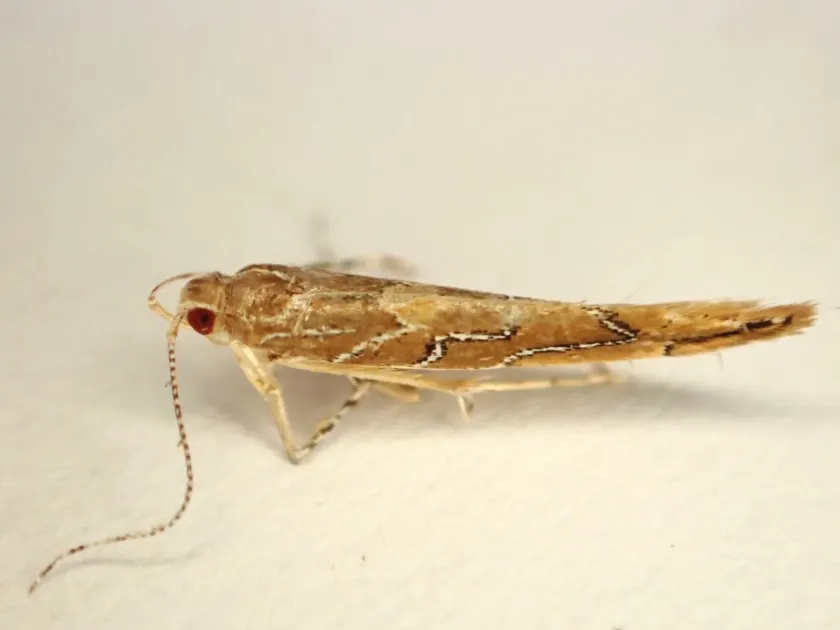
Description
How to identify
Pyroderces is a genus of moths belonging to the family Cosmopterigidae (cosmet moths). These small insects are characterized by their narrow, elongated wings, which are often decorated with distinct patterns that assist in their camouflage on plant surfaces.
The larvae are typically pale, often yellowish or pinkish, and exhibit cryptic behavior, meaning they feed concealed inside seeds, fruits, or stems. Because of this hidden lifestyle, identifying them requires examining the internal structure of the host plant.
The life cycle involves complete metamorphosis, including egg, larva, pupa, and adult stages. Depending on the environment, several generations can occur within a single growing season, making them a persistent threat to agricultural stability.
Adult moths are primarily nocturnal, which makes visual field monitoring difficult. Entomologists often rely on pheromone-baited traps to detect their presence in the early stages of an infestation before damage becomes widespread.
For accurate identification, experts often rear the larvae until they reach the adult stage. This method ensures the precise species is identified, allowing for tailored pest control strategies based on the specific biology of the pest.
What it damages
This pest affects a wide array of agricultural products, including cereals, legumes, and various fruits. The damage is particularly severe when larvae bore into the grains, consuming the endosperm and significantly reducing the weight and quality of the yield.
Infestation in stored products is a major concern. The larvae cause significant losses by destroying the internal structure of seeds, which renders them useless for both consumption and seeding purposes due to lost germination viability.
Besides direct feeding, the larvae produce silk webbing that binds seeds together, complicating the handling and processing of stored grain. This webbing also creates microclimates that encourage the growth of molds and secondary fungal infections.
In the field, larvae can damage developing flowers and ovaries, leading to premature fruit drop. This early-stage injury significantly reduces the total harvest potential and can lead to uneven ripening across the field.
The presence of Pyroderces in exported grain is a critical quality issue. International trade regulations are strict, and even minor evidence of larvae or webbing can result in shipments being rejected, leading to substantial financial losses.
When it appears
The field activity of Pyroderces is closely linked to the phenological stages of host plants. The emergence of adults typically coincides with the period when plants are beginning to form fruits or seeds, which are the primary targets for oviposition.
In indoor environments, such as grain silos or warehouses, the pest can remain active throughout the year. Stable temperatures and sufficient food sources allow for continuous reproduction, making storage areas a constant source of infestation.
The period of peak reproductive activity often matches the crop maturation phase. During this time, the availability of fresh food sources allows for rapid population growth, necessitating frequent inspections and timely intervention.
Wintering usually occurs in the larval or pupal stage. These stages can survive in crop residues, cracks in storage structures, or even inside infested grain kernels, which serves as a reservoir for the following season's infestation.
Extreme weather patterns, such as prolonged warm autumns, can lead to increased numbers of generations, extending the period of risk. Agronomists must monitor conditions closely to predict and mitigate the impact of these population spikes.
Signs of infestation
The most common sign of infestation is the presence of small entry holes in seeds or fruits. These holes are often surrounded by fine frass (larval waste), which appears as a dusty or granular substance on the surface of the produce.
Silk webbing is a hallmark of this pest's presence. In stored grain, this webbing often binds grains into clumps, which is easily visible when moving or screening the material. Adult moths may also be seen flying when grain is disturbed.
Yellowing, wilting, or premature drop of fruits and flowers can indicate internal larval activity. If a fruit is opened, one may find the larva itself or clear evidence of tunnel-like feeding paths and accumulated debris.
- Silk webbing visible within the grain mass.
- Small entry holes in the outer coat of seeds.
- Presence of larval frass and cast skins.
- Unusual clumping of seeds in storage.
- Increased mold development in localized areas of grain.
A reliable way to assess infestation levels is to take representative samples of the grain or fruit and perform a thorough inspection under magnification. This allows for the identification of early signs that might be missed by the naked eye.
Control measures
Effective control starts with strict sanitation in storage facilities. Cleaning out all residual grain and debris before the new harvest is essential to remove sites where the pest could potentially harbor and reproduce.
Pheromone traps are highly effective for early warning in both field and warehouse settings. These tools allow agronomists to determine the exact timing for insecticide applications, ensuring that treatments are as efficient as possible.
Chemical control must be applied in compliance with safety regulations and pre-harvest intervals. Choosing the right systemic or contact insecticide is vital to minimize the pest population while ensuring the produce remains safe for consumption.
Cultural practices such as crop rotation and the prompt removal of crop residues are critical for field management. By eliminating the overwintering sites, the initial pressure of the infestation can be significantly reduced.
For infested storage stocks, fumigation remains the primary method for total elimination. This process must be conducted by certified professionals under controlled conditions to ensure that all stages of the pest are eradicated without compromising grain safety.
Taxonomy
- Latin name
- Pyroderces
- Order
- Lepidoptera (butterflies)
- Family
- Cosmopterigidae
- EPPO code
- PYROSP
Discussion
No discussions yet — be the first.