
Mushroom mite Pygmephorus sellnicki
Pygmephorus sellnicki
Description
How to identify
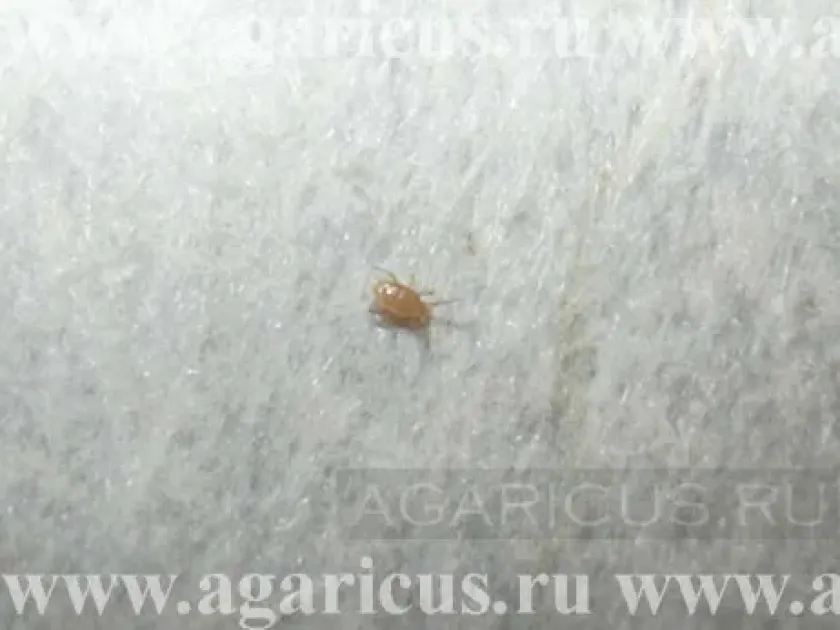
The mushroom mite Pygmephorus sellnicki belongs to the family Pygmephoridae, order Trombidiformes. This is a microscopic pest with an oval body, typically light brown or yellowish in color.
Adults measure approximately 0.2–0.3 mm in length, which makes them barely visible without the use of specialized optical equipment like magnifying glasses or microscopes.
They possess four pairs of legs, with the anterior pair being well-developed and specialized for moving through loose organic substrates found in mushroom farms.
The life cycle of this mite is highly efficient, allowing populations to explode within a few days under optimal conditions of temperature and humidity.
These mites are often introduced into cultivation facilities through human error, contaminated supplies, or by phoresy, where they attach themselves to flying insects like sciarid flies.
What it damages
Pygmephorus sellnicki is a serious pest of cultivated mushrooms such as Agaricus bisporus and oyster mushrooms, feeding directly on the mycelium.
As they consume the mycelial hyphae, they destroy the foundation of the crop, preventing the formation of fruit bodies and causing severe yield losses.
Beyond direct feeding, the mite's activity degrades the substrate, rendering it susceptible to secondary infections by competitive molds and pathogenic bacteria.
Heavy infestations can lead to the total collapse of the mycelial network, leaving the substrate dry and barren, which translates into significant financial loss for farmers.
The pest's ability to migrate across the entire facility means that a localized infestation can quickly turn into a system-wide problem if not addressed immediately.
When it appears
The mite thrives year-round in the climate-controlled environments of mushroom houses, where high humidity and moderate temperatures are consistently maintained.
Activity levels are highest during the fruiting stages of the mushroom, coinciding with the peak biological activity within the substrate and organic waste accumulations.
While not seasonal in the traditional outdoor sense, their population dynamics are heavily influenced by the hygiene cycle and management practices of the indoor facility.
Summer months often present the highest risk, as ambient heat can increase the reproductive rate, and natural insect vectors are more active outside the facility.
Continuous monitoring is required because these mites can exist in low numbers throughout the year, waiting for environmental shifts to begin rapid reproduction.
Signs of infestation
A primary indicator of a Pygmephorus sellnicki infestation is the sudden thinning or disappearance of mycelial growth on the casing layer of the mushroom bed.
Observers may notice patches of fine, dust-like particles that move under magnification, indicating a dense concentration of live mite individuals.
The affected mycelium often loses its bright white color, turning grey or brown, and may emit a foul or sickly-sweet odor as the substrate begins to decay.
Visible damage to fruit bodies includes small pits or necrotic spots on the stipe and cap, which eventually become entry points for opportunistic pathogens.
The surface of the substrate may appear dehydrated or flaky despite adequate watering, indicating that the underlying biological structure has been decimated.
Control measures
Effective control of this pest relies on rigorous sanitation practices, including the heat-based pasteurization of all substrates and casing materials.
Preventing the entry of insect vectors is critical; this involves sealing all ventilation gaps with fine-mesh screens and using sticky traps to monitor and catch flying adults.
Post-harvest facility disinfection using industry-approved acaricides or heat treatments is mandatory to break the life cycle of the mites between crops.
Isolation of affected batches is necessary to prevent the physical spread of mites by workers or tools to healthy parts of the farm.
- Regular sanitation of all tools and equipment.
- Strict adherence to pasteurization temperatures.
- Implementation of a multi-stage monitoring system.
- Employee hygiene training for pest avoidance.
Taxonomy
- Latin name
- Pygmephorus sellnicki
- Order
- Mites
- Family
- Pygmephoridae
- EPPO code
- PYGMSE
Discussion
No discussions yet — be the first.