
Pygmephorus mite
Pygmephorus
Description
How to identify
The Pygmephorus mite (genus Pygmephorus) belongs to the family Pygmephoridae within the order Trombidiformes. They are microscopic creatures often found in agricultural substrates.
Adult mites are typically small, oval-shaped, and range in color from pale yellow to reddish-brown, making them difficult to spot with the naked eye.
The life cycle of these mites is remarkably rapid, allowing populations to explode within a short period under optimal temperature and humidity conditions.
Female mites exhibit a behavior known as phoresy, where they attach themselves to flying insects to travel between different substrates or greenhouses.
Their morphological structure is adapted for survival in organic debris, where they thrive by feeding on mycelium and various fungal spores.
What it damages
These mites are notorious pests in mushroom production, specifically targeting cultivated button mushrooms by grazing on the mycelial network.
By consuming the hyphae, they severely stunt the growth of the fungal colony, which leads to a significant reduction or total failure of mushroom yields.
The damage often results in the substrate losing its structural integrity and vitality, rendering it unsuitable for further mushroom development.
Beyond fungi, they can cause distress to young plant seedlings by feeding on root hairs, which may weaken the plant's defense system.
They act as significant vectors, mechanically transporting harmful pathogens and fungal spores from infested areas to healthy crops throughout the facility.
Signs of infestation
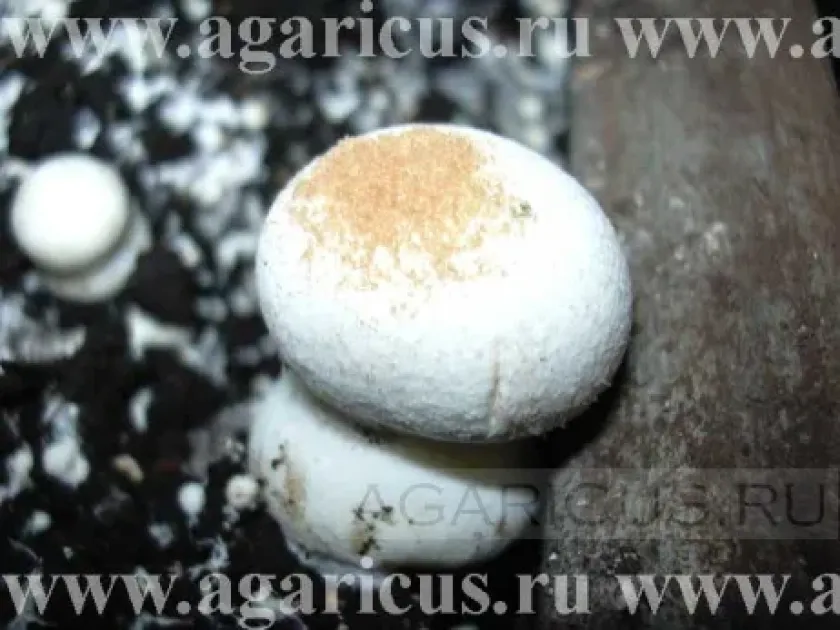
A primary indicator of a Pygmephorus infestation is the discoloration of the mycelium, which loses its healthy white appearance and turns brownish.
Growers may observe dusty or grainy patches on the surface of the growing media, which are actually dense concentrations of the mites themselves.
Infected mushroom blocks often fail to produce mushrooms, or the fruiting bodies that do emerge are misshapen, small, and stunted.
For greenhouse plants, signs include stunted growth, chlorosis, and general wilting, indicating that the root zone is being damaged by the mites.
An unpleasant, musty, or decaying odor emanating from the growing medium is a common sign that the mite infestation has encouraged rot.
Control measures
Effective management begins with rigorous pasteurization of the growing substrate, which is essential to kill all life stages of the mite.
Implementing strict hygienic protocols, including cleaning tools and worker gear, is critical to preventing the accidental introduction of the pest.
Control of insect vectors, such as fungus gnats and sciarids, is vital because these insects are the primary means for mites to enter cultivation areas.
In case of an outbreak, physical removal of the infested substrate followed by targeted disinfection of the area is the most effective approach.
- Maintaining high standards of farm sanitation.
- Using fine-mesh screens to block insect vectors.
- Monitoring the substrate for early signs of mycelial decay.
Taxonomy
- Latin name
- Pygmephorus
- Order
- Mites
- Family
- Pygmephoridae
- EPPO code
- PYGMSP
Discussion
No discussions yet — be the first.