
Plum leaf gall midge
Putoniella pruni
Description
How to identify
The plum leaf gall midge, known scientifically as Putoniella pruni, is a small dipteran insect belonging to the Cecidomyiidae family.
The adult midge is a tiny, delicate fly measuring approximately 1.5 to 2 mm in length, often difficult to spot during routine garden inspections.
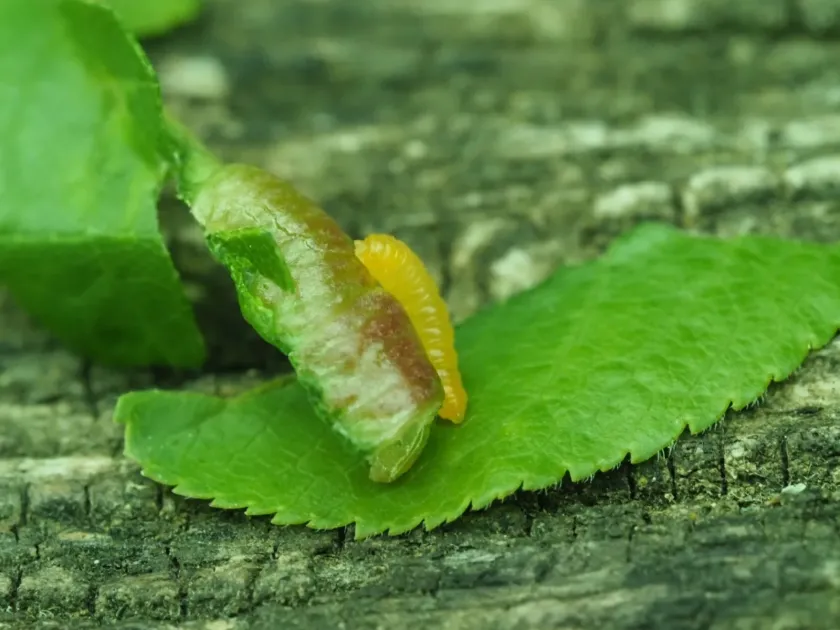
The larval stage is the one responsible for damage; the larvae are spindle-shaped, legless, and typically yellowish-white in color.
Their life cycle is highly adapted to the host tree, allowing them to exploit the most succulent tissues of the new spring growth.
These insects survive the winter as mature larvae buried in the soil, emerging as adults in the spring when conditions are favorable for mating and oviposition.
What it damages
This pest primarily attacks the leaves of plum trees, although it can also affect other Prunus species such as sloe or mirabelle.
By feeding within the leaf tissues, larvae cause the plant to produce galls, which are abnormal growths along the central or lateral leaf veins.
Severe infestations lead to significant leaf curling and deformation, which impairs the tree's ability to perform photosynthesis efficiently.
Young trees in nurseries are particularly vulnerable, as damage to terminal buds can stunt growth and ruin the structural development of the tree.
While mature trees are generally more resilient, heavy infestations can lead to premature leaf drop, reducing the tree's overall vigor and winter hardiness.
When it appears
Adult midges emerge from the soil in early spring, precisely when the plum buds begin to break and fresh leaves unfold.
Females deposit eggs in small groups directly into the leaf tissue, ensuring that larvae have immediate access to food upon hatching.
The larval feeding period lasts for several weeks, during which the gall develops to protect the larvae from environmental stressors and predators.
There can be multiple overlapping generations per year, creating a continuous pressure on the trees throughout the early and mid-summer months.
By late summer, the larvae finish their development, drop to the ground, and enter the soil to overwinter, completing their annual developmental cycle.
Signs of infestation
The most distinctive sign of a Putoniella pruni infestation is the presence of small, elongated, reddish, or yellowish galls along the veins of the leaves.
Infected leaves become misshapen, wavy, and wrinkled, making them stand out from healthy foliage in the tree canopy.
If you inspect the galls closely, you may find tiny larvae inside, which confirms the diagnosis and distinguishes it from fungal leaf spot diseases.
Significant leaf damage often results in the curling of leaves, which may eventually turn necrotic if the infestation is severe enough.
Terminal growth in young plum trees may appear stunted or twisted as a result of concentrated larval activity in the developing bud tissues.
Control measures
Cultural control is the most effective approach: manually removing and destroying galled leaves as soon as they appear can prevent further spread.
During autumn, cultivating the soil around the base of the trees helps to expose overwintering larvae to predators and unfavorable weather conditions.
Chemical control must be timed carefully; systemic insecticides are most effective when applied before the galls have fully formed around the larvae.
Maintaining a healthy garden environment supports natural predators like ladybugs, lacewings, and parasitic wasps, which can help regulate midge populations.
- Prune and burn infested leaves immediately.
- Practice thorough autumn sanitation of the orchard floor.
- Monitor for adult activity during the early spring bloom period.
Taxonomy
- Latin name
- Putoniella pruni
- Order
- Diptera (flies)
- Family
- Cecidomyiidae
- EPPO code
- PUTNMA
Discussion
No discussions yet — be the first.