
Plum gall midge
Putoniella
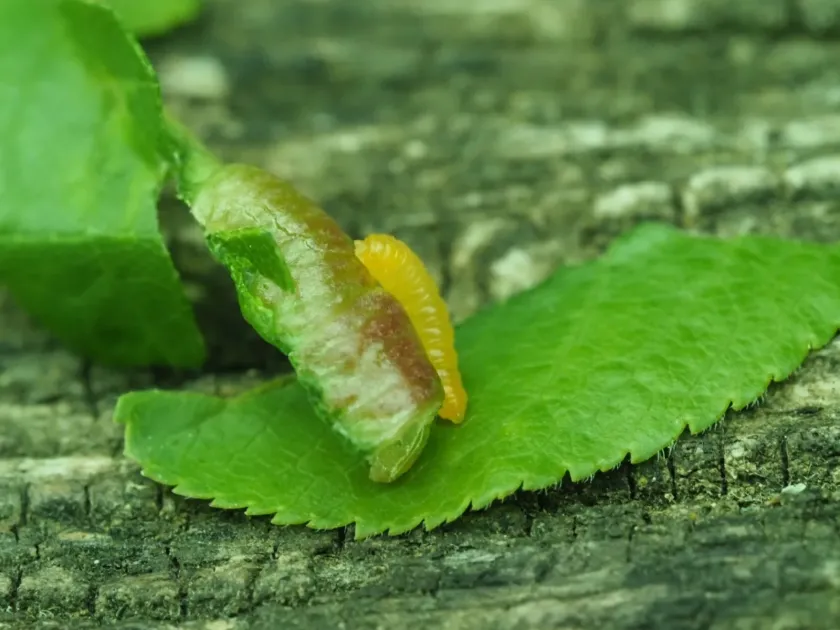
Description
How to identify
The plum gall midge, scientifically known as Putoniella prunispinosae, is a tiny insect belonging to the Cecidomyiidae family within the order Diptera.
Adult insects are extremely small and inconspicuous, making them very difficult to spot during routine garden inspections without specialized monitoring equipment.
The primary concern for orchardists is the larval stage, which develops inside the leaf tissues of host plants, leading to the formation of visible, abnormal growths called galls.
These pests follow a life cycle that is highly synchronized with the phenological stages of plum trees, emerging exactly when young foliage begins to develop.
The insects overwinter in the soil beneath the canopy in the larval or pupal stage, emphasizing the importance of orchard floor management.
What it damages
The species primarily infests common plum trees (Prunus domestica) and related wild species such as blackthorn (Prunus spinosa).
The larvae induce physiological changes in the leaf tissue, causing it to swell into a gall. These structures provide protection and nourishment for the developing larvae.
Heavy infestations reduce the overall photosynthetic capacity of the tree, which can lead to weakened growth and a significant drop in seasonal fruit production.
Leaves affected by gall midge activity often exhibit stunted growth, deformation, and premature senescence, causing them to fall earlier than healthy foliage.
Chronic infestations over several years can severely impact the tree's health, making it more susceptible to environmental stressors and secondary pathogenic infections.
When it appears
Adult emergence typically occurs in late spring, corresponding precisely with the time when young, tender leaves are appearing on plum trees.
The active breeding season persists through the early summer months, during which time the larvae feed extensively within the newly formed leaf structures.
The duration of the larval development stage is climate-dependent, with warmer and more humid conditions accelerating the process significantly.
By mid-to-late summer, most larvae finish their development inside the galls, emerge through exit holes, and migrate into the soil to prepare for overwintering.
The pest generally completes one or two generations per year, depending on the latitude and the specific climatic conditions of the growing region.
Signs of infestation
The most reliable sign of a plum gall midge infestation is the presence of small, elongated, or rounded swellings on the leaf surfaces.
These galls are often vividly colored, displaying shades of light green, yellow, or deep red, which makes them stand out against the healthy green leaf tissue.
Looking at the underside of the leaf, one can often see a small aperture, which serves as the exit point for the larvae after they have completed their growth cycle.
As the galls mature, the surrounding leaf area may become distorted, curled, or wrinkled, drastically altering the normal leaf architecture.
In cases of severe infestation, the sheer number of galls on a single leaf can cause the tissue to dry out and die, leading to unsightly brown patches.
Control measures
Effective management begins with cultural practices, such as deep cultivation of the soil under the tree canopy to disrupt the pupation cycle of the overwintering larvae.
Sanitation is critical; collecting and destroying infested foliage immediately after it falls can drastically reduce the pest pressure for the following season.
In commercial orchards, systemic insecticides may be applied if infestation levels exceed economic thresholds, specifically targeting the period of egg hatching.
Natural predators, including various parasitic wasps and predatory beetles, can play a significant role in limiting the population of gall midges in balanced garden ecosystems.
- Prune away and destroy any root suckers, which are common hotspots for gall midge colonization.
- Apply mulching or landscape fabric around the base of the tree to create a barrier for emerging adults in the spring.
- Maintain proper tree spacing and pruning to ensure adequate sunlight, as lower humidity levels can deter the pest.
Taxonomy
- Latin name
- Putoniella
- Order
- Diptera (flies)
- Family
- Cecidomyiidae
- EPPO code
- PUTNSP
Discussion
No discussions yet — be the first.