
Punctum pygmaeum
Punctum pygmaeum
Description
How to identify
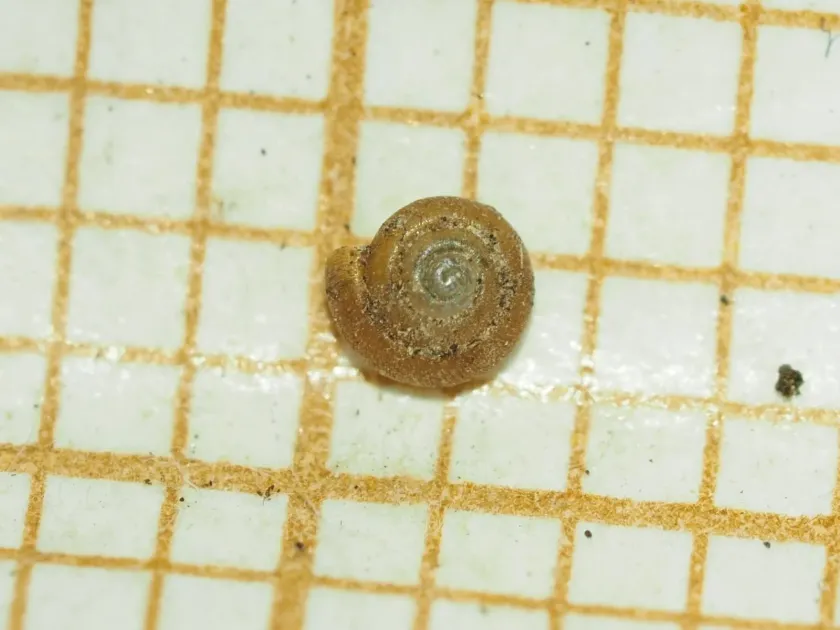
Punctum pygmaeum is a microscopic terrestrial gastropod mollusk belonging to the Punctidae family. It is recognized as one of the smallest snails in the world, with a shell diameter rarely exceeding 1.5 millimeters, making it largely invisible to the naked eye.
The shell of this species is characterized by a horn-colored, transparent structure with very fine radial ribs that require microscopic examination to be clearly visible. The body of the snail is soft and highly sensitive to desiccation.
Taxonomically, it belongs to the order Stylommatophora. These snails prefer damp environments, specifically the leaf litter layer, where they reside protected from direct sunlight and environmental fluctuations.
In agricultural settings, identifying the presence of Punctum pygmaeum usually requires processing soil samples through fine sieves. This method separates the tiny shells from soil particles, allowing for a quantitative analysis of the population.
Unlike larger slugs, this species lives in the upper soil layers and thrives in areas with abundant organic matter, which provides both food and protection throughout the season.
What it damages
This pest primarily damages young seedlings of agricultural and horticultural crops. During the germination stage, the delicate tissues of the primary leaves and stems are highly susceptible to the snail's feeding activity.
By grazing on the epidermis of young plants, Punctum pygmaeum creates wounds that serve as entry points for various pathogenic fungi and bacteria, leading to further necrosis of the tissue.
Characteristic damage includes small, irregular holes or grazing marks on cotyledons. If the population density is high, the cumulative effect can significantly retard plant growth or lead to total seedling failure.
Damage is often localized around the base of the plant stem, where the humidity is higher. This makes it difficult to detect early on, as the snails are often hidden from view during the daytime.
Greenhouse environments are particularly vulnerable, as the stable, humid conditions favor the rapid reproduction and spreading of these mollusks, potentially impacting crop yields year-round.
When it appears
The activity of Punctum pygmaeum is heavily dependent on moisture levels. Their lifecycle peaks during periods of frequent rainfall and moderate temperatures, which are optimal for their reproductive cycle.
Spring is the most critical period, as the emergence of vulnerable seedlings coincides with the peak activity phase of the snails. A secondary peak of activity may occur during the autumn, depending on climate conditions.
Reproduction involves laying eggs in damp soil or beneath organic debris. Embryonic development is accelerated by favorable moisture levels, allowing the population to increase rapidly within a short timeframe.
During winter, Punctum pygmaeum enters a state of diapause, residing deep within the soil or beneath protected cover. However, in controlled indoor environments, their development can continue throughout the year.
Migration occurs predominantly at night or under overcast, humid weather conditions. During the day, they remain in shaded, damp microhabitats, which makes daily monitoring challenging for farmers and researchers.
Signs of infestation
The primary sign of an infestation is the appearance of thinned plant stands with damaged seedlings. Upon close inspection, one may find thin, silvery trails of mucus left on the soil or leaves, indicating the snail's movement.
Leaves exhibit small, intricate grazing patterns that eventually dry out and turn necrotic. If the plants are severely affected, wilting or stunted growth patterns will become noticeable across the field.
The accumulation of crop residues on the soil surface is a strong indicator of potential risk. By inspecting these residues, one can often find clusters of the tiny snails even during the daylight hours.
For more accurate diagnosis, researchers use bait traps made of damp organic materials left out overnight. Monitoring these traps in the early morning helps determine the presence and density of the pest population.
Symptoms are sometimes misidentified as root rot due to the stunted growth, but the presence of tiny, fragile shells in the soil is a definitive sign of Punctum pygmaeum infestation.
Control measures
Effective management relies on an integrated approach. The most crucial factor is modifying the environment to reduce surface humidity, which includes timely soil cultivation and the removal of weeds.
Removing plant debris is essential to eliminate the habitats where the snails live and reproduce. Keeping the fields free of excessive organic litter significantly reduces the pest population.
Chemical control can be achieved through the use of specialized molluscicides, often formulated as pellets containing metaldehyde or iron phosphate. These should be applied in areas of identified infestation.
Biological control methods involve supporting natural predators that consume snails, such as ground beetles and small mammals, which can help maintain the population below the economic damage threshold.
Regular monitoring and rapid intervention are keys to protecting young crops. Integrating these practices into standard agricultural management ensures that the impact of Punctum pygmaeum remains minimal.
Taxonomy
- Latin name
- Punctum pygmaeum
- Order
- Molluscs
- Family
- Punctidae
- EPPO code
- PNCTPY
Discussion
No discussions yet — be the first.